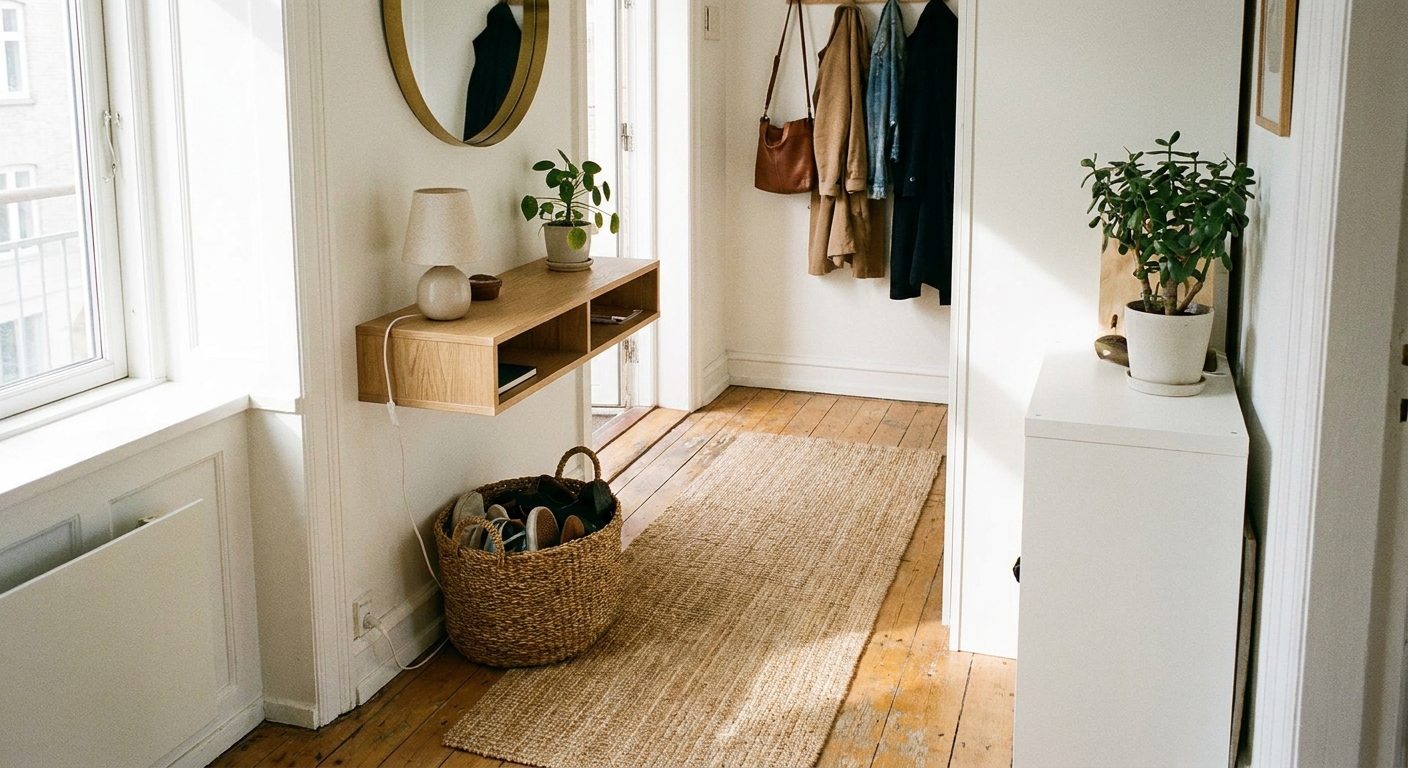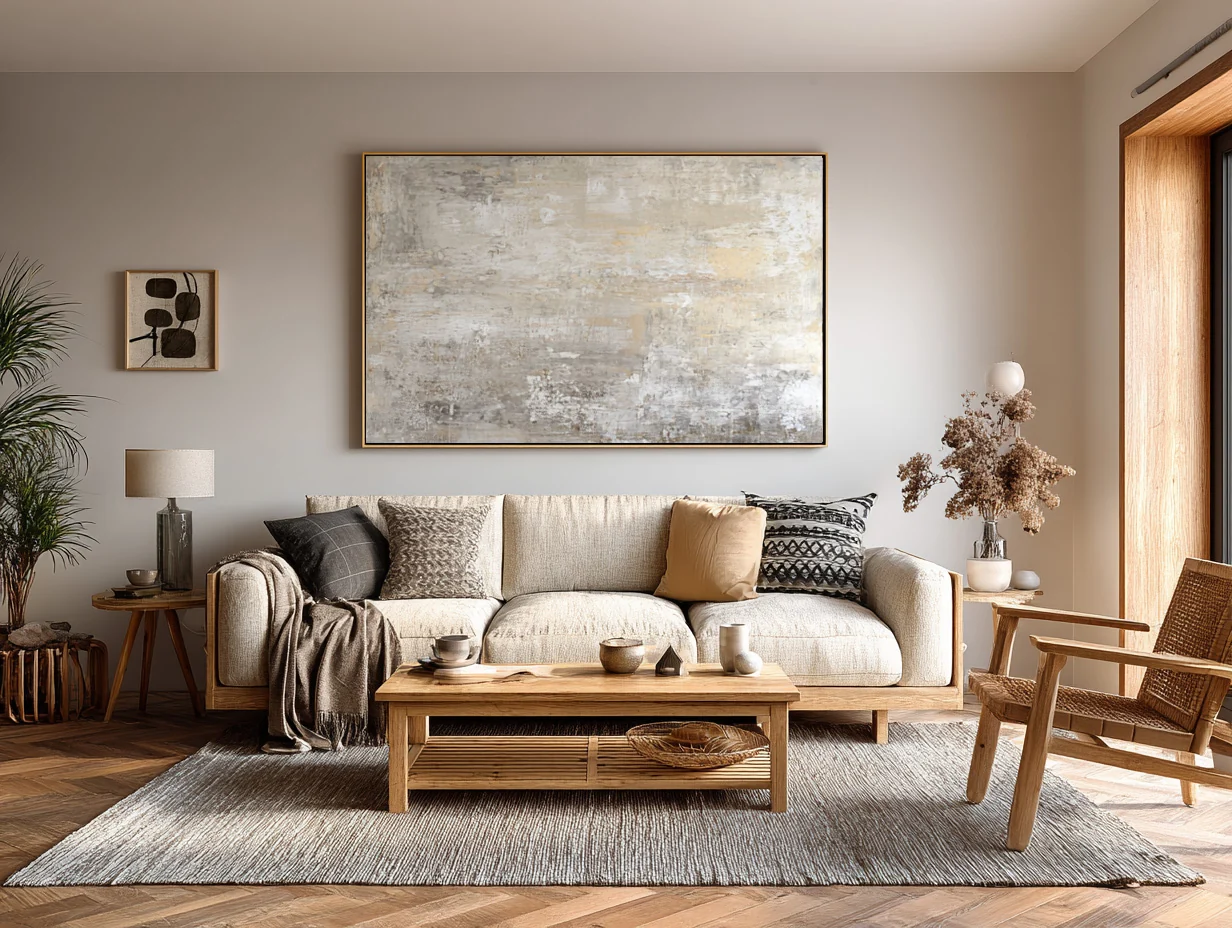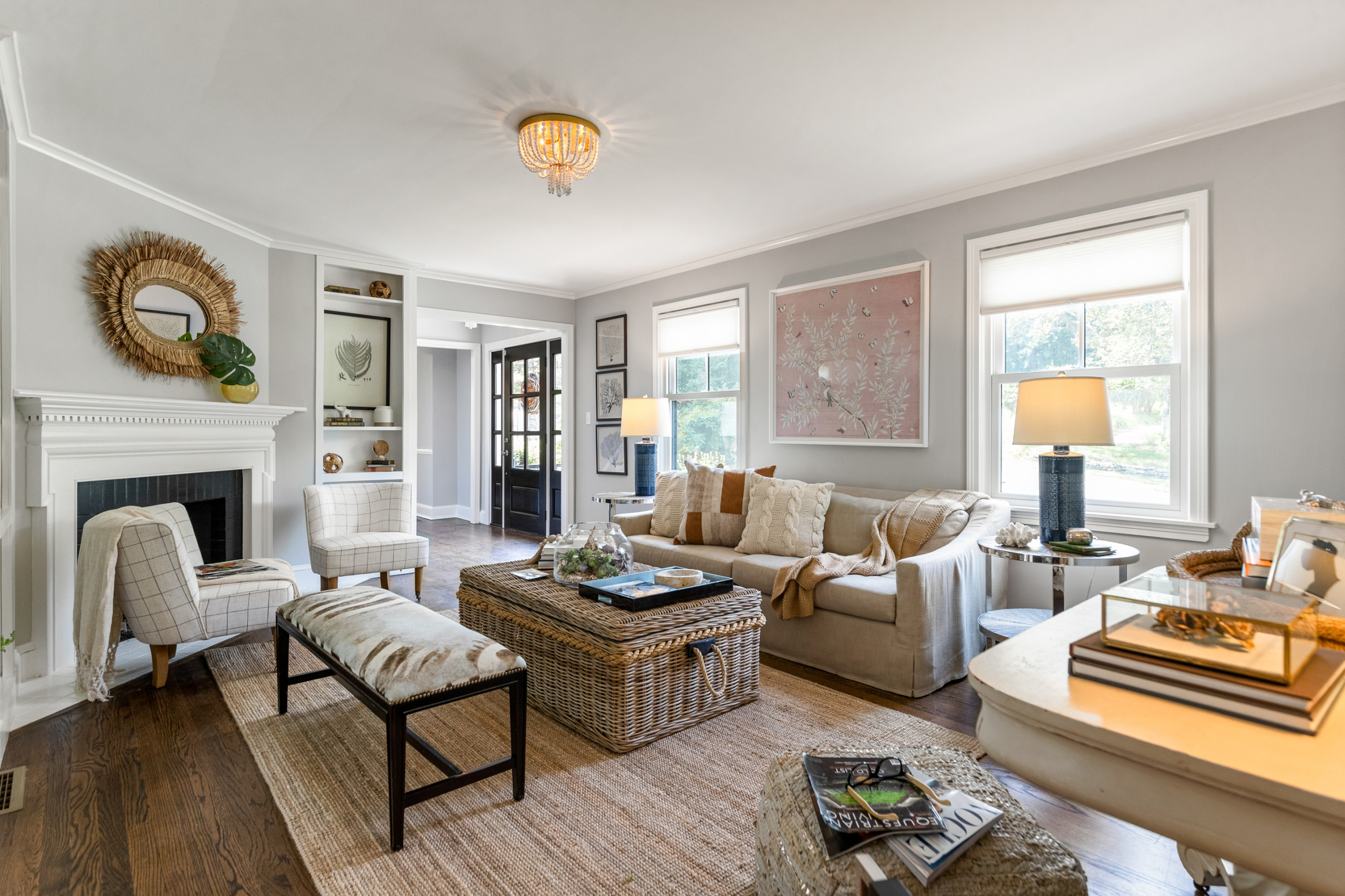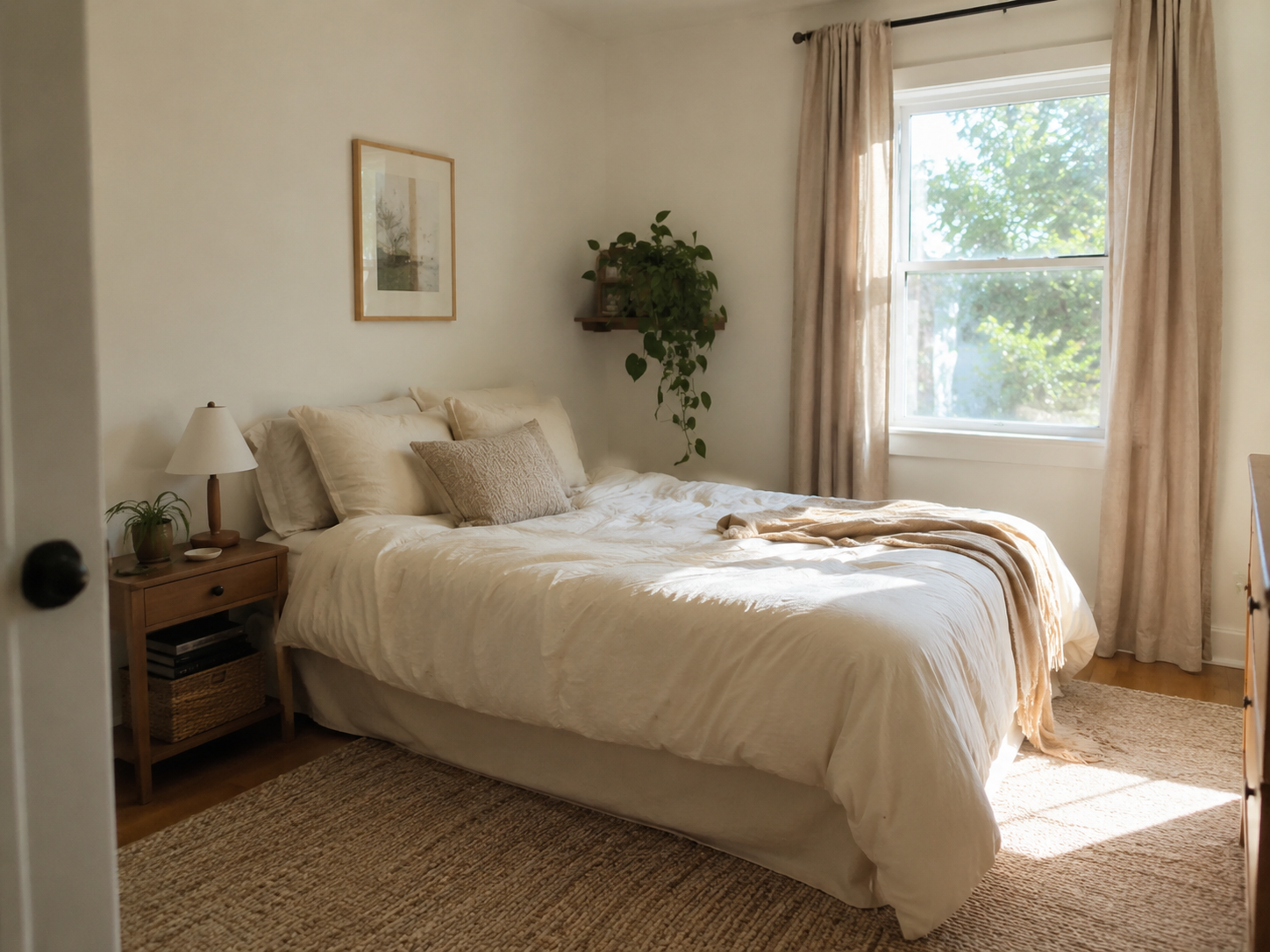
Visual tricks that open up a cramped bedroom: layout tweaks, mirror placement, curtain height, rug sizing, lighter colors, and layered lighting. Practical, b...
home decor / design / interior decoration
How to Choose the Right Mirror Size for a Dresser

Maya Thorne
Maya Thorne is an interior stylist and the creative voice behind Homoraa. With over a decade of experience blending vintage finds with modern aesthetics, she helps readers transform ordinary spaces into personalized sanctuaries. When she is not rearranging her living room, she can usually be found hunting for unique ceramics and textiles at local flea markets.
Created: October 1, 2026
Updated: October 1, 2026
A dresser mirror can make a bedroom feel brighter, bigger, and more finished in one move. But size is everything. Too small and it looks like an afterthought. Too big and it can crowd the dresser (and sometimes the wall).
Below is the sizing cheat sheet I use when styling real bedrooms, from tiny rentals to long double dressers. We will cover a reliable width rule, the best hanging height, and how to choose a shape that fits your space and style.
The easiest rule: width
If you remember one thing, make it this: your mirror should relate to the dresser, not float independently on the wall.
Best-looking range for most bedrooms
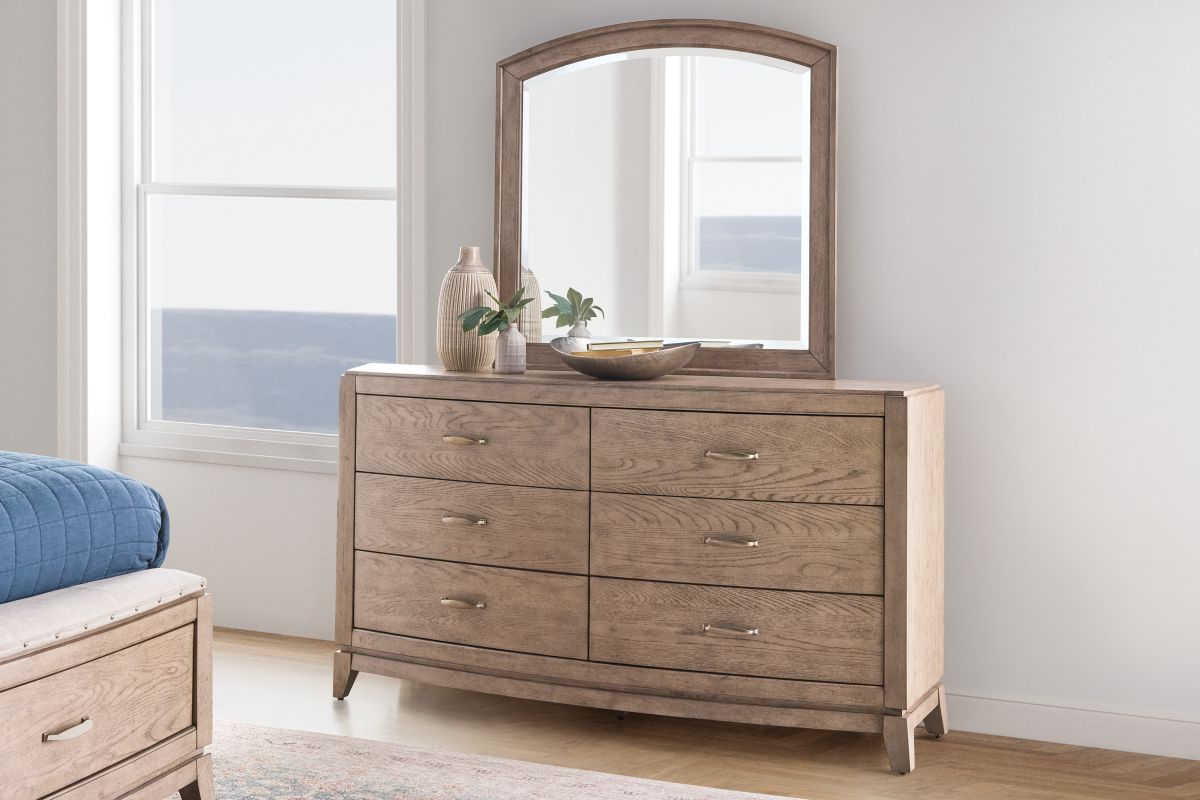
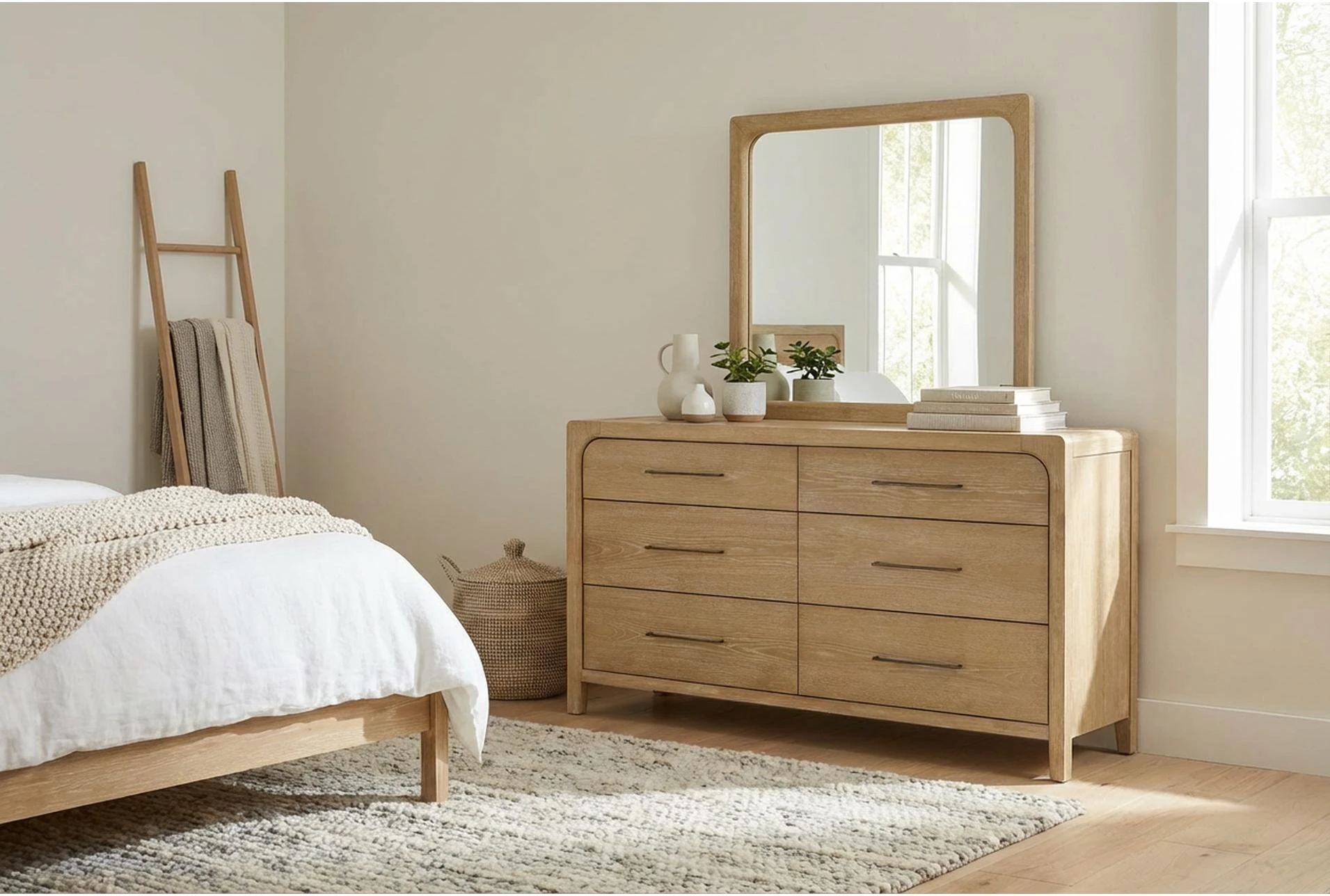
- Ideal mirror width: about 60% to 80% of the dresser’s width. This is a dependable starting point, not a hard law.
- Usually not wider than the dresser: a wider mirror can work if you are intentionally creating a built-in, wall-to-wall look, or you are balancing it with wide lighting and substantial styling.
- Breathing room on each side: aim for 3 to 6 inches of dresser showing on each side when possible. Treat this as flexible, especially on smaller dressers where every inch matters.
Quick math: Dresser width × 0.6 to 0.8 = target mirror width.
Examples (so you do not have to guess)
- 42-inch dresser: mirror width around 25 to 34 inches
- 60-inch double dresser: mirror width around 36 to 48 inches
- 72-inch long dresser: mirror width around 43 to 58 inches
If you are stuck between two sizes, I usually choose the larger one as long as it still feels anchored to the dresser and you have some dresser showing on the sides. Slightly too big tends to look intentional. Slightly too small tends to look accidental.
One more detail that matters: frame thickness changes the visual weight. A thick, chunky frame reads larger and heavier than the same-size mirror with a thin frame, so you may want to size down slightly if the frame is substantial.
Height and placement
Once the width is right, placement is what makes it feel polished.
The sweet spot above a dresser
- Gap between dresser top and mirror: typically 4 to 8 inches
- Centering rule: center the mirror to the dresser, not necessarily to the whole wall (especially if the dresser is off-center due to a door or window).
In a bedroom, that 4 to 8 inch gap gives your styling room a little air without making the mirror feel like it is climbing the wall.
A simple real-life height check
If the mirror is mostly for getting ready, aim so the mirror’s vertical center lands roughly around eye height for the primary user. As a quick sanity check in many bedrooms, the top of the mirror often ends up around 65 to 70 inches from the floor, adjusted up or down depending on dresser height and ceiling height.
If multiple people share the space, prioritize overall proportions: mirror visually anchored to the dresser, with enough height to reflect face and upper torso comfortably.
Leaning vs. hanging
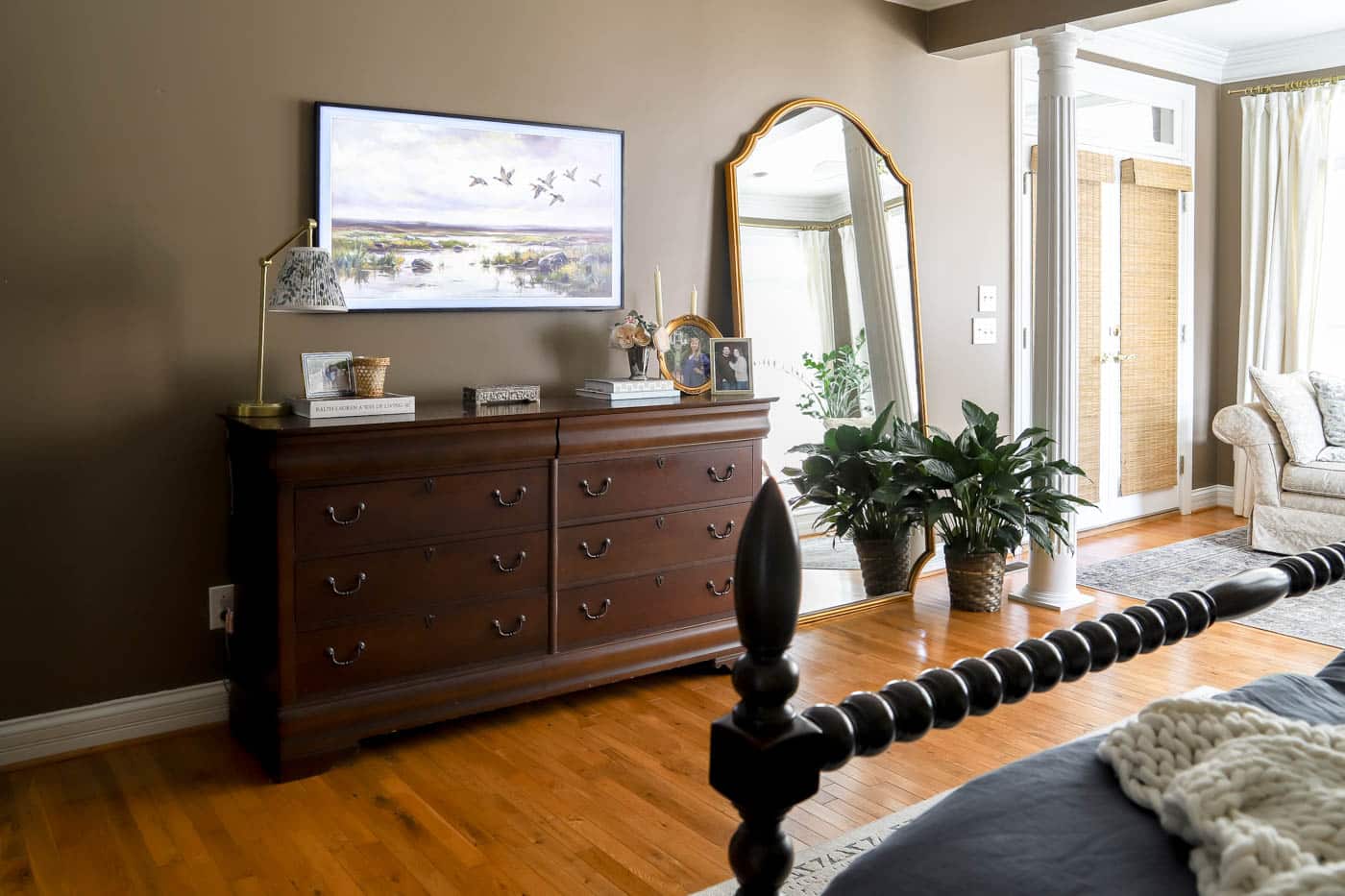
- Hung mirrors look crisp and tailored, especially with a classic rectangular frame.
- Leaning mirrors feel relaxed and layered, and they can be rental-friendly because you may not need to put a heavy anchor in the wall. For safety, many leaning mirrors still benefit from anti-tip hardware, especially with kids, pets, or in earthquake-prone areas.
Choosing the right shape
Shape is not just aesthetic. It changes the room’s mood and the visual architecture above the dresser.
Rectangular mirrors
- Best for: traditional, transitional, modern, minimalist
- Why it works: it echoes the dresser’s lines, so it reads tidy and grounded
- Styling note: if your dresser is very boxy, a rectangle can look tailored. Warm it up with rounded accessories (a ceramic lamp, a curved vase).
Round mirrors
- Best for: Scandinavian, boho, contemporary, softer modern
- Why it works: a circle breaks up hard angles and makes a room feel more relaxed
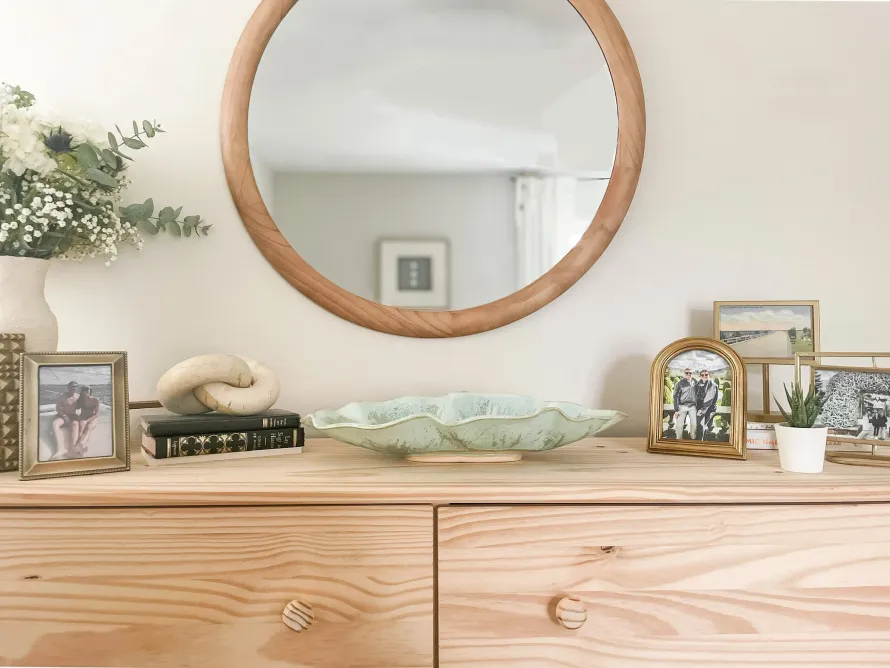
- Size tip: round mirrors often end up too small. If you are going round, go big enough that it still lands near that 60% to 80% width relationship with the dresser.
Arched mirrors
- Best for: vintage, Mediterranean, eclectic, romantic
- Why it works: the curve adds character, especially in bedrooms that feel a bit boxy
- Where it shines: above low, long dressers where you want height without harsh lines.
Organic or irregular shapes
- Best for: artistic, modern, playful spaces
- Balance tip: keep other items on the dresser simple so the mirror is the star.
Small bedroom scenarios
In small bedrooms, a mirror is doing double duty: function and light amplification. The goal is to keep it proportional without adding visual clutter.
If your dresser is narrow (30 to 40 inches)
- Choose a mirror around 18 to 30 inches wide.
- Consider a taller mirror rather than a wider one. Vertical height visually lifts the room.
- Keep the frame slim. A chunky frame can make a small mirror feel even smaller.
If the dresser sits near a door or corner
- Center the mirror to the dresser, even if the dresser is not centered on the wall.
- Use a round or arched mirror to soften the tight feeling of a corner placement.
If you want the room to feel bigger
- Go slightly larger within the suggested width range.
- Choose a mirror with a thin frame or a light-reflective finish (brass, polished nickel) if it suits your palette.
- For maximum light bounce, place the dresser and mirror opposite or adjacent to a window when you can. Avoid aiming it straight at a bulb that creates harsh glare.
Long dressers and double dressers
Long dressers are where people most often undersize the mirror. A tiny mirror centered over a 60-inch dresser can read like a postage stamp.
Option A: One large mirror
- Aim for 40% to 60% of the dresser width if you want negative space on both sides for lamps or decor.
- Or go bolder with 60% to 80% if you want the mirror to be the main focal point.
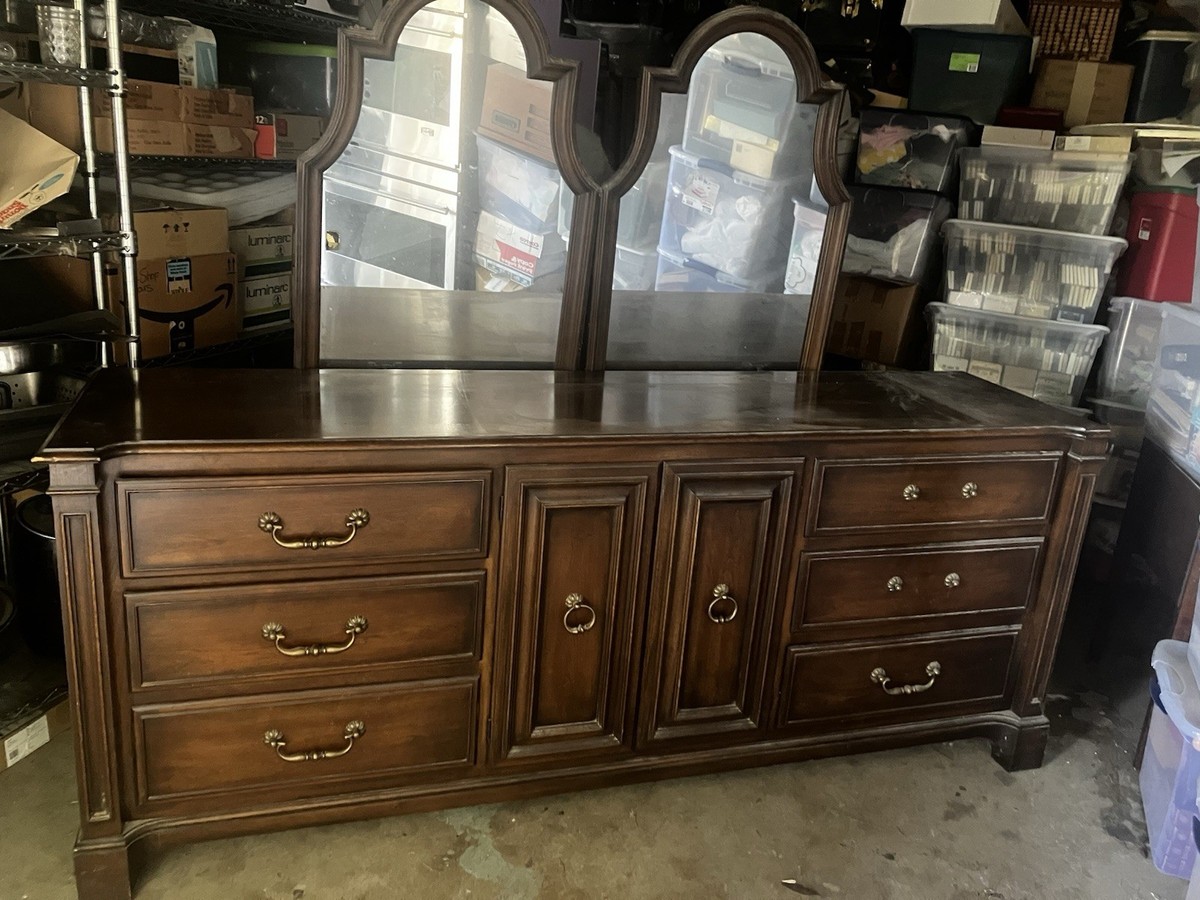
Option B: Two mirrors
- Two matching mirrors above a long dresser can look custom.
- Keep each mirror around 25% to 35% of the dresser width, with intentional spacing between.
- This works beautifully when you use two lamps or matching sconces to reinforce the symmetry.
Stylist’s note: Two mirrors only look great if the spacing is deliberate. If they are crammed together, it can feel like you compromised. Give them room to breathe.
Layered looks
If you love a collected, slow-decorated bedroom, you might want the mirror to be part of a layered moment rather than a single statement piece. The key is keeping one element in charge.
Mirror plus artwork
- Choose one hero: either the mirror is large and the art is small, or the art is large and the mirror is smaller.
- Keep frames in the same family (similar tone or finish), even if they are not matching.
Mirror with a light
- Make sure the mirror is not too narrow for the lighting. A wide fixture above a small mirror looks top-heavy.
- For side sconces, keep the mirror wide enough that the whole grouping feels unified, not scattered.
- To reduce glare, aim bulbs away from the mirror surface when possible, or use softer, diffused shades.
Mirror with a shelf
- A shallow picture ledge under a mirror can be gorgeous for leaning framed photos and small ceramics.
- Keep the shelf narrower than the dresser and visually lighter than the mirror so it does not compete.
Safety and installation basics
A beautiful mirror should also be secure.
- Check weight ratings: use hangers and wall anchors rated for the mirror’s weight, and follow the manufacturer’s instructions.
- Use studs when you can: especially for larger, heavier mirrors. If you cannot hit a stud, use a high-quality drywall anchor rated for the load.
- Anti-tip matters: for leaning mirrors, consider anti-tip hardware or straps so a bump does not turn into a hazard.
- Earthquake zones and kids or pets: treat tip resistance as non-negotiable, even if the mirror is not technically mounted.
Common mistakes
- Mistake: The mirror is too small.
Fix: Size up, or add wall sconces or tall lamps to visually expand the vignette. - Mistake: The mirror is hung too high.
Fix: Lower it so the gap above the dresser is 4 to 8 inches. This instantly looks more intentional. - Mistake: The mirror feels too wide for the dresser.
Fix: Swap for a narrower mirror, or shift the plan to a wider, more intentional setup (a longer surface, matching sconces, or a more built-in treatment). - Mistake: The mirror fights the dresser style.
Fix: Repeat one detail. If the dresser is ornate, pick a frame with some depth. If the dresser is sleek, choose a clean-lined frame. - Mistake: The mirror creates glare.
Fix: Reposition slightly so it reflects window light, not bare bulbs. If the only option is lamp glare, add a shade or use a softer bulb.
Quick sizing checklist
- Measure the dresser width.
- Multiply by 0.6 to 0.8 to find a target mirror width, then adjust for frame thickness and nearby lighting.
- Plan for a 4 to 8 inch gap above the dresser top.
- Decide: rectangle for tailored, round for softness, arched for character.
- Consider what else will live there: lamps, sconces, art, trays, jewelry bowls.
If you want a designed look without overthinking it, my favorite combination is a mirror that’s about 70% of the dresser width, hung about 6 inches above the surface, plus one lamp and one sculptural object. Simple, calm, and it leaves room for your home to evolve.
FAQ
Should a dresser mirror be the same width as the dresser?
Usually, no. It can look heavy and top-dominant, and it can make the surface feel crowded. In most bedrooms, a mirror around 60% to 80% of the dresser width looks more balanced. If you love the full-width look, it works best when the whole setup is intentionally substantial, like a wider vanity moment with lighting to match.
How high should I hang a mirror above a dresser?
Aim for 4 to 8 inches above the dresser top. Lower reads more grounded and intentional, especially in bedrooms. Fine-tune based on dresser height and who will use the mirror most.
What size round mirror works above a dresser?
Use the same width logic as any other mirror. For example, above a 48-inch dresser, a round mirror around 30 to 38 inches wide tends to look right, depending on frame thickness.
Can I lean a mirror on a dresser instead of hanging it?
Yes, and it can look beautifully relaxed. Choose a mirror with enough height so it feels substantial, and make sure it is stable. For safety, consider anti-tip hardware, especially with kids, pets, or in earthquake zones.