A complete, step-by-step $500 small bedroom makeover: paint choices that expand the room, storage-friendly furniture swaps, and styling tips that look custom...
home decor / design / interior decoration
Make a Small Bedroom Feel Bigger (No New Furniture)

Maya Thorne
Maya Thorne is an interior stylist and the creative voice behind Homoraa. With over a decade of experience blending vintage finds with modern aesthetics, she helps readers transform ordinary spaces into personalized sanctuaries. When she is not rearranging her living room, she can usually be found hunting for unique ceramics and textiles at local flea markets.
Created: September 26, 2026
Updated: September 26, 2026
Small bedrooms have a special talent for feeling “full” even when you own very normal amounts of stuff. The good news is you can make your room feel bigger in a weekend without buying new furniture. It is mostly about letting the eye travel, emphasizing height, and clearing a few visual speed bumps that shrink the space.
I’m going to walk you through the easiest high-impact tweaks: furniture placement, mirrors, curtains, rugs, and light color choices, plus a few mistakes I see all the time.
Start with clear sightlines
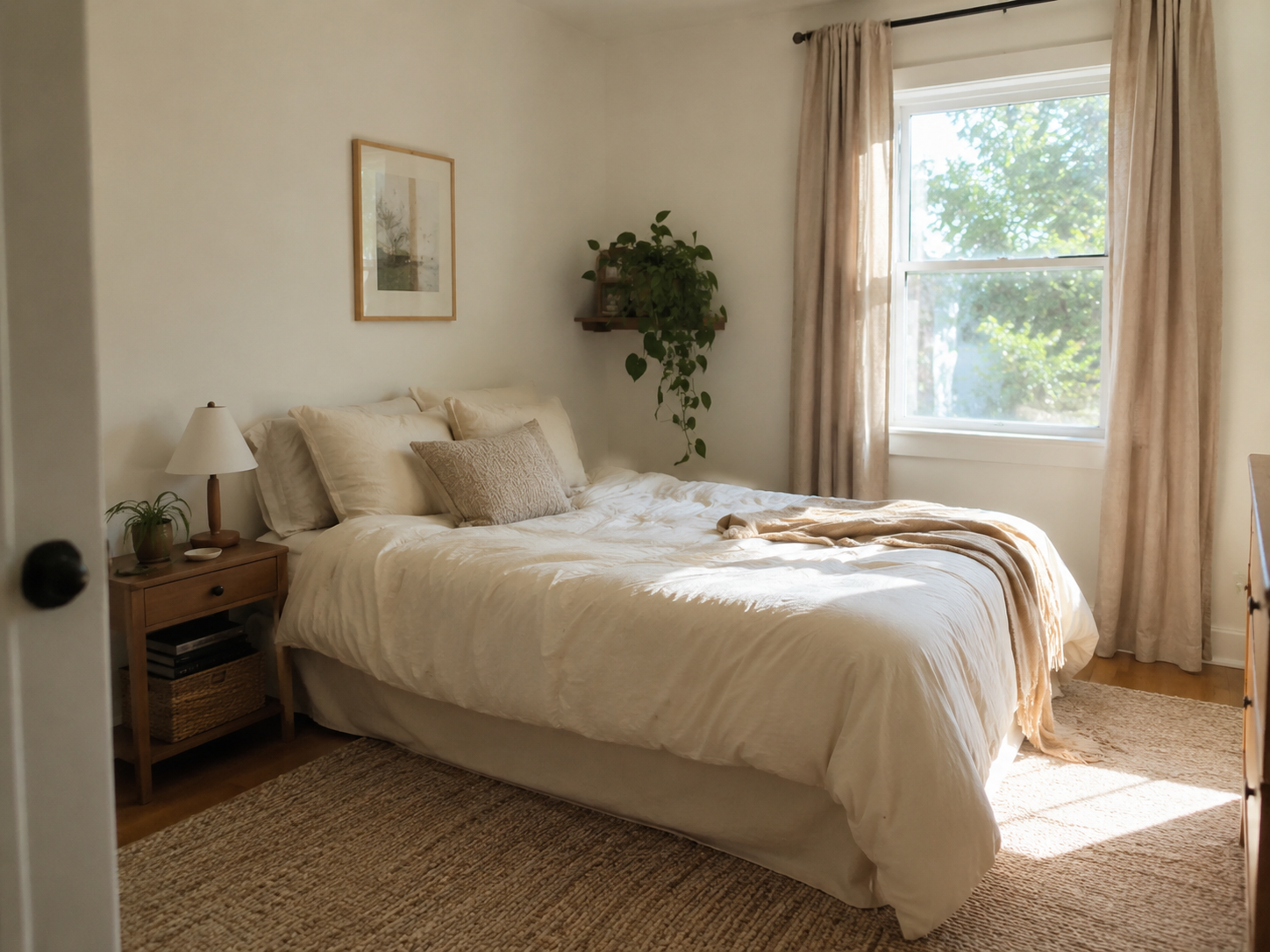
When a room feels cramped, it is usually because your eye has to stop over and over. The goal is not emptiness. It is flow.
Do this first (15 minutes)
- Stand in the doorway and notice what blocks the view.
- Clear the floor where you can: slide bins into closets, move a hamper behind the door, tuck shoes into a basket.
- Create one clean path from the door to the bed and to the closet. Aim for about 18 to 24 inches if you can. Even a little breathing room helps.
Before vs after
- Before: You open the door and see a chair piled with clothes, a nightstand with tall clutter, and cords across the floor.
- After: The floor reads as one continuous sheet of space, with a clear route to the bed and window.
Mistake to avoid: using the floor as storage. Floor clutter instantly shrinks a room, no matter how pretty your decor is.
Furniture placement that breathes
You’re not replacing furniture, but you can absolutely reposition it to feel more intentional and airy. Think: fewer awkward gaps, fewer pinch points, and a layout that looks on purpose.
1) Pull the bed off the wall a bit (if possible)
If your bed is jammed into a corner, it can read as temporary, like a spare room. If you can, give it a few inches on both sides. Even 3 to 6 inches can make the bed look centered and the room feel calmer.
- If you can’t access both sides, aim for one side clear and one side tight. Symmetry is lovely, but function wins in small spaces.
2) Keep low pieces low, group tall pieces
A room feels bigger when the horizon line stays open.
- Consolidate height: place your tallest piece (dresser, bookcase) in one zone rather than scattering tall objects around the room.
- Lower the visual noise: keep the top of a dresser mostly clear, and move small items into a tray or box.
3) Give the door a full swing
If your bedroom door hits a hamper, a cart, or a basket, the room will always feel tight. Move whatever is in that arc. This is one of those small changes that feels oddly luxurious.
Mirrors that actually help
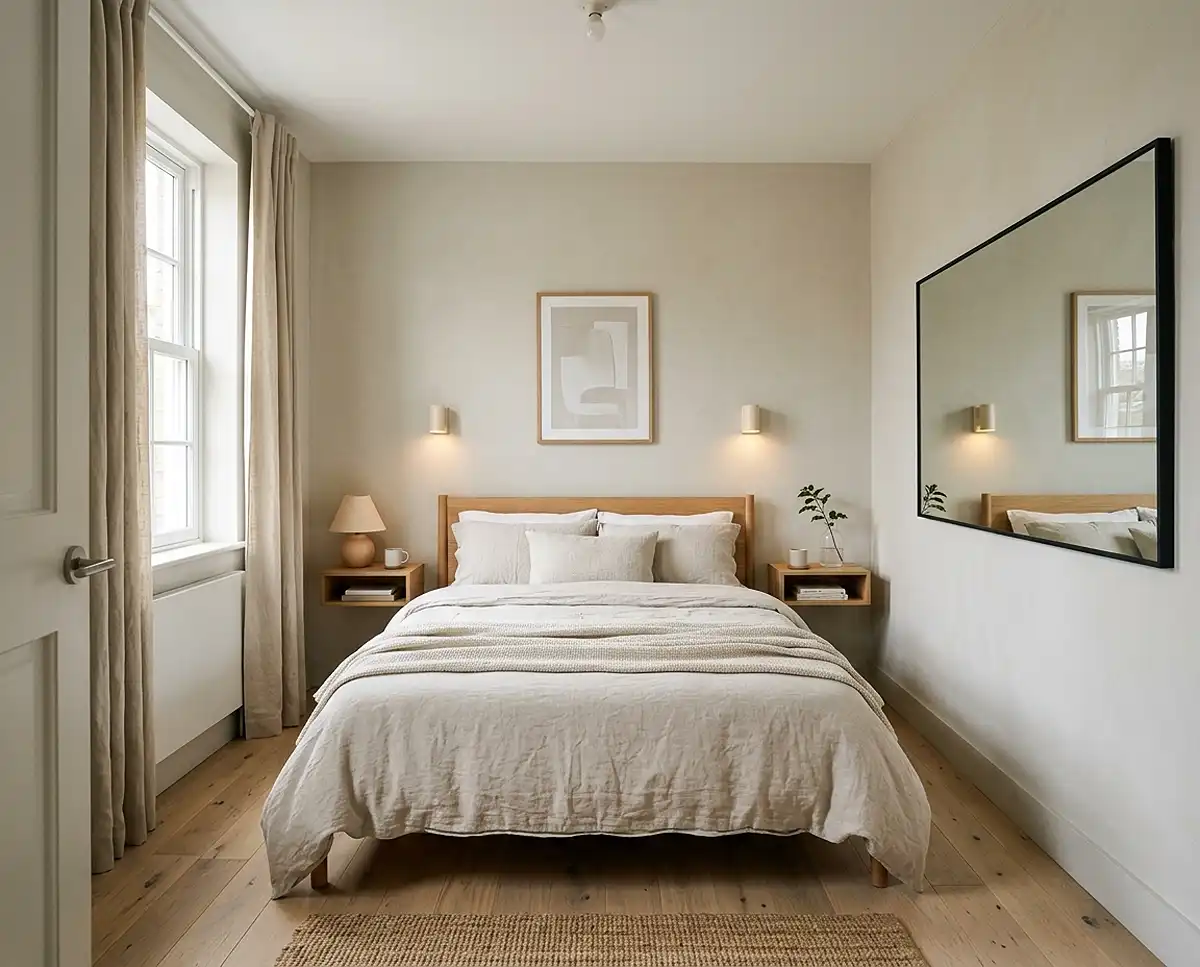
Mirrors can add depth on their own, but they work best when they reflect something worth expanding, like a window, a light source, or an open stretch of wall.
Best mirror placements
- Across from a window (or angled toward it): bounces daylight deeper into the room.
- Near the doorway: helps the room feel more open the moment you step in.
- Behind a lamp: doubles the glow at night and adds depth.
Quick, budget-friendly options
- Lean a mirror you already own on a dresser for height.
- Hang a mirror so the center sits around eye level, which usually means it ends up a little higher than people expect.
- If you have mirrored closet doors, keep them clean. It matters more than you’d think.
Mistake to avoid: placing a mirror where it reflects clutter, laundry piles, or the side of a bulky dresser. You will double what you don’t want to see.
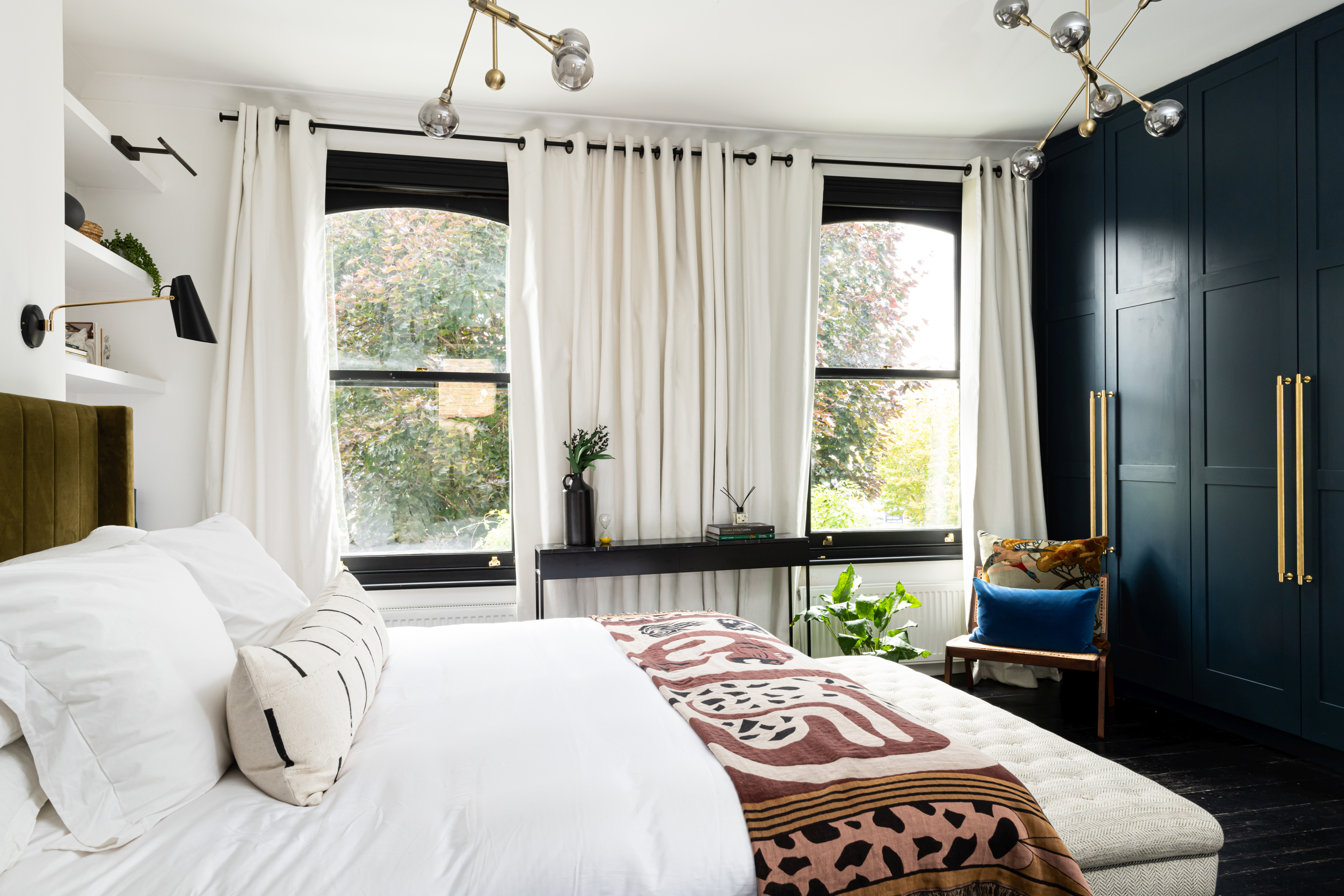
Hang curtains higher
This is my favorite no-furniture trick because it changes the room’s proportions fast.
The easy rule
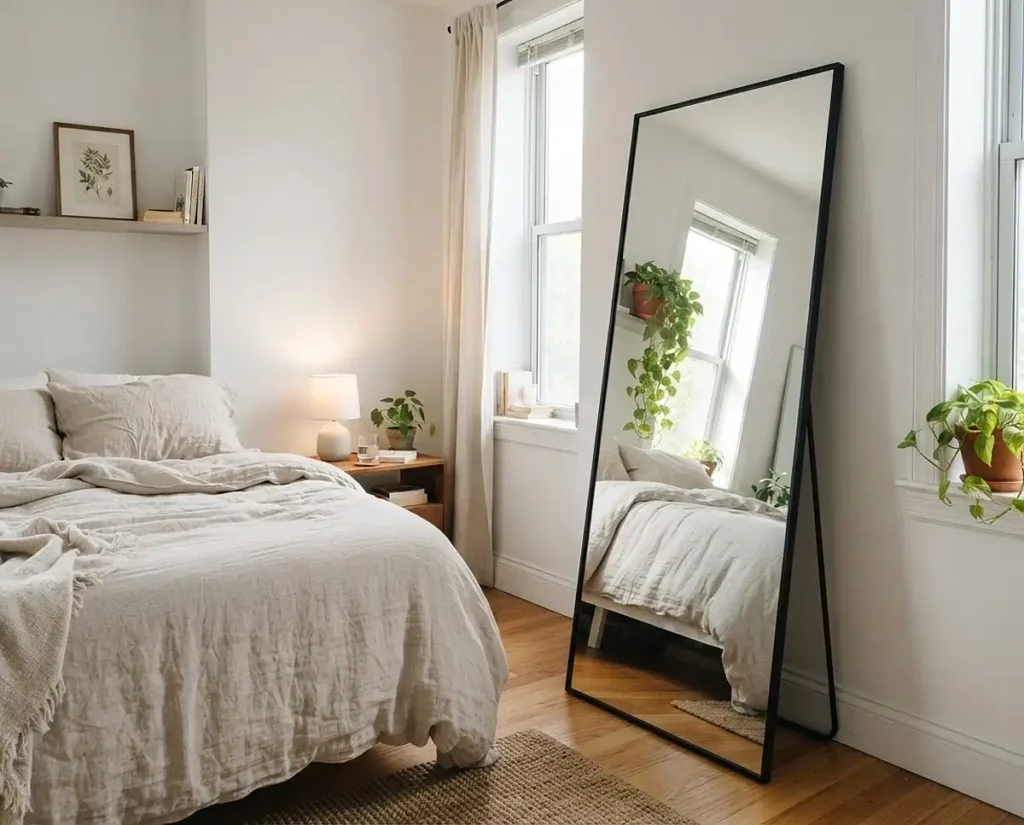
- Hang the rod 4 to 8 inches above the window frame, or go higher if your ceilings and window placement allow. If the window is close to the ceiling, mount the rod as high as you reasonably can.
- Go wider than the window so the curtains can stack mostly off the glass when open. More visible window equals more perceived space.
What if you can’t drill?
- Try a tension rod inside the frame for lightweight curtains, or heavy-duty adhesive hooks designed for rods. Always check the weight rating, your wall surface, and the combined weight of the rod plus curtains.
- If you want the height illusion without the risk, use longer panels and hang as high as your setup allows, then aim for a hem that just kisses the floor. A slight puddle can look romantic, but it also collects dust and can be a tripping hazard.
- If you’re renting and can drill, patching two small holes later is usually simpler than living with short-looking windows for years.
Mistake to avoid: curtains that stop at the sill. They chop the wall in half and make ceilings feel lower.
Rug size matters
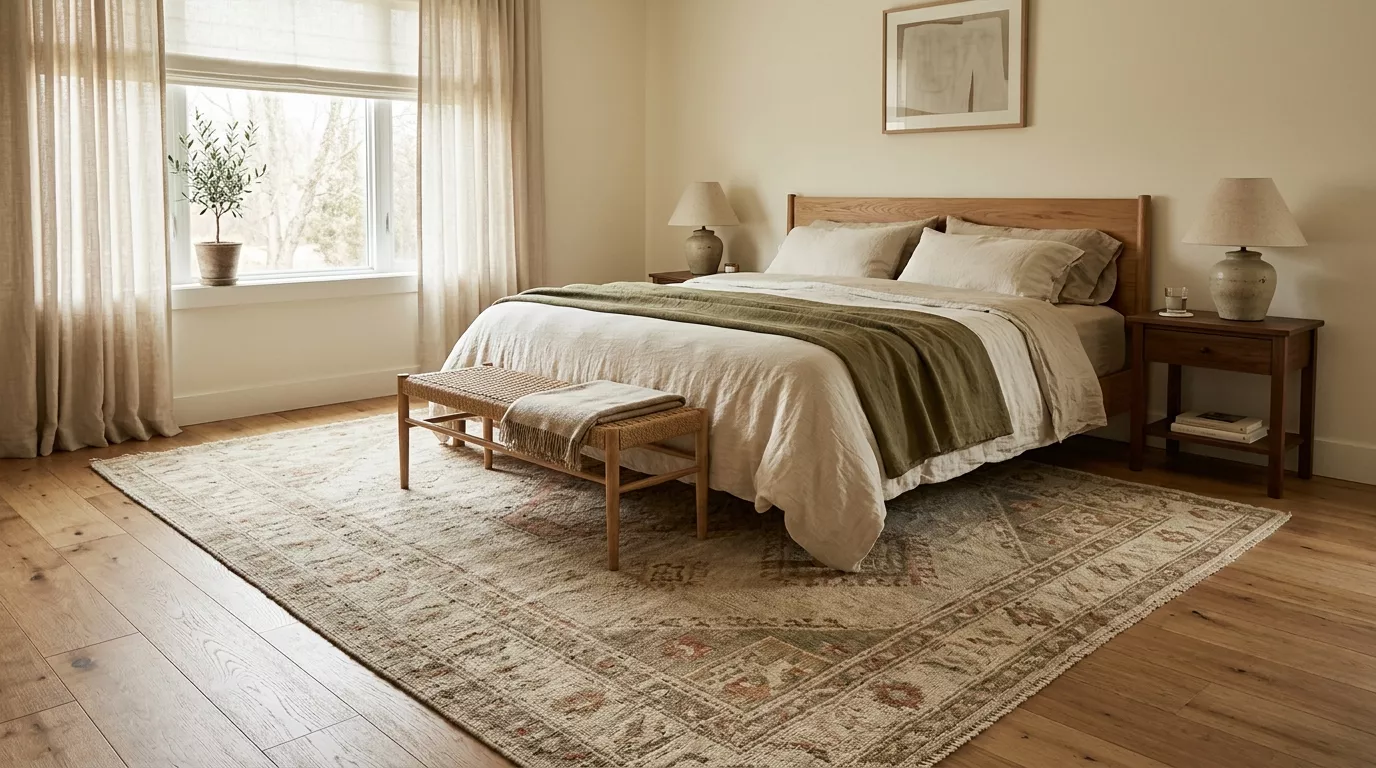
In small rooms, tiny rugs are one of the fastest ways to shrink the space. A larger rug makes the floor read as one continuous zone, which makes the room feel more open.
Simple rug guidelines for a bed
- Ideally: the rug extends at least 18 to 24 inches on the sides of the bed you step out on.
- If your rug is smaller, pull it forward so it sits under the front two-thirds of the bed rather than centered under the whole thing. This gives you more landing strip where it counts.
- If you have runners, use two matching runners on either side of the bed for a clean, hotel-like effect.
Mistake to avoid: a rug that is too small and floating in the middle of the room like an island. It visually fragments the floor.
Light colors, still cozy
Light and bright does not have to mean stark. The goal is gentle contrast and reflective surfaces so the room feels open, but still like you.
Walls: soft, light-reflective tones
- Warm off-whites, pale greige, blush-tinted neutrals, and muted sandy tones tend to make walls recede.
- If you love color, try it in lower contrast: dusty blue, softened sage, or clay-leaning blush.
Bedding: calm the biggest surface
Your bed is usually the largest visual object in the room. A high-contrast, busy comforter can dominate fast.
- Try a lighter duvet (even just a lighter cover) and bring pattern in with a throw or one accent pillow.
- Use one color family for bedding and curtains so the eye keeps moving instead of stopping.
Finish trick: repeat one tone
Pick one light tone and repeat it 3 times: for example, ivory bedding, an ivory lampshade, and an ivory ceramic dish on the dresser. This makes the room feel cohesive, and cohesion reads as spacious.
Lighting that opens corners
Small rooms feel tighter when light is concentrated in one harsh overhead source, leaving corners dim. When corners disappear visually, the room can feel like it is closing in.
A simple, no-renovation lighting plan
- Overhead: keep it, but use a warm bulb (around 2700 to 3000K). 2700K is cozier, 3000K feels a little cleaner. Pick what looks best in your space.
- Bedside: add a lamp if you have one, or “shop” your home and borrow a lamp from another room for a week-long trial.
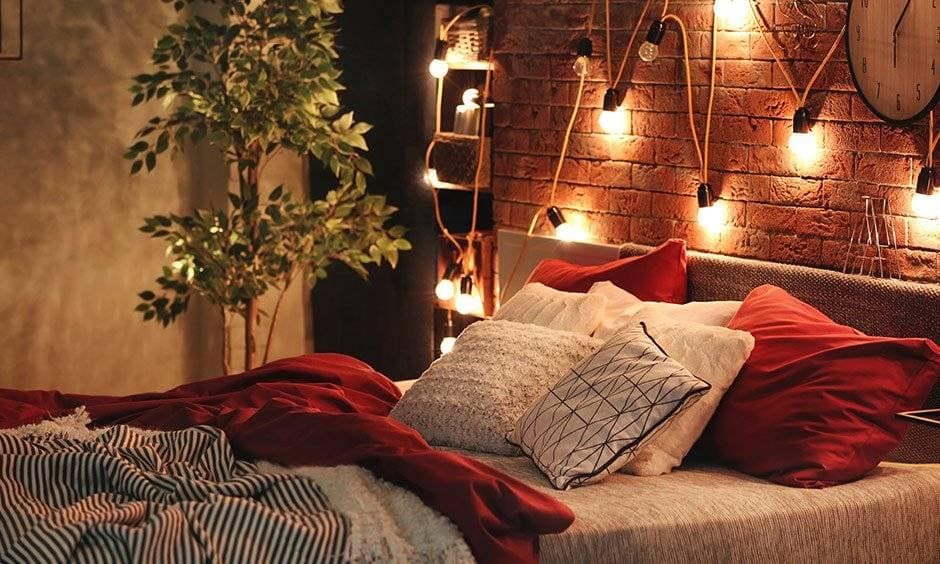
- Low glow: string lights inside a glass jar, a plug-in night light, or an LED strip behind a headboard can help the room feel deeper.
Mistake to avoid: cool, bright bulbs in a small bedroom. They flatten everything and can make the room feel more like a hallway than a sanctuary.
Small styling shifts
These are the finishing moves I use when a room still feels tight after the big changes.
Edit the nightstand
- Limit it to three items: lamp, book, and a small dish.
- Corral tiny items in a tray so they read as one shape, not twelve.
Use verticals on purpose
- A tall plant, a vertical framed print, or a hanging textile pulls the eye up.
- Keep it to one or two vertical statements, not a forest of tall objects.
Make everyday storage look calm
- Same-color baskets, matching boxes, or simply turning labels inward reduces visual noise.
- If your under-bed storage is visible, use a bed skirt or uniform bins so it reads tidy.
- Swap mismatched hangers for one type you already own (or at least group by color). It sounds small, but it makes closets look instantly calmer when the door is open.
- Use the back of the door for a hook or slim organizer to get a few items off surfaces.
Watch visual bulk
If your bed has a chunky footboard or an oversized headboard, let the rest of the room be quieter. Simpler bedding, fewer wall items, and a clearer nightstand can balance the scale without changing furniture.
Mistakes that shrink a room
- Too many small art pieces scattered around. Group them into a tighter cluster or go with one larger piece you already own.
- Short curtains or rods mounted right on the window frame.
- Tiny rugs that create a postage stamp effect.
- Furniture that is almost aligned with nothing, like a bed that is slightly off-center for no reason. In small rooms, near-misses feel louder.
- Open shelving full of mixed items at eye level. If you can’t edit, contain with boxes or baskets.
A simple weekend plan
Day 1: Layout and sightlines
- Clear the door swing and the main walkway.
- Shift the bed for the best access and calmest view from the doorway.
- Consolidate tall furniture to one zone.
Day 2: Height and light
- Raise the curtain rod and widen it if possible.
- Move a mirror to reflect a window or lamp.
- Layer lighting using what you already own.
Final 10 minutes: Style edits
- Edit the nightstand to three items.
- Tidy surfaces into trays or boxes.
- Smooth bedding and let the room exhale.
If you try just two changes, make it higher curtains and a mirror that catches daylight. They are small moves with a big payoff.
FAQ
Should I push my bed against the wall to make more space?
Sometimes, yes. But if you can leave even a few inches on both sides, the room often feels more balanced and intentionally styled. If one-side access is all you can do, prioritize a clear walkway on the side you use most.
Do light walls always make a room look bigger?
Light walls help because they reflect more light, but the bigger factor is contrast. A soft, low-contrast palette with good lighting usually feels more open than stark white with lots of dark, busy accessories.
Where should a mirror go in a small bedroom?
Best case: across from a window or angled toward it. Second best: behind a lamp or near the entry, anywhere it reflects light and openness rather than your clutter.
What is the most common rug mistake in a small bedroom?
Going too small. A larger rug, or repositioning your existing rug so it extends where you step, makes the room feel bigger immediately.