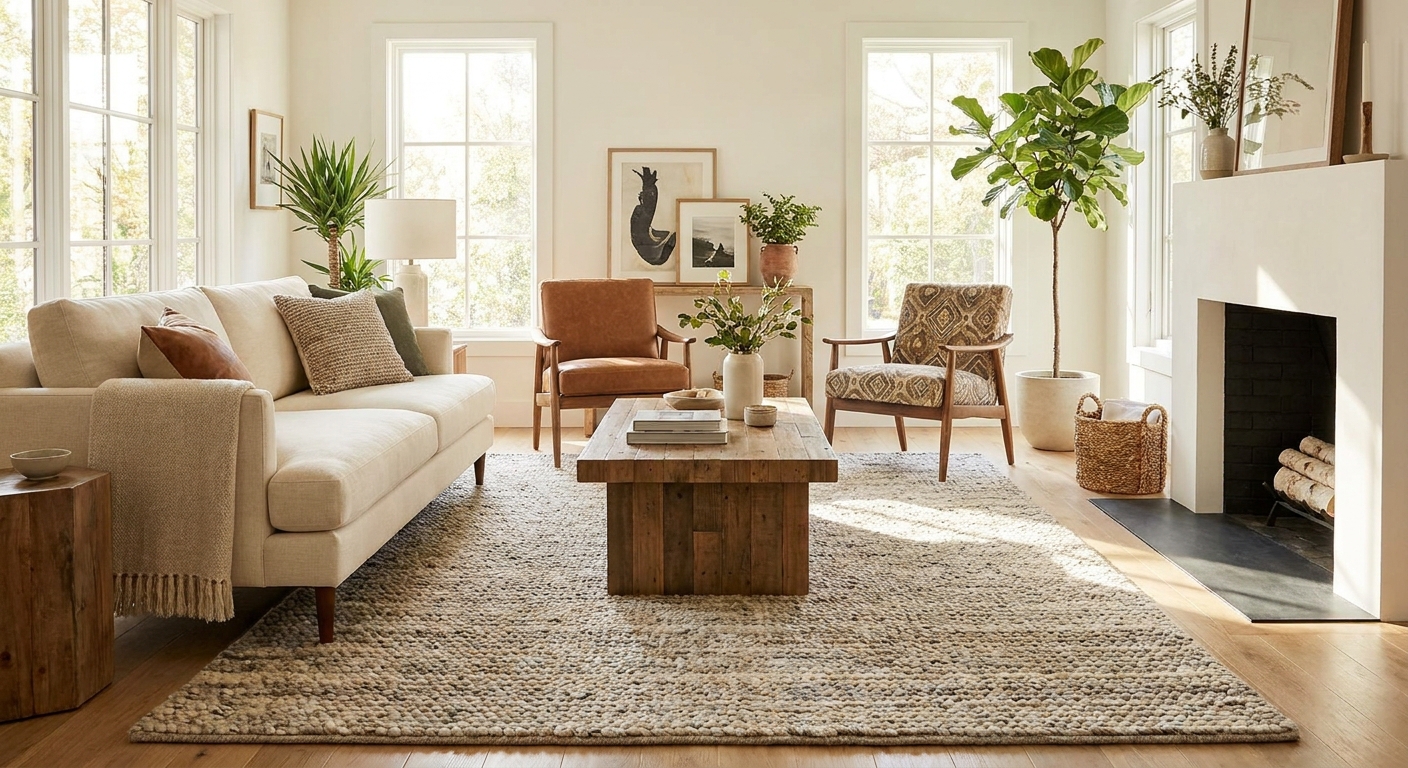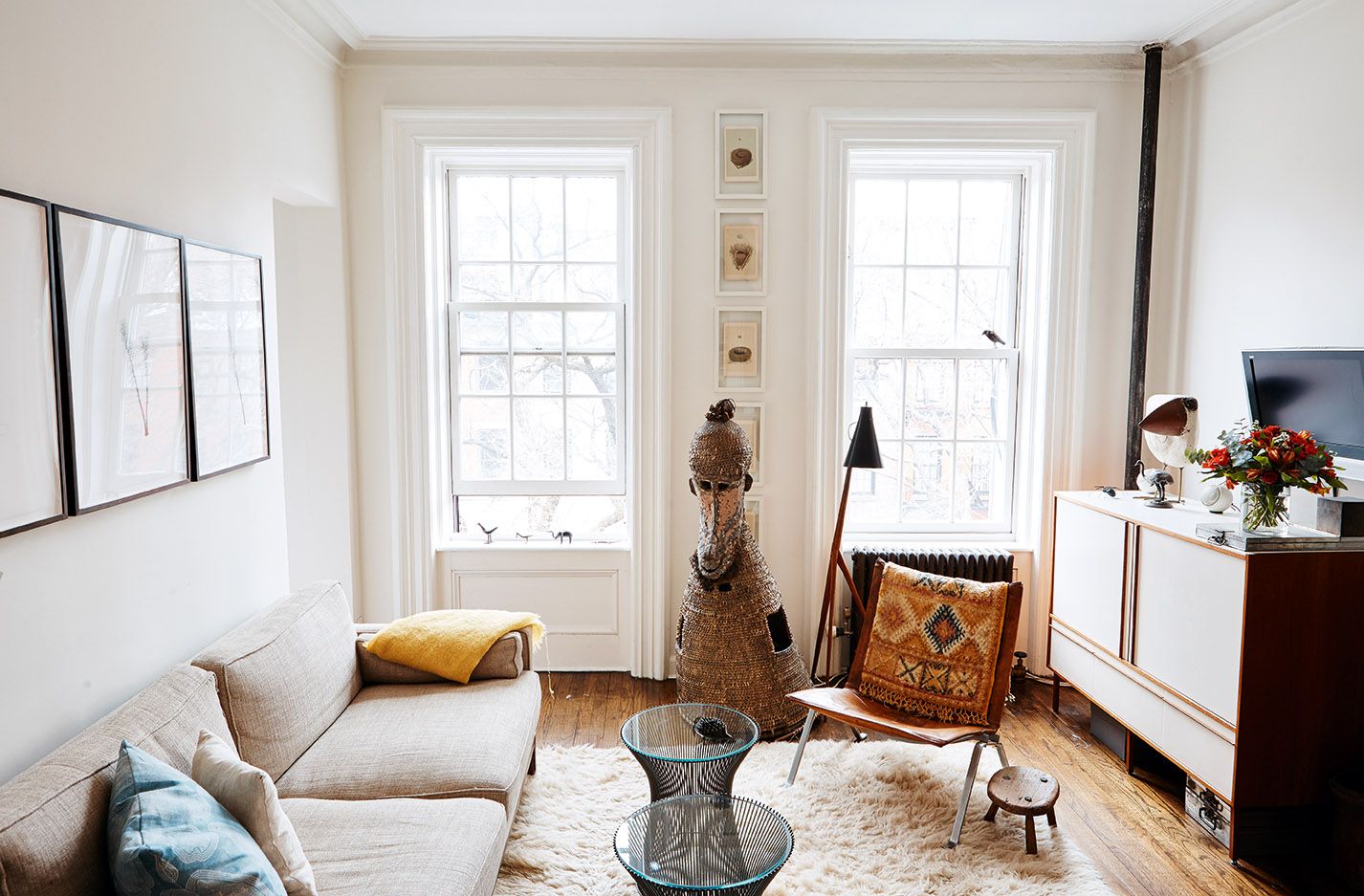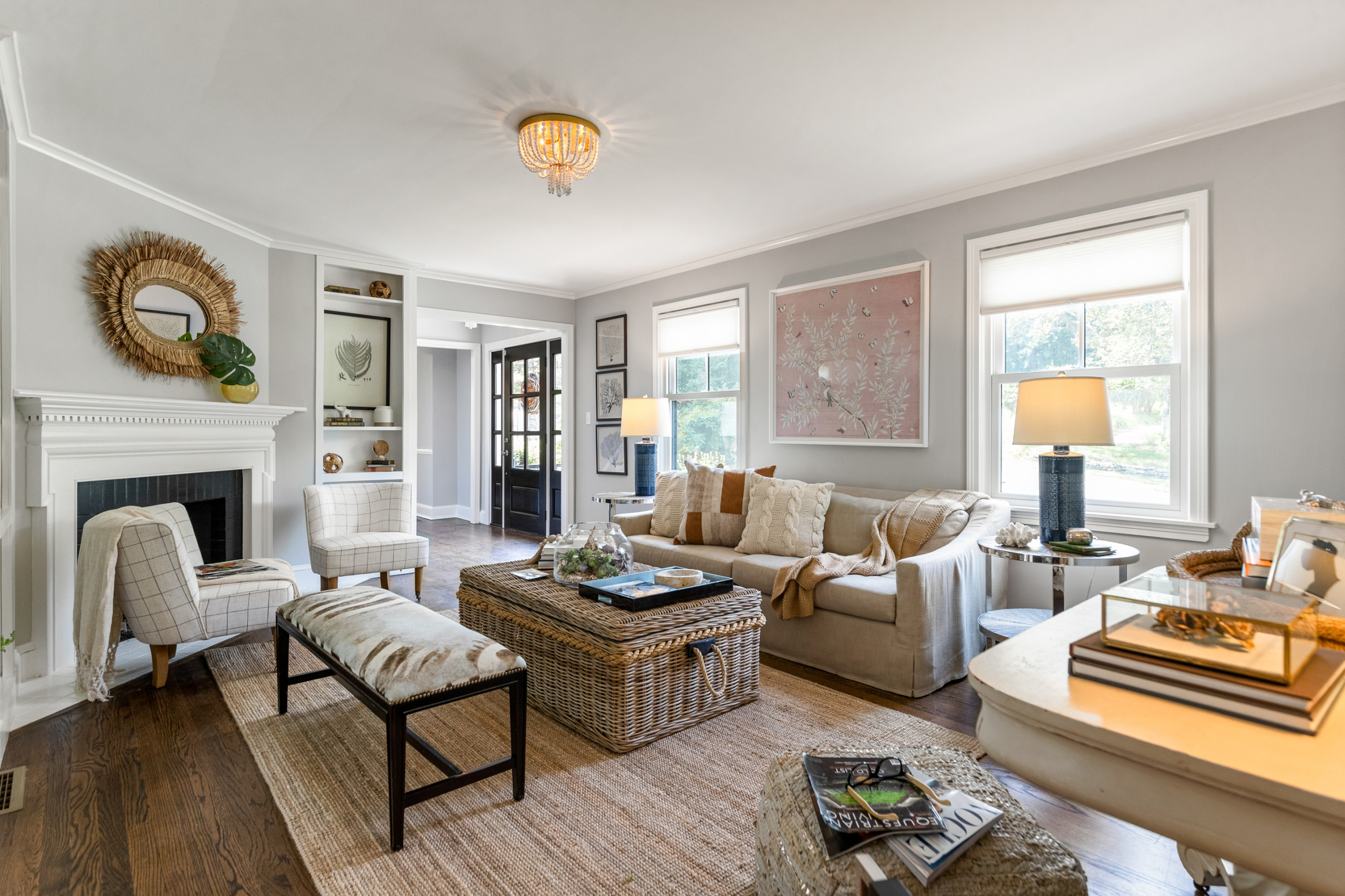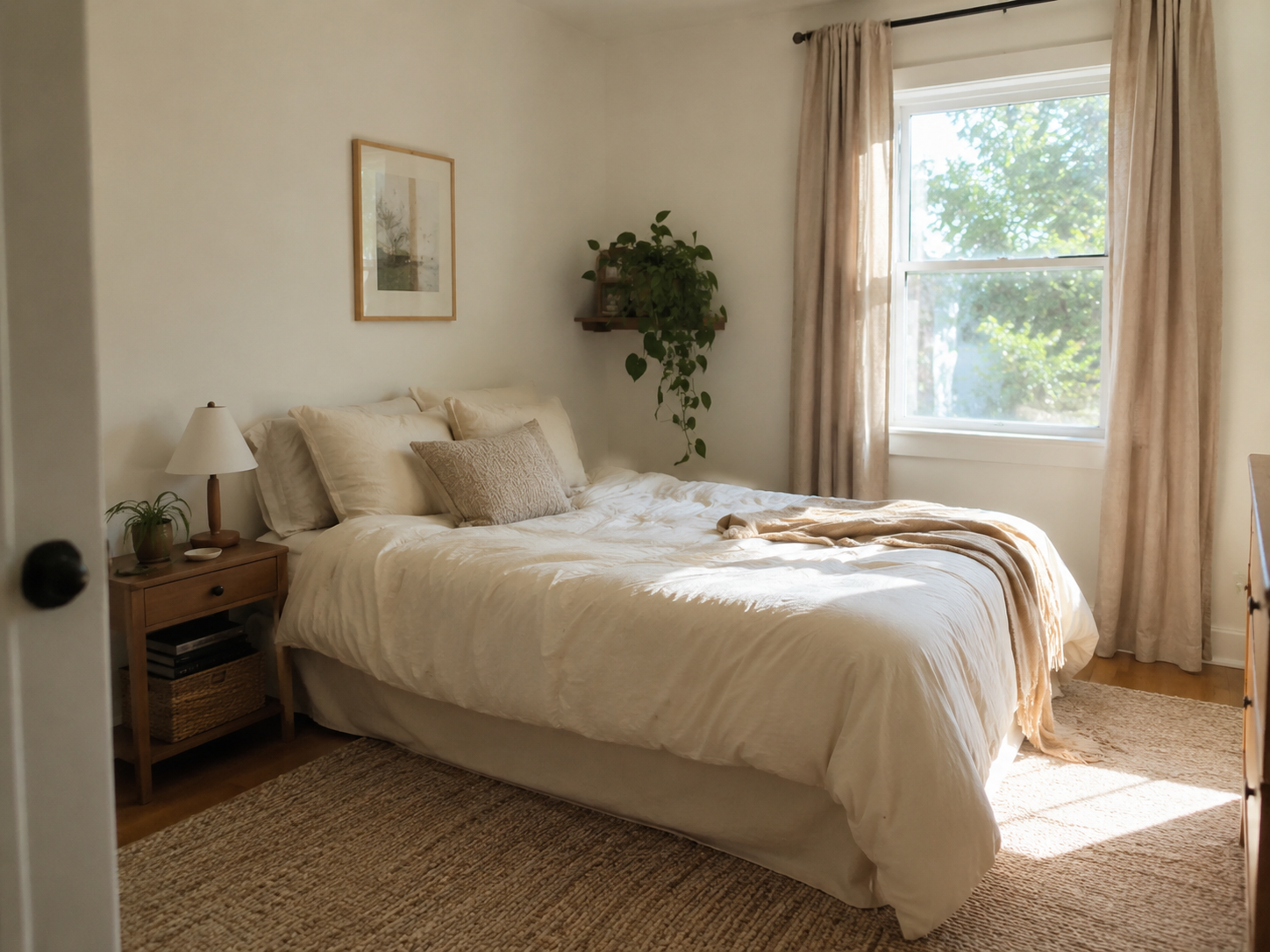
Visual tricks that open up a cramped bedroom: layout tweaks, mirror placement, curtain height, rug sizing, lighter colors, and layered lighting. Practical, b...
home decor / design / interior decoration
How to Choose Curtain Length for Every Room

Maya Thorne
Maya Thorne is an interior stylist and the creative voice behind Homoraa. With over a decade of experience blending vintage finds with modern aesthetics, she helps readers transform ordinary spaces into personalized sanctuaries. When she is not rearranging her living room, she can usually be found hunting for unique ceramics and textiles at local flea markets.
Created: September 28, 2026
Updated: September 28, 2026
Curtain length sounds like a small decision until you hang a set and realize they feel awkwardly short, puddle like a prom dress, or stop right where your radiator needs to breathe. The good news is that curtain length is one of the easiest “high impact, low drama” choices you can make once you know the standards and how they behave in real rooms.
This guide walks you through the common lengths, how to measure them, and how to choose the right look for each room, including tricky windows that never seem to follow the rules.
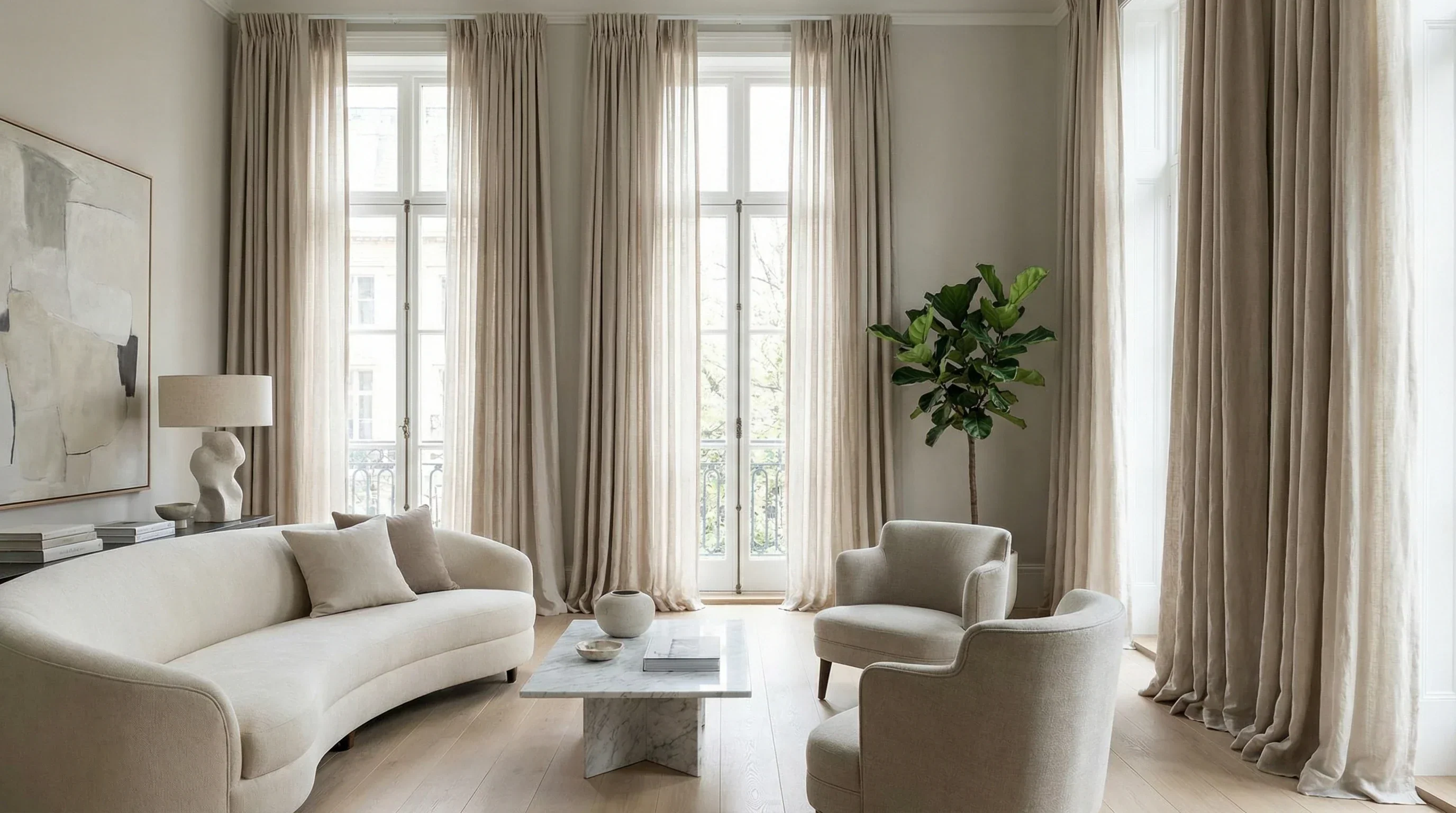
Standard curtain lengths (and what they look like)
Most ready-made curtain panels come in a few predictable lengths. Retailers vary, so think of this as the common lineup, not the only lineup. You may also see 72-inch and 90-inch panels, especially at big-box stores.
- 63 inches: Usually lands at or slightly below the window sill on a typical window. Best for kitchens, casual spaces, and anywhere you need fabric out of the way.
- 72 inches: A handy in-between length that often hits just below the sill or radiator cover on taller windows.
- 84 inches: Often works for standard 8-foot ceilings if you mount the rod just above the window trim. Can hit the floor in some homes, but frequently reads a touch short when hung high.
- 90 inches: Another common in-between that can bridge the gap when 84 is too short and 96 is too long.
- 96 inches: A popular choice for 8-foot ceilings when you want to hang the rod higher for a taller feel. Just remember: where 96 inches lands depends on where the panel is measured from (grommets, rings, back tabs) and how high your rod sits.
- 108 inches: Great for 9-foot ceilings or for creating a high, dramatic hang on 8-foot ceilings with extra clearance.
- 120 inches: For 10-foot ceilings, tall windows, or intentionally puddled looks.
Design reality check: Two houses with the same ceiling height can need different curtain lengths because window height, trim thickness, rod style, and how high you mount all change the final number.
Three classic finishing lengths
Once you choose a panel length, you are really choosing the “finish” at the bottom edge. These are the three most common looks.
1) Sill length
Where it lands: Ends at the window sill or just below it.
Best for: Kitchens, bathrooms (outside splash zones), breakfast nooks, kids’ spaces, or windows with furniture tight underneath.
Visual effect: Casual, practical, and slightly more traditional. It does not visually elongate the wall the way floor-length panels do.
2) Floor length (the “kiss”)
Where it lands: Just barely touches the floor or hovers about 1/4 inch above it.
Best for: Living rooms, bedrooms, dining rooms, offices. Basically anywhere you want the room to feel finished and intentional.
Visual effect: Clean, tailored, and timeless. This is the easiest to live with day-to-day because it does not drag.
3) Puddle length
Where it lands: Extra fabric spills onto the floor, typically 2 to 6 inches.
Best for: Low-traffic rooms, primary bedrooms, formal sitting rooms, or spaces where curtains are mostly decorative and rarely opened.
Visual effect: Soft, romantic, and luxe. It can also read messy quickly if your floors collect dust or you have pets who love fabric.
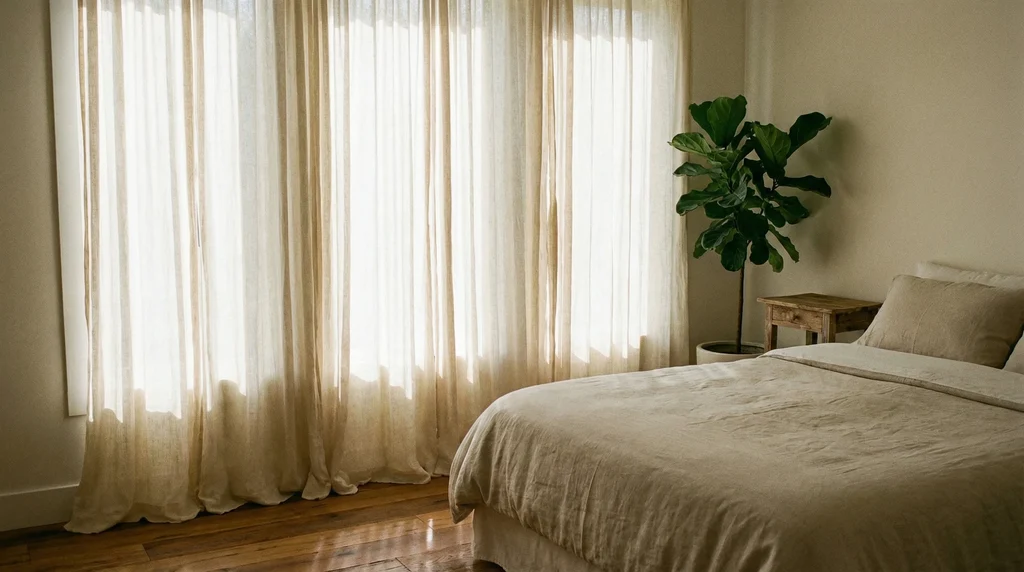
How to measure curtain length
Measuring is where most mistakes happen, especially if you shop first and measure second. Here is the method I use on styling jobs, scaled down for real life.
Step 1: Decide where the rod will go
- Standard placement: 4 to 6 inches above the window frame.
- Height-boost placement: 6 to 12 inches above the window frame, or mounted halfway between the top of the window and the ceiling.
- Ceiling-close look: Right below crown molding or near the ceiling for maximum height.
If you already have a rod and it is staying, measure from the actual hanging point (this changes with header style) down to where you want the curtains to end.
Step 2: Match measurement to header style
Panel “length” is not always measured from the same place visually. This is the cheat code: measure from where the fabric actually starts hanging.
- Rod pocket: The pocket creates a ruffle above the rod. Pocket depth varies a lot, so measure from the rod to your finish point, then plan to test-hang (or expect to hem) for a perfect kiss.
- Back tabs: Fabric usually starts near the top of the rod. Measure from the top of the rod to your finish point, and still consider a quick test-hang if you are aiming for exact floor contact.
- Grommet top: The top of the fabric typically sits about 1 to 2 inches below the top of the rod. Measure from the top of the rod to your desired finish, then subtract that 1 to 2 inches (or check the product photo and measure the header drop if it is listed).
- Rings with hooks (pinch pleat or drapery hooks): Rings can add about 1 to 3 inches depending on ring size and which hook position you use. Measure from the bottom of the ring (or the hook eye, if that is the true hang point) to your finish point.
- Clip rings: Measure from the bottom of the clip to your finish point. Then remember you will have about 1/2 to 1 inch of fabric above the clip that shows, which can slightly change where the top visually sits.
My real-life tip: If you want a true “kiss,” test-hang one panel before you commit. Even a half inch of difference in header style or floor slope shows.
Step 3: Measure to your finish point
- For floor length: Measure to 1/4 inch above the floor (or to just touch).
- For puddle: Measure to the floor, then add 2 to 6 inches.
- For sill: Measure to the sill, or 1 inch below it.
Step 4: Choose the closest panel length, then tailor if needed
If you are between sizes, I prefer going slightly longer and hemming. A curtain that is 1 inch too short usually looks like a mistake. A curtain that is 1 inch too long can often be steamed into a gentle break, or it can be hemmed for a crisp finish.
Easy hemming options: Sew a hem (best), use iron-on hem tape (great for DIY), or use temporary stitch tape while you live with the length for a week before making it permanent.
Hang high or hang low?
Curtain length and curtain placement work together. You can use hanging height to change the perceived size of your window and the height of your room.
Hanging panels higher (my go-to)
- Makes ceilings feel taller by drawing the eye up.
- Makes windows feel larger, especially if you also extend the rod wider than the window.
- Creates a more custom look, even with budget panels.
Quick width tip (the “stack-back”): Extend your rod 8 to 12 inches past the window frame on each side when you can. It lets panels stack on the wall, not on the glass, so you get more light and the window looks bigger.
Tip: If you hang high, you will often land in the 96-inch to 108-inch range for 8-foot ceilings, depending on your exact rod height and header style.
Hanging panels lower (when it makes sense)
- Works for very short walls where a high rod would crowd crown molding or ceiling beams.
- Can feel cozier in cottagey rooms or small nooks where you want a grounded, casual vibe.
- Helps avoid awkward gaps if your window is extremely close to the ceiling already.
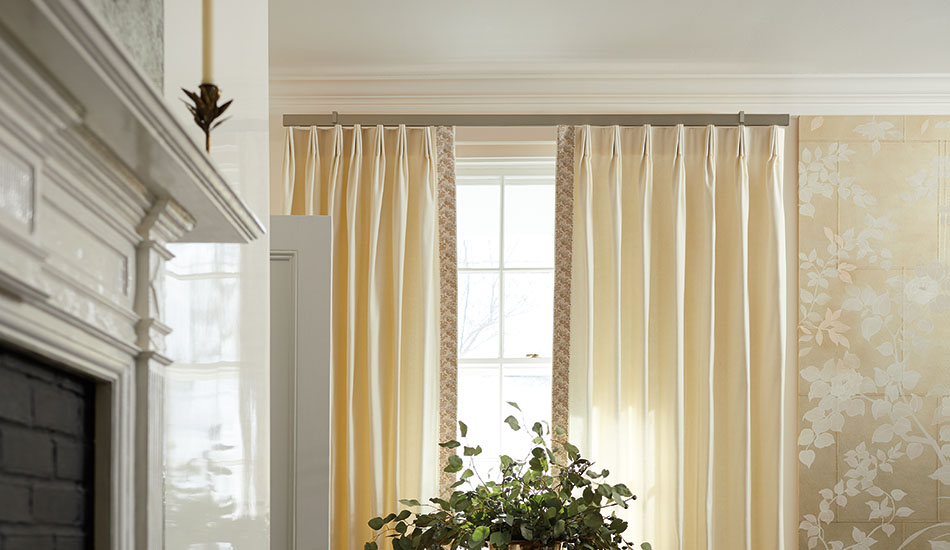
Room-by-room curtain length guide
Living room
Best default: Floor length with a slightly higher-than-trim rod placement.
- If you want a polished, airy look: Hang the rod 6 to 10 inches above the frame (or closer to the ceiling) and choose the panel length that matches your true hanging point measurement.
- If furniture sits under the window (sofa, console, radiator cover): Still doable with floor-length curtains, but mount the rod wider so panels can stack mostly on the wall, not on the glass.
- If you open and close curtains daily: Avoid heavy puddling. Go for the “kiss” to keep hems clean.
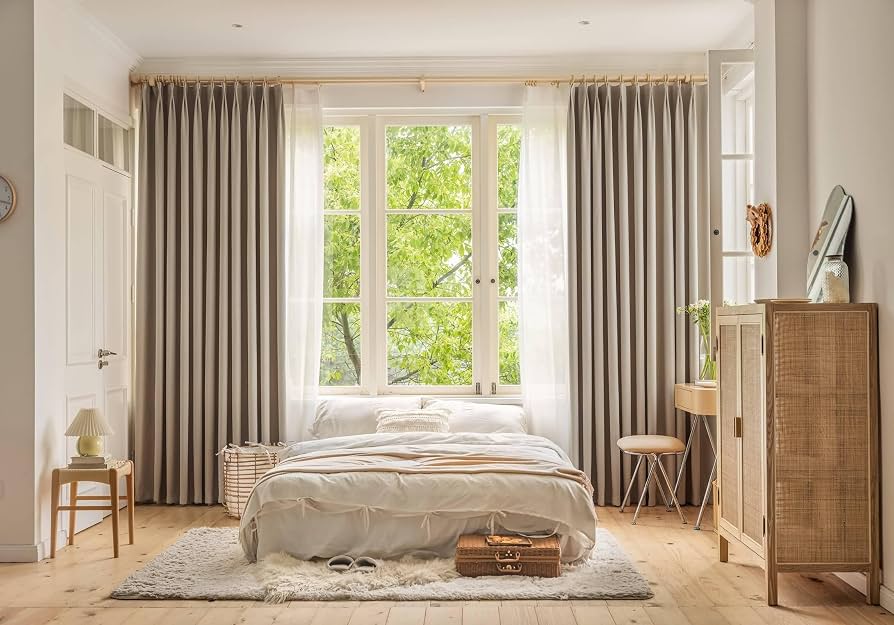
Bedroom
Best default: Floor length, often with blackout lining.
- For a calm, hotel feel: Hang high and wide, and let panels just touch the floor.
- For a romantic, soft look: Consider a small puddle (2 inches). Only if you are not constantly tugging them open.
- For kids’ rooms: Floor length is fine, but keep it easy to clean. I skip puddling here and choose washable fabric when possible.
Dining room
Best default: Floor length, hung high for drama.
Dining rooms love a little theatricality. Even simple cotton or linen panels look elevated when they run long and straight to the floor. If your dining table sits near the window, widen the rod so the fabric stacks away from where chairs need to slide.
Kitchen
Best default: Sill length or just-below-sill length.
- Why shorter works: Steam, splatter, and frequent cleaning. Floor-length kitchen curtains can get grimy fast.
- Good options: 63-inch or 72-inch panels, café curtains, or a Roman shade paired with side panels that stay mostly decorative.
Exception: If you have an eat-in kitchen with a big picture window and no sink nearby, floor-length curtains can be gorgeous. Just keep them easy to launder.
Bathroom
Best default: Sill length, unless the window is far from water and humidity is well managed.
In bathrooms, I prioritize privacy and moisture resistance. If you do use full-length panels, keep them away from tubs and showers and choose fabrics that can handle humidity without warping.
Home office
Best default: Floor length for a finished backdrop on video calls, sill length if you need practical clearance.
If your desk sits under the window, sill length is often the least annoying. If the window is to the side and visible on camera, floor-length curtains look more intentional and soften sound.
Awkward windows
Some windows are just weird. Here are the fixes I use most.
Short windows with lots of wall above
- Do: Hang the rod higher than the frame to balance the wall space.
- Use: Floor-length panels (often 96 inches) to create height.
- Avoid: Hanging right on the trim with 84-inch panels if it makes the window look squat.
Windows close to the ceiling
- Do: Mount just below the ceiling or crown molding and go floor length.
- Use: 96 to 108 inches, depending on your measurement.
- Tip: Consider ceiling-mount tracks for the cleanest line.
Radiators, baseboard heaters, and vents
- Safest approach: Keep fabric clear. Sill length is often the least risky, but clearances depend on heater type and local safety guidance. Follow manufacturer recommendations and fire safety best practices.
- Design workaround: Use a Roman shade for function, then add decorative side panels that hang to the floor but stay pulled back and clear of the heat source.
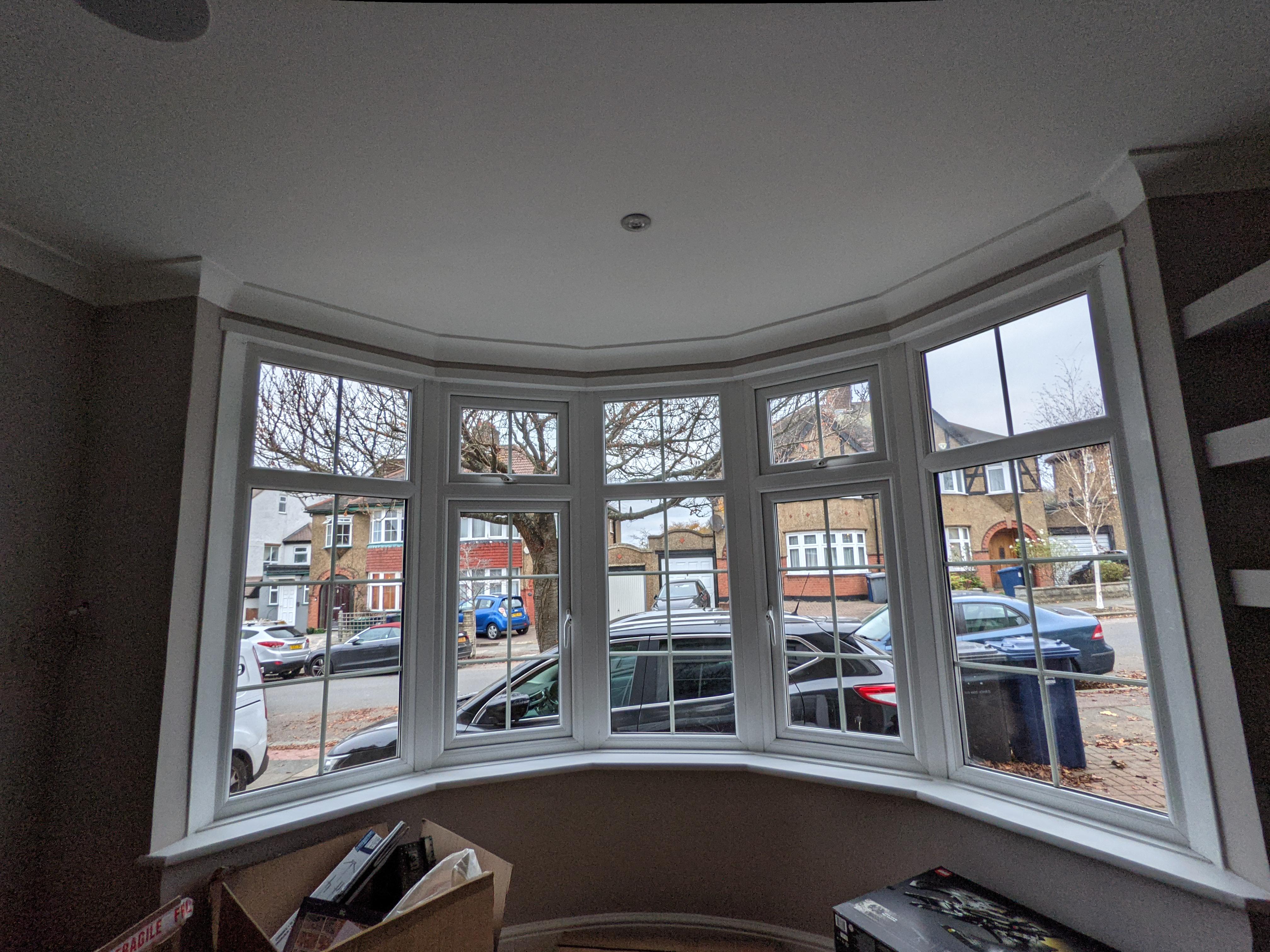
Bay windows
- Option A: Use multiple rods and floor-length panels on the outer edges, with shades inside each bay section.
- Option B: Use a ceiling track that curves with the bay for a soft, enveloping look.
Sliding doors and French doors
- Best default: Floor length, hung high and wide to make the opening feel grander.
- Practical tip: Choose panels that glide easily (rings or a track) if you open the door daily.
Common mistakes (and quick fixes)
- Mistake: Curtains that stop mid-wall.
Fix: Either commit to sill length or go full floor length. The in-between tends to look accidental. - Mistake: Hanging the rod too low.
Fix: Raise it 6 to 10 inches above the frame, or closer to the ceiling if proportions allow. - Mistake: Panels too narrow for the window.
Fix: For a full look, aim for total curtain width that is 2 to 2.5 times the window width (more for sheers). Also extend the rod 8 to 12 inches past the frame on each side so curtains can stack off the glass. - Mistake: Choosing length before choosing hardware.
Fix: Decide rod, rings, or clips first, then measure from the true hanging point. - Mistake: Not accounting for hems shrinking or lifting.
Fix: Pre-wash if you plan to wash later. Steam and let panels “drop” for a day before deciding if you need to hem. - Mistake: Puddling in high-traffic, high-dust homes.
Fix: Keep a tailored floor length and add softness with texture, like linen blends or a subtle weave.
Quick cheat sheet
- Want ceilings to look taller? Hang high, go floor length.
- Want an easy, tailored everyday look? “Kiss the floor” length.
- Want romantic drama? Add a 2 to 6 inch puddle in low-traffic rooms.
- Working around heat, sinks, or tight furniture? Sill length or a shade plus side panels.
- Unsure between two panel lengths? Buy longer and hem.
If you take one thing from this: measure from where the curtain will actually hang, then choose a finish you can live with. The most beautiful curtains are the ones that make your space feel calm, intentional, and easy to be in.