Three real-world studio layouts, three distinct styles, and a handful of small-space moves that make every inch work harder: zoning, dividers, and vertical s...
home decor / design / interior decoration
Cozy Minimalist Home Office Tour

Maya Thorne
Maya Thorne is an interior stylist and the creative voice behind Homoraa. With over a decade of experience blending vintage finds with modern aesthetics, she helps readers transform ordinary spaces into personalized sanctuaries. When she is not rearranging her living room, she can usually be found hunting for unique ceramics and textiles at local flea markets.
Created: September 11, 2026
Updated: September 11, 2026
Minimalism sometimes gets a bad rap for feeling cold. But a cozy minimalist home office can be one of the kindest things you can do for your brain. Less visual noise, fewer decisions, and a workspace that makes it easy to begin. Today I’m walking you through a real-world setup that balances clean lines with softness, plus the decision points I use when choosing an ergonomic desk, lighting, and clutter-free decor.
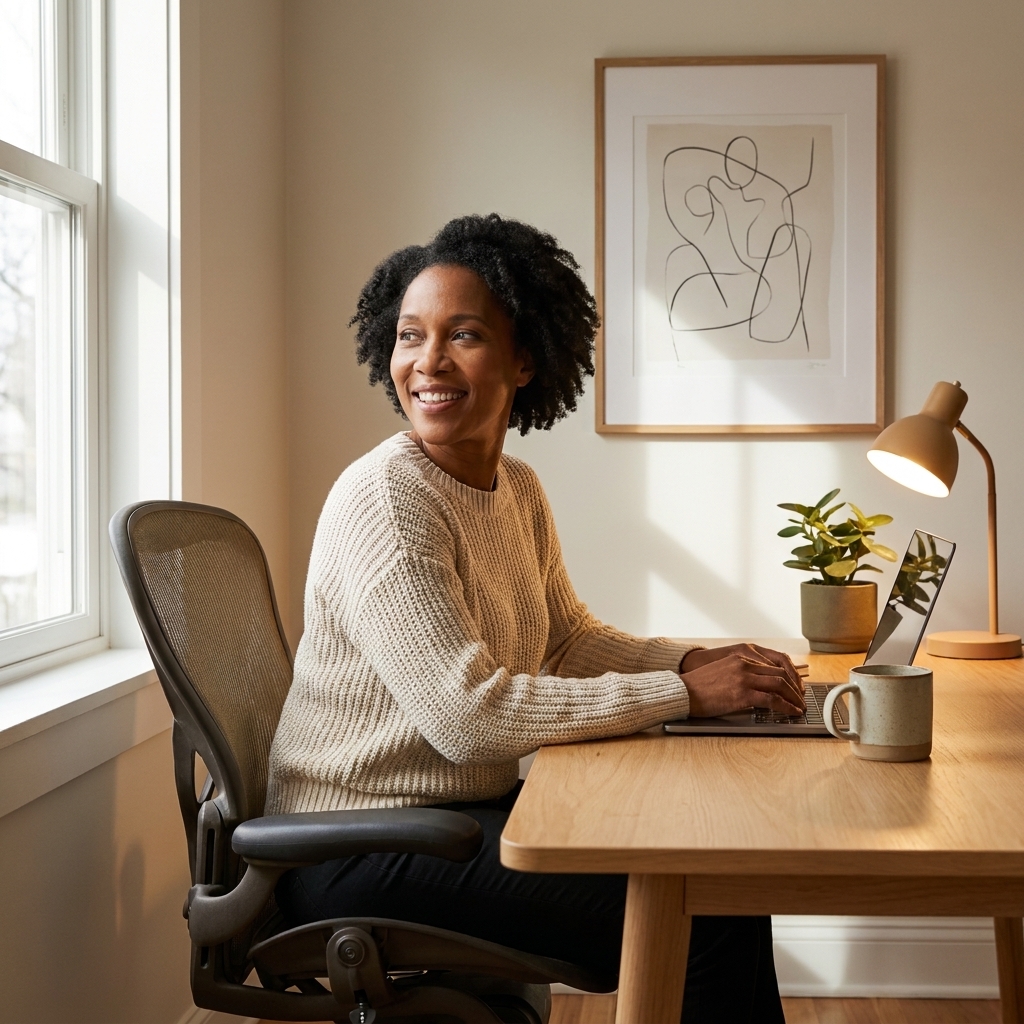
The vibe: productive, quiet, lived-in
The goal is not a showroom. It is a room that supports deep work and gentle decompression in the same square footage. In this office, the palette stays intentionally narrow: warm whites, pale oak, matte black accents, and one earthy color that repeats in small doses (think clay, olive, or inky blue). That repetition is what makes the space feel “together” even when your day is not.
- Why it works: fewer colors means fewer visual interruptions.
- How it stays cozy: texture does the talking, not clutter.
- How it stays practical: every surface has a job, and nothing competes with your monitor.
Room tour: one wall at a time
1) The desk wall (your command center)
The desk sits facing a wall rather than the room. This is a subtle productivity trick: fewer moving distractions in your peripheral vision. Above the desk is a single piece of art, sized to feel intentional, not like an afterthought. If you like a mood board, keep it inside a cabinet or use one framed pinboard in a neutral tone.
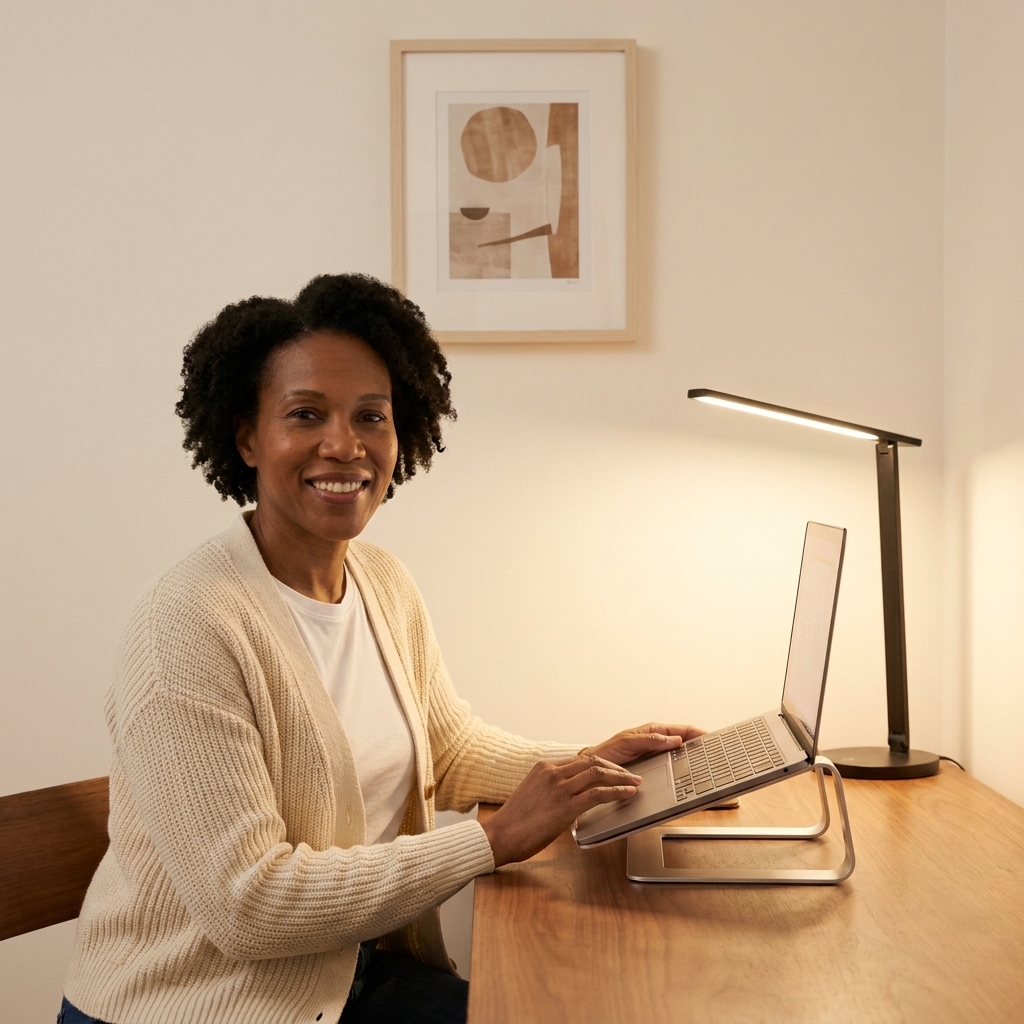
- On the desktop: monitor or laptop stand, keyboard and mouse, one notebook, one pen cup, and one small tray for daily essentials.
- Rule of thumb: if you do not touch it daily, it does not live on the desk.
2) The window corner (soft light, softer energy)
Natural light is one of the most underrated “decor items” in a home office. In this room, the window gets a simple linen curtain that filters glare without turning the space into a cave. A small plant sits nearby to break up hard edges and add a tiny hit of life. If you forget to water plants, a pothos often tolerates missed waterings better than many plants.

3) The storage zone (everything has a home)
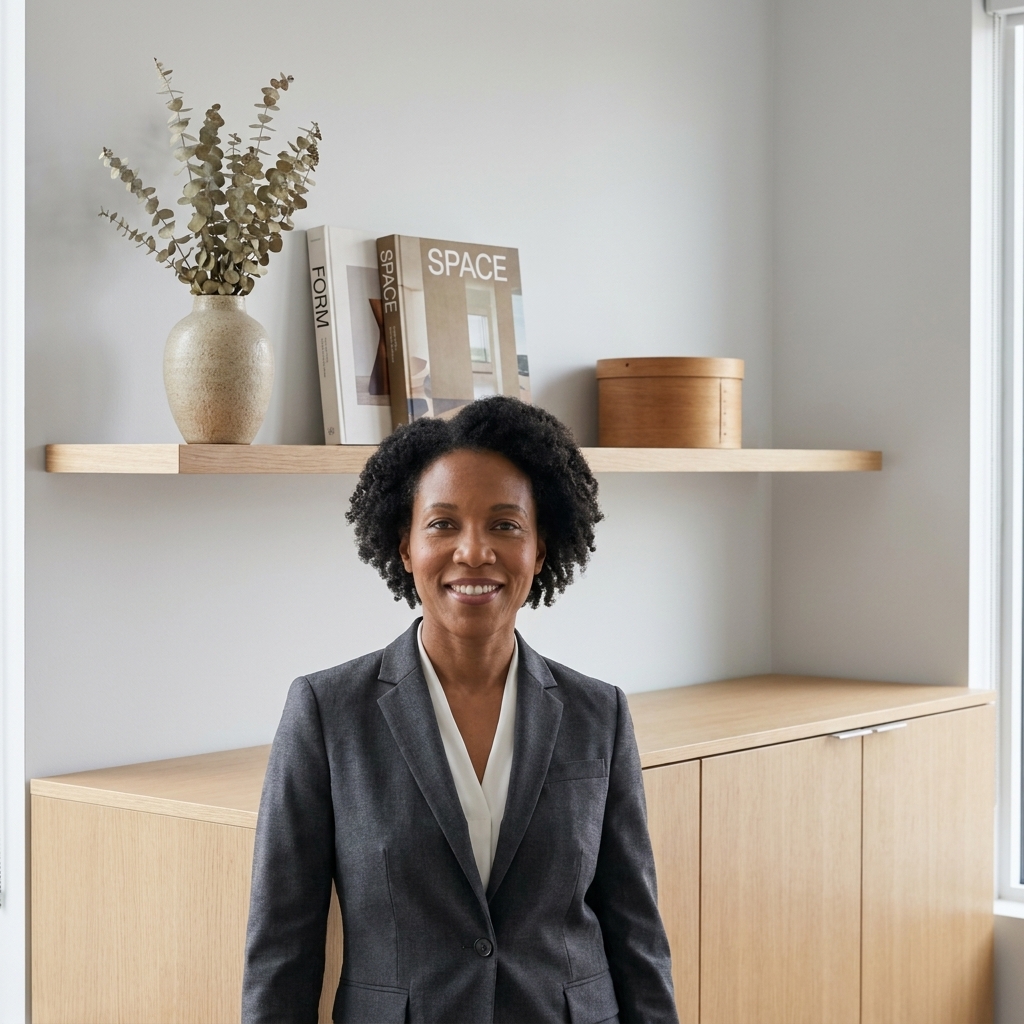
Minimalism is easier when you are not relying on willpower. This office uses closed storage for the messy stuff and one open shelf for the pretty stuff. The open shelf is intentionally sparse: a ceramic vessel, a stack of two books, and a textured box. That’s it. When open shelving is too full, your brain reads it like a to-do list.
Choosing an ergonomic desk
An ergonomic desk is not just about posture. It is about reducing tiny points of friction that drain focus. Here is how I choose a desk for real life, not perfect catalog life.
Desk size and layout
- Depth: 24 inches is a common minimum, while 27 to 30 inches tends to feel better if you use a monitor (especially on a stand) or like having a notebook open.
- Width: 48 inches often works for laptop-only; 55 to 60 inches is a comfortable range if you want a monitor plus writing space. (Monitor size, a monitor arm, and paperwork habits all change what “enough” feels like.)
- Leg room: avoid bulky center drawers if you sit for long stretches.
Height: the comfort checkpoints
A desk that is “standard height” is not automatically ergonomic for your body. When seated:
- Feet should rest flat (or on a footrest).
- Elbows should land around a 90-degree angle with shoulders relaxed.
- Wrists should feel neutral, not bent upward to reach the keyboard.
If you are between sizes, a slightly lower desk with an adjustable chair is usually easier to dial in than a desk that is too high.
Sit-stand desks: worth it?
If you have back stiffness, long meetings, or you simply think better when you move, a sit-stand desk can be a great upgrade. The key is alternating, not standing all day. If your budget is tight, consider a desktop riser first. It gives you the change of posture without committing to a full base.
Materials that feel calm (and wear well)
- Wood or wood veneer: warm and forgiving, especially in light oak or walnut.
- Matte laminate: easy-care and often budget-friendly, great if you drink coffee near your keyboard.
- Avoid high-gloss: it reflects light and fingerprints, which adds visual fuss.
Lighting for focus and softness
Lighting is where cozy minimalism really shines. You want enough brightness to stay alert, plus warmth so you do not feel like you are working in a clinic. I use a simple three-layer approach.
Layer 1: ambient (the room’s baseline)
This can be a ceiling fixture or a plug-in pendant. Choose a bulb around 2700K to 3000K for warmth. If you work late, put ambient lighting on a dimmer or use smart bulbs so your evenings can soften without changing fixtures.
Layer 2: task (the workhorse)
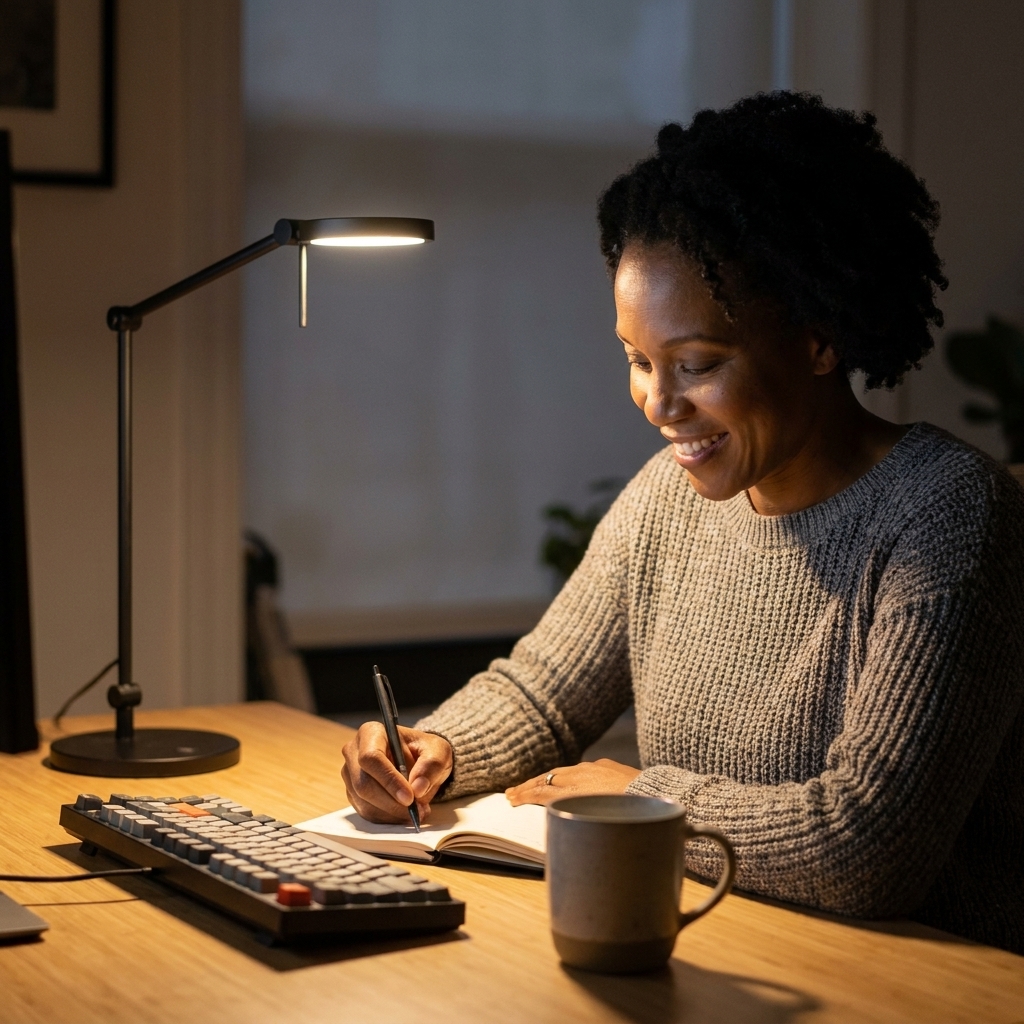
A good desk lamp reduces eye strain and keeps your screen from being the only bright object in the room. Look for an adjustable arm and a shade that directs light downward.
- Placement: if you are right-handed, put the lamp on the left (and vice versa) to reduce shadows on your writing hand.
- Brightness: as a starting point, a task lamp in the 400 to 800 lumen range often works well, but distance, shade design, and your ambient lighting matter. Aim for comfortable page illumination without glare.
Layer 3: glow (the cozy factor)
This is the lamp you turn on when you want your nervous system to unclench. A small table lamp on a cabinet, a paper lantern floor lamp, or a warm wall sconce creates depth and reduces the harsh contrast between screen and darkness.
- Cozy shortcut: one warm lamp at eye level or below makes a room feel calmer.
Monitor and chair basics
These two details do more for day-to-day comfort than almost anything else. Once they are right, the rest of the room feels easier to keep simple.
Monitor placement (quick, real-world rules)
- Height: keep the top of the screen around eye level.
- Distance: start at about an arm’s length away, then adjust so you are not leaning forward to read.
- Glare: position the screen so it is not facing a window directly, and try to keep bright light sources out of the screen’s reflection.
Chair checkpoints (what I look for)
- Seat height: adjust so feet are flat and thighs are roughly parallel to the floor.
- Lumbar support: you want gentle support at the lower back so you are not bracing all day.
- Armrests: helpful if they let your shoulders stay relaxed (armrests that force your shoulders up are not your friends).
- Seat depth: you should be able to sit back with a little space behind the knees, not the chair edge pressing into the legs.
Clutter-free decor that feels personal
The secret to minimalist decor that does not feel sterile is choosing a few items with real texture and meaning, then giving them breathing room. Think of this as slow decorating: letting the room gather character over time.
My minimalist styling formula: 1, 2, 3
- 1 piece of art that sets the tone (photography, a vintage print, or a simple abstract).
- 2 tactile elements like a woven basket, linen curtain, wool rug, ceramic lamp base, or a wooden tray.
- 3 living touches spread out, not clustered: a plant, a candle, and a small bowl for everyday objects.
High impact, low clutter decor ideas
- A rug with a quiet pattern: it anchors the desk without shouting. Flatweaves are great for rolling chairs.
- A cork or felt board inside a frame: keeps reminders contained and visually tidy.
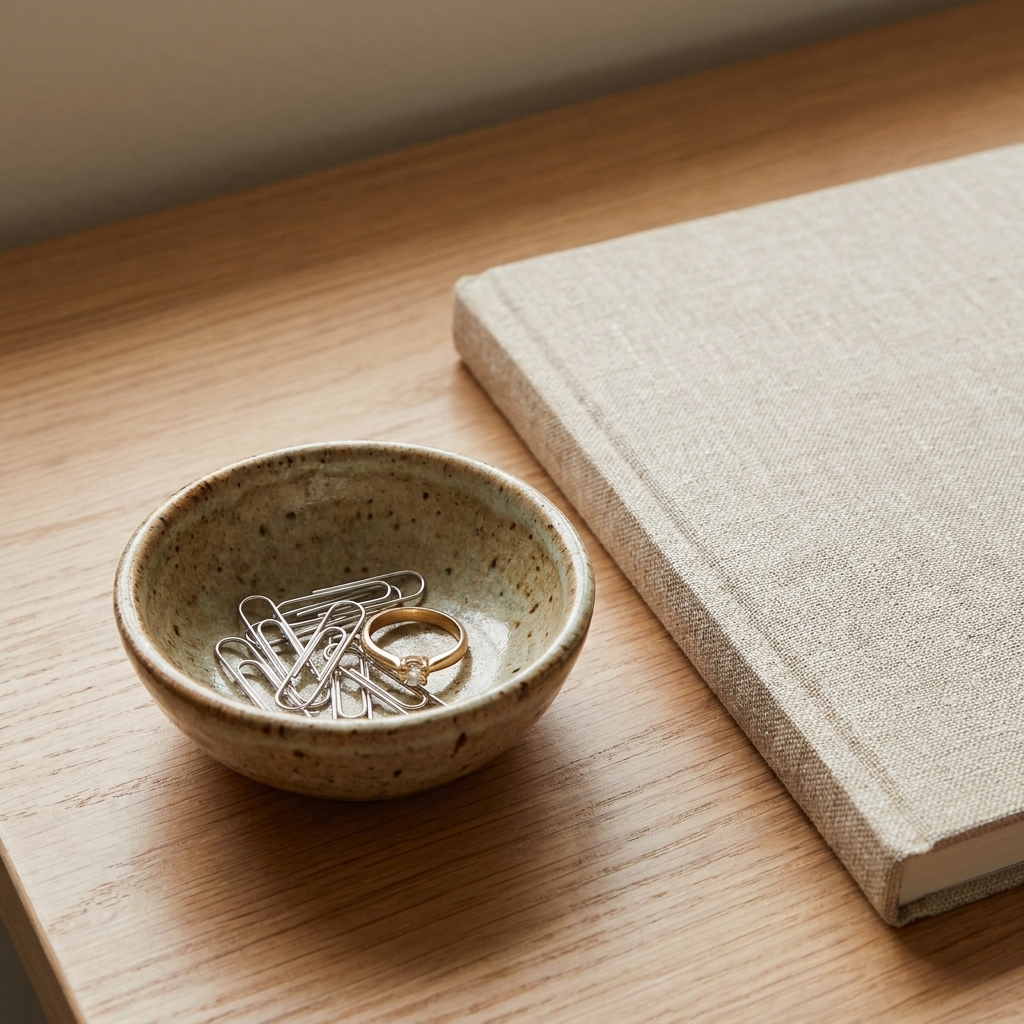
- Ceramic catchall: flea market bowls are perfect for paper clips, rings, or spare keys.
- One beautiful storage box: the elegant hiding place for chargers, receipts, and sticky notes.
What I do not keep in a cozy minimalist office
- Stacks of loose paper (scan it, file it, or recycle it).
- Too many open containers (they become visual clutter quickly).
- Overly bright decor colors near the screen (save them for art or textiles elsewhere).
Cable control and hidden tech
Nothing breaks the calm faster than a tangle of cords. You do not need a full renovation to fix it, just a few small tools.
- Under-desk cable tray: hides power strips and adapters in one sweep.
- Velcro ties: bundle by function (monitor, laptop, lamp).
- Cable clips: keep charging cords exactly where your hand expects them.
- One charging station: a tray or box that makes “putting things away” a 5-second habit.
If your router or modem lives in the office, keep it in the open when you can. If you must tuck it away, use a ventilated cabinet and keep vents clear. Fully enclosed bins can trap heat and may reduce Wi-Fi signal, so check temperatures and performance after you change the setup.
Small-space optimization
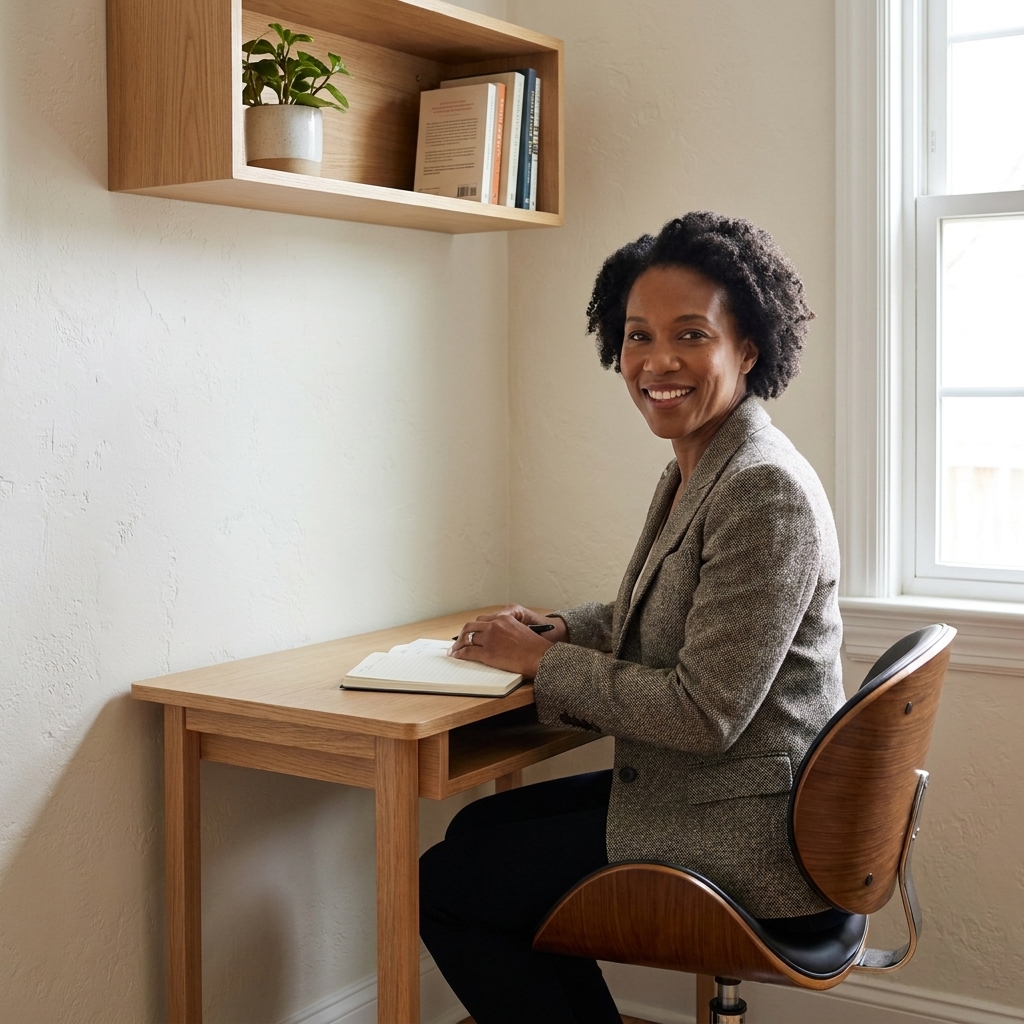
If your office is a corner of a bedroom or dining room, cozy minimalism is your best friend. It creates a visual boundary without building a wall.
- Use a shallow desk: 18 to 20 inches deep can work for laptop-only setups.
- Go vertical: one slim wall shelf above the desk replaces a wide bookcase.
- Choose a chair that tucks fully in: it makes the room feel bigger.
- Try a plug-in sconce: frees up desk space and adds a gentle glow.
Sound: keep it quiet
If “quiet” is part of the vibe, you do not need a recording studio. You just need a few soft surfaces that stop the room from feeling echo-y.
- Rug + curtains: they absorb more sound than bare floors and blinds.
- Pinboard or fabric panel: a felt board pulls double duty as acoustics and a contained reminder zone.
- Draft stopper: a simple door draft stopper can cut hallway noise more than you would expect.
- White noise: a small machine or app can smooth out the sharp edges of a busy house.
A simple weekly reset
Minimalism is not a one-time purge. It is a maintenance rhythm. Here is the reset I do every Friday so Monday feels lighter.
- Clear the desktop completely.
- Wipe the desk, keyboard, and lamp base.
- Empty the catchall bowl back into its proper homes.
- File or recycle paper.
- Refill water, fluff the chair cushion, and set out one fresh notebook page.
It takes 10 minutes, and it makes your workspace feel like it is working for you again.
Quick shopping checklist
- Desk: common guideline range of 24 to 30 inch depth, enough width for your workflow, comfortable leg room.
- Chair: adjustable height, lumbar support, armrests that do not lift shoulders, seat depth that fits your legs.
- Lighting: warm ambient + adjustable task lamp + one cozy glow lamp.
- Storage: one closed cabinet or set of drawers, one beautiful box, one tray.
- Decor: one art piece, two textures, three small living touches.
- Cables: tray, ties, clips, and one charging home.
FAQ
How do I make a minimalist office feel cozy?
Start with warm lighting (2700K to 3000K), then add texture: linen curtains, a wool or flatweave rug, and one ceramic or wood accessory. Keep the color palette tight and let materials create depth.
What is the best desk setup for productivity?
Keep the desktop to daily-use items only, place the screen so the top is near eye level, and add a task lamp to reduce eye strain. Face a wall or a quiet view if distractions are an issue.
Do I need a sit-stand desk for ergonomics?
Not necessarily. A well-sized desk with a properly adjusted chair and monitor height can be excellent. If you crave movement or have stiffness, a sit-stand option or a desktop riser can be helpful.
How do I hide clutter in a small office?
Prioritize closed storage, even if it is just one cabinet. Use a single lidded box for loose items and limit open shelving to a few intentional pieces so it reads as decor, not storage overflow.