Visual tricks that open up a cramped bedroom: layout tweaks, mirror placement, curtain height, rug sizing, lighter colors, and layered lighting. Practical, b...
home decor / design / interior decoration
How to Choose the Right Rug Size for Every Room

Maya Thorne
Maya Thorne is an interior stylist and the creative voice behind Homoraa. With over a decade of experience blending vintage finds with modern aesthetics, she helps readers transform ordinary spaces into personalized sanctuaries. When she is not rearranging her living room, she can usually be found hunting for unique ceramics and textiles at local flea markets.
Created: September 27, 2026
Updated: September 27, 2026
A rug can make a room feel finished in five minutes, or it can make a beautiful space feel oddly shrunken and off balance. If you have ever brought home a rug that looked generous in the store but turned into a “postage stamp” under your coffee table, you are not alone.
This guide will help you measure once, buy well, and place your rug so it looks intentional, not improvised. We will go room by room, with simple sizing rules and styling tips you can actually use.
The two measurements that matter
1) Your seating or furniture footprint
The rug should relate to the group, not a single piece. In most rooms, you are trying to visually “hold” the main furniture arrangement together so it reads as one zone.
2) Your clearance
Leave a comfortable border of floor around the rug so the room can breathe. In many spaces, a good starting point is 8 to 18 inches of bare floor between the rug edge and the wall or built-ins. Small rooms tend to look best with a slightly smaller border, large rooms can handle a wider one.
Quick measuring routine
Measure the zone you want the rug to anchor. Start with the width of your seating group (sofa plus the chairs, and side tables if you want them on the rug), then measure the depth from the sofa front legs to where you want the rug to end (often just past the coffee table, or to the front legs of chairs).
Mark the rug outline on the floor with painter’s tape using a likely rug size (like 8x10 or 9x12).
Walk it. Open drawers, move dining chairs, and step through the room like you normally do.
Adjust the tape until it feels easy. Then shop that size.
If you are between sizes, choose the larger one whenever the room can handle it. A slightly-too-big rug looks luxe, as long as it does not block doors or crowd the main walkways.
Living room rug sizes
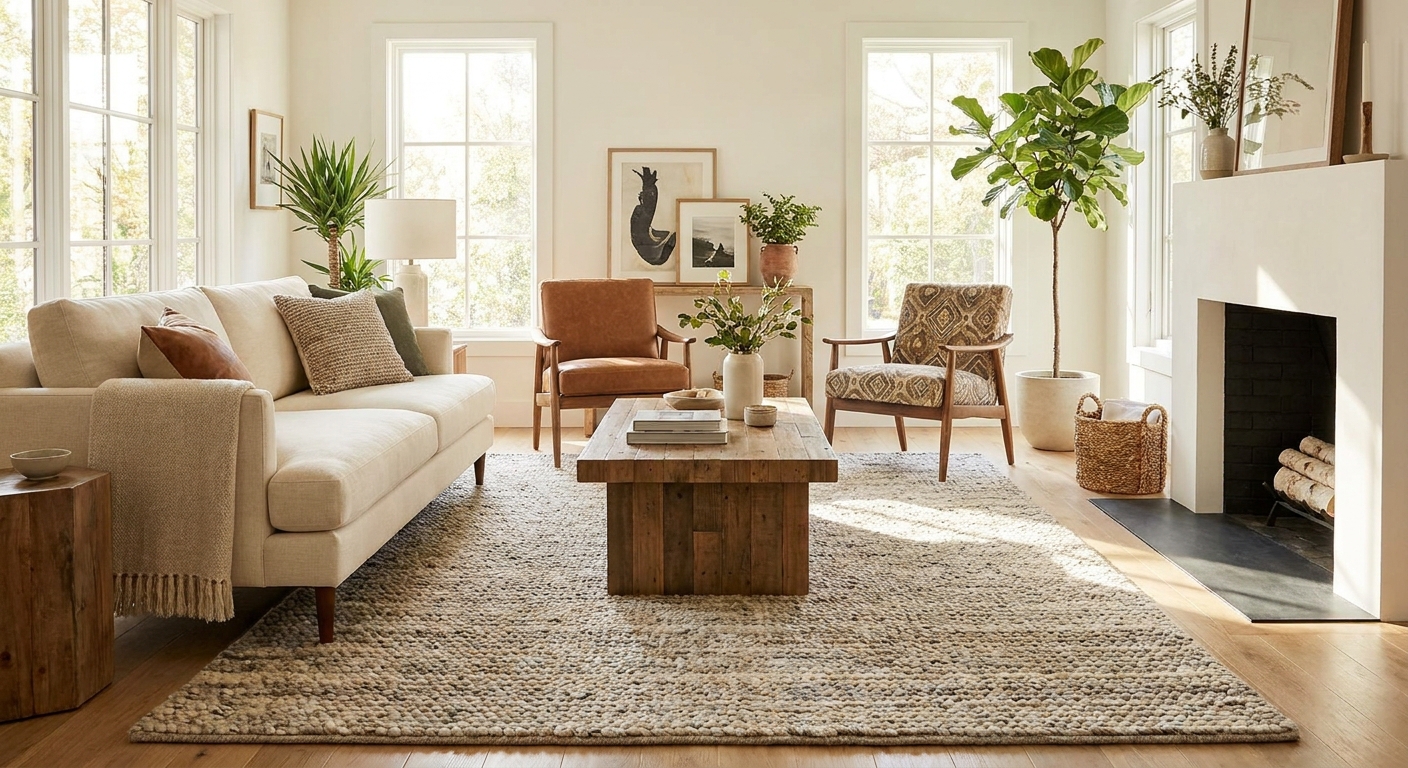
The living room is where rug sizing makes the biggest visual difference. Your goal is to anchor seating so it feels connected, not floating.
Best layout options
All legs on: Every seating piece sits fully on the rug. This is the most polished option and works best in larger rooms. Common sizes: 9x12, 10x14, or larger.
Front legs on (my most-used sweet spot): The front legs of the sofa and chairs sit on the rug, back legs can be off. It visually stitches the seating together without needing a huge rug. Common sizes: 8x10, 9x12.
Coffee table only: Rug only under the coffee table. I only recommend this in very tiny rooms or when you are layering (a larger natural fiber base with a smaller vintage rug on top). Common sizes: 5x8 or 6x9 depending on the furniture scale.
Simple sizing rules
Rule of thumb: match the sofa width. A strong starting point is a rug that is at least as wide as your sofa, and ideally extends 6 to 12 inches beyond each side. In tight rooms or tricky sectionals, you can go narrower on purpose, just know it reads more casual.
Reach the front legs. Make sure the rug reaches under the front legs of the sofa and chairs. If the rug stops short of the seating, the room often feels chopped up.
Center on the seating group. Center the rug on the seating group, not the room. In open-concept spaces, the rug defines the living zone even if it is not centered to the entire floor plan.
Bedroom rug sizes
Bedrooms are all about the first and last step of the day. A correctly sized rug makes the room feel calmer and more put together, especially when your bedding is simple.
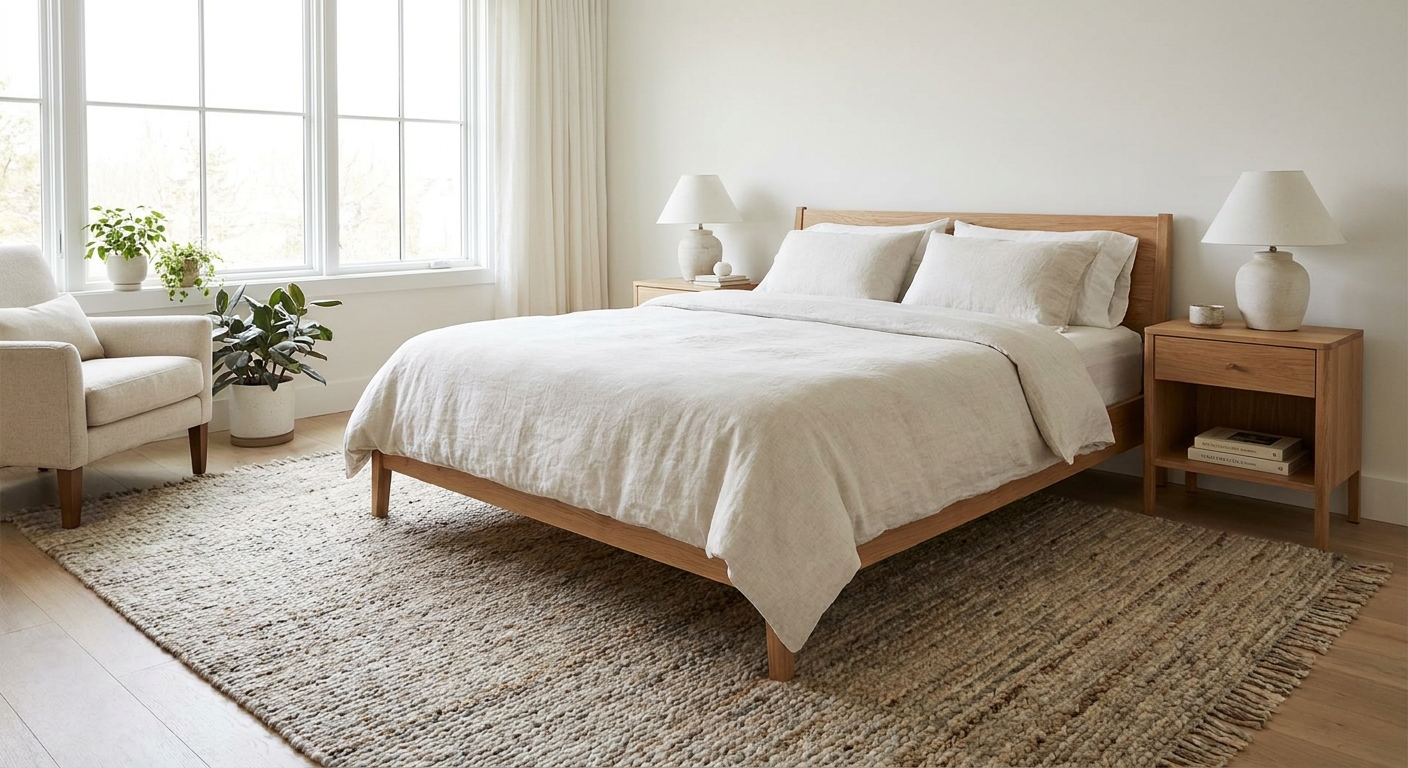
Rug under the bed
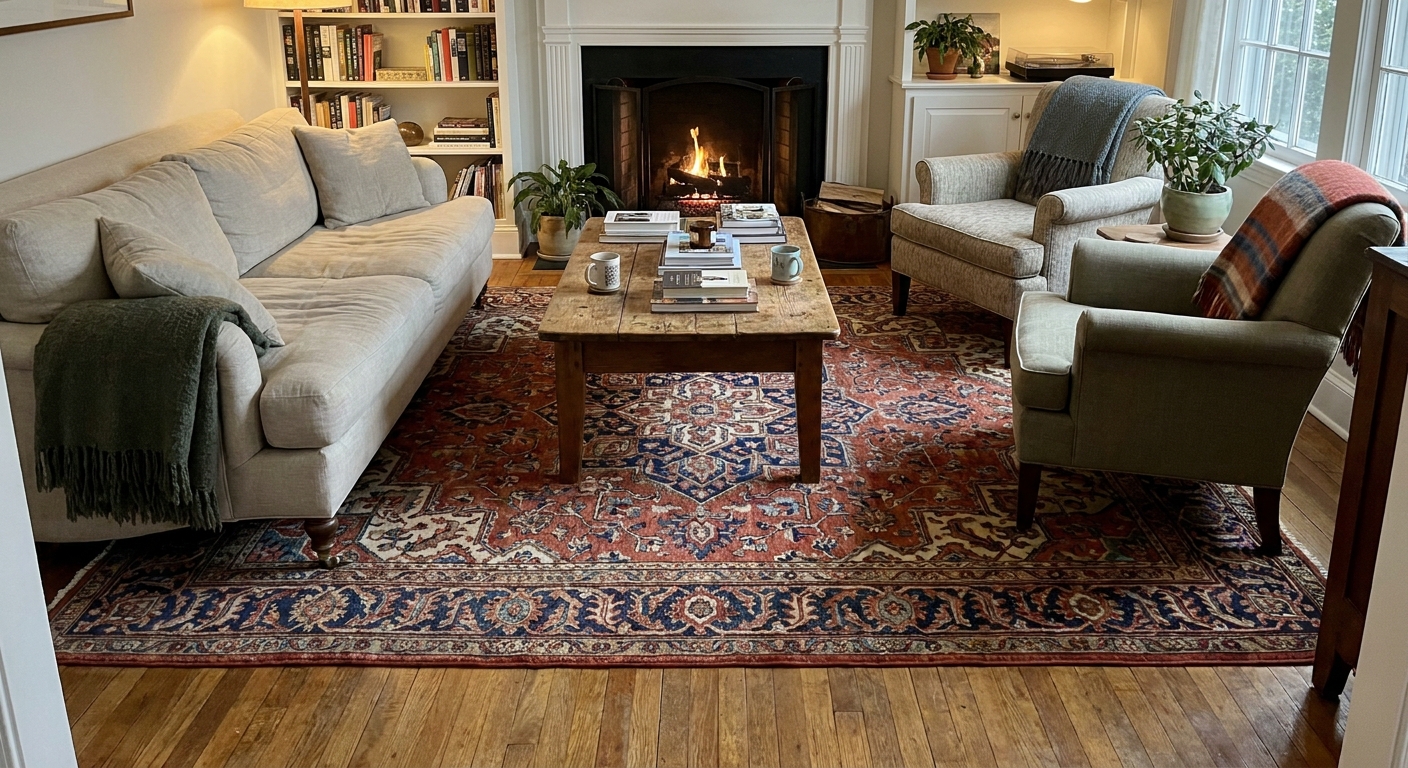
Pull the rug under the bed so it extends beyond the sides and foot. Visually, it frames the bed and gives you a soft landing.
Queen bed: Typically 8x10 is the go-to. If you want your nightstands fully on the rug, or your room is spacious, sizing up to 9x12 can feel more balanced.
King bed: Typically 9x12. If you want more rug showing or you want nightstands on the rug, 10x14 can be stunning if you have the floor space.
Full bed: Often 6x9 or 8x10 depending on room size and how much rug you want showing.
Placement tip: A reliable starting point is to place the rug so it begins a little in front of your nightstands and runs past the foot of the bed. You want the rug to read as part of the bed “zone,” not like a mat at the end.
Alternatives for small rooms
Two runners: Place one runner on each side of the bed. This works beautifully in narrow rooms where a large rug would feel cramped.
Runner at the foot: Nice if you want softness when you dress, but it will not help those first steps out of bed.
Dining room rug sizes
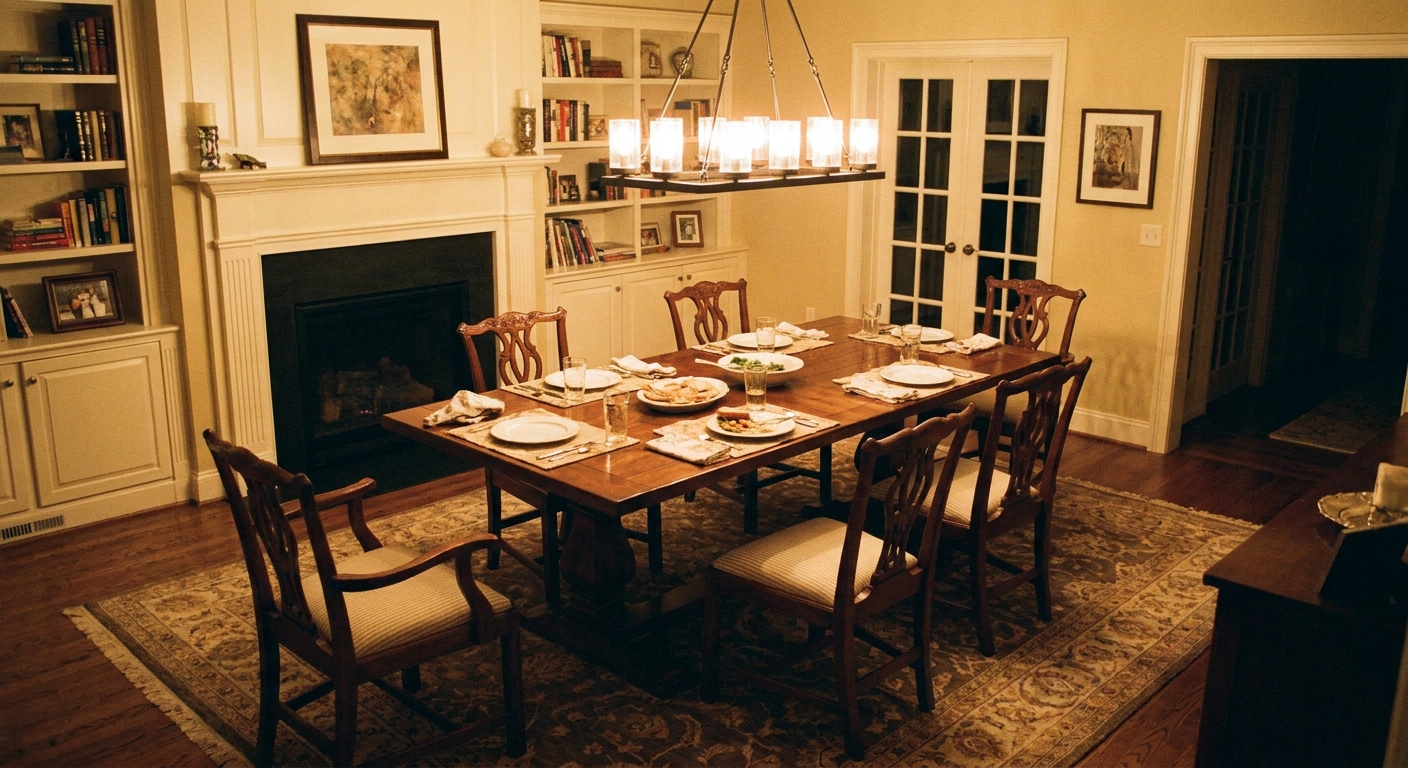
Dining rugs are less about looks and more about function. If your chairs catch on the rug edge every time someone scoots back, the rug is too small.
The chair rule
Choose a rug that extends at least 24 inches beyond the table on all sides. If you have the space, 30 inches is even better, especially for armchairs.
How to measure fast
Measure your table length and width.
Add 48 to 60 inches to each measurement (24 to 30 inches on both sides).
Shop for the closest standard rug size that meets or exceeds that number.
Shape matching
Rectangle table: Rectangle rug is the easiest, and usually the most forgiving.
Round table: Round rug looks tailored, but a square rug can also work if your room is more angular. Just keep the chair clearance rule.
Material note: Low-pile rugs are your friend in dining rooms. They are easier to vacuum and chairs slide more smoothly.
Entryway and hallway rugs
Entry rugs do heavy lifting. They catch grit, set the tone, and create that “welcome home” moment. The best size is the one that matches the architecture and does not become a tripping hazard.
Entry rug sizing
Keep it proportional: Aim for a rug that is wide enough to feel grounded, but still leaves 3 to 6 inches of floor visible on each side in smaller entries.
Mind the door swing: If your door catches, go for a lower profile rug or a flatweave.
Typical picks: 2x3 (very small entries), 3x5 (most common), 4x6 (larger foyers).
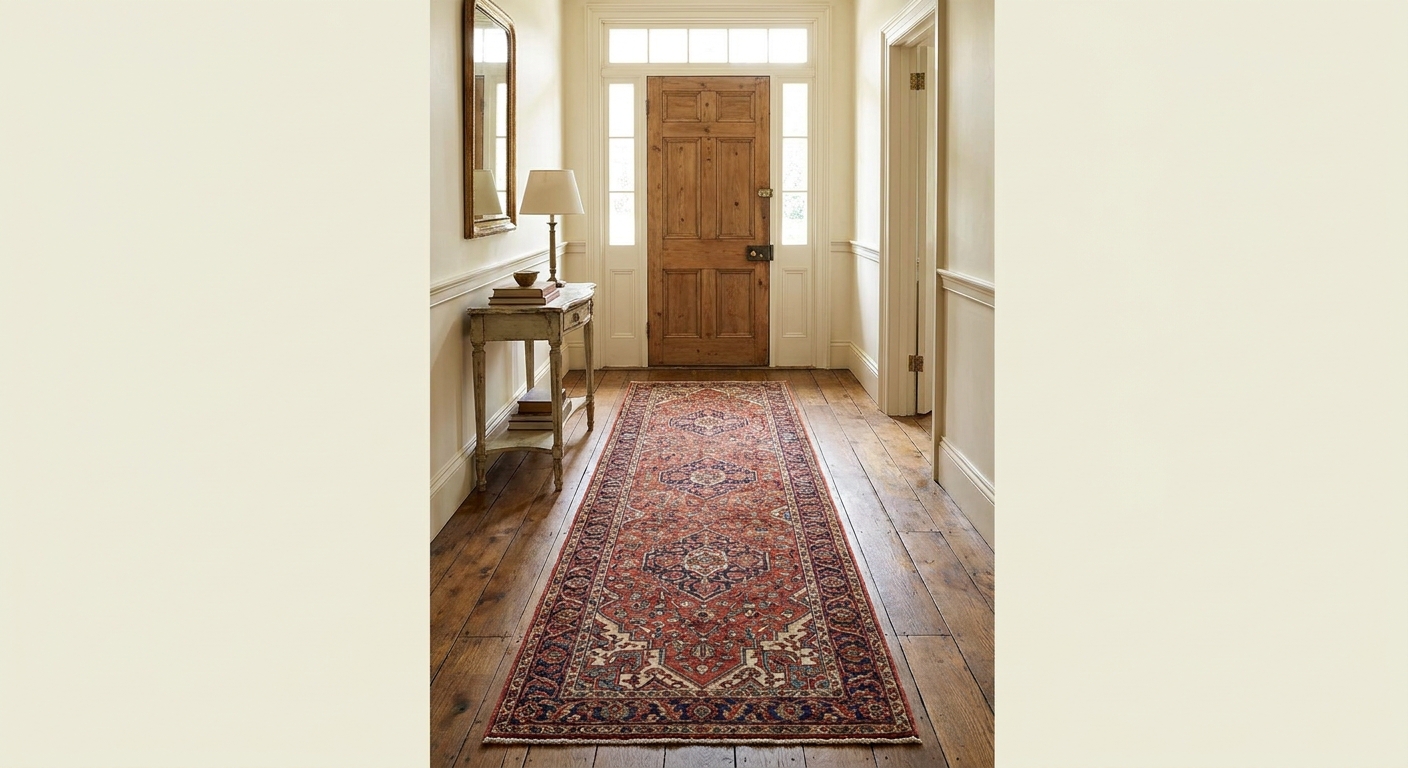
Hallway runner sizing
Leave a border: A runner looks best with 2 to 5 inches of floor showing on each side, depending on hallway width.
Length: Stop it a few inches before the end so it does not look wall-to-wall. If you need near full coverage, consider a custom runner.
Safety tip: In high-traffic zones, a quality rug pad is non-negotiable. It keeps corners from curling and makes everything feel more solid underfoot.
Common rug size mistakes
Mistake: A living room rug that only fits the coffee table.
Fix: Upgrade to a size that reaches the front legs of seating, or layer a smaller vintage rug on top of a larger natural fiber rug.Mistake: A dining rug that stops where the chair legs land.
Fix: Go larger so chairs stay on the rug when pulled out. Prioritize function here, always.Mistake: A bedroom rug placed only at the foot.
Fix: Either move a larger rug under the bed or commit to two side runners for daily comfort.Mistake: Pushing the rug against the wall.
Fix: Pull it inward to leave a clean border. Rooms generally look more “designed” when the rug floats slightly within the space.Mistake: Skipping the rug pad.
Fix: Add a pad sized 1 to 2 inches smaller than the rug. It prevents slipping, adds cushion, and helps the rug wear better.
Quick cheat sheet
Living room: Aim for front legs of sofa and chairs on the rug. A common winner is 8x10 or 9x12.
Bedroom: For a queen, start with 8x10. For a king, start with 9x12. If you want nightstands fully on the rug, consider sizing up. Or use two runners for narrow rooms.
Dining room: Rug should extend 24 to 30 inches beyond the table on all sides.
Entryway: Choose a size that suits the footprint and allows the door to swing freely. Common: 3x5.
Hallway: Runner with a visible border of floor on both sides, plus a non-slip pad.
FAQ
Should a rug be darker or lighter than the sofa?
Either works, but contrast is what keeps a room from feeling flat. If your sofa is dark, a lighter rug can lift the whole space. If your sofa is light, a rug with a bit more depth or pattern helps ground the seating area and hides everyday life.
What if my room is an in-between size?
Two options: size up (my preference if the room allows it), or layer a smaller statement rug over a larger, affordable natural fiber base. Layering is also a great way to bring in vintage character without paying for a massive antique.
How much floor should show around a rug?
As a starting point, leave 8 to 18 inches of bare floor between the rug and the wall in most rooms. In tiny spaces, you can go a little tighter. In large rooms, you can go wider.
Do I need a rug pad on carpet?
Sometimes yes, especially if the rug shifts or wrinkles. Use a pad made specifically for carpet-on-carpet, and pay attention to your carpet pile. On very plush carpet, the wrong pad can cause buckling. When in doubt, test for stability and skip the pad if the rug already sits heavy and flat.
A final styling note
If you are building a home with personality over time, a rug is one of the smartest “anchor” purchases you can make. Start with the right size, then let the rest of the room grow around it. The good news is that once your rug is scaled correctly, even budget-friendly furniture instantly looks more intentional.