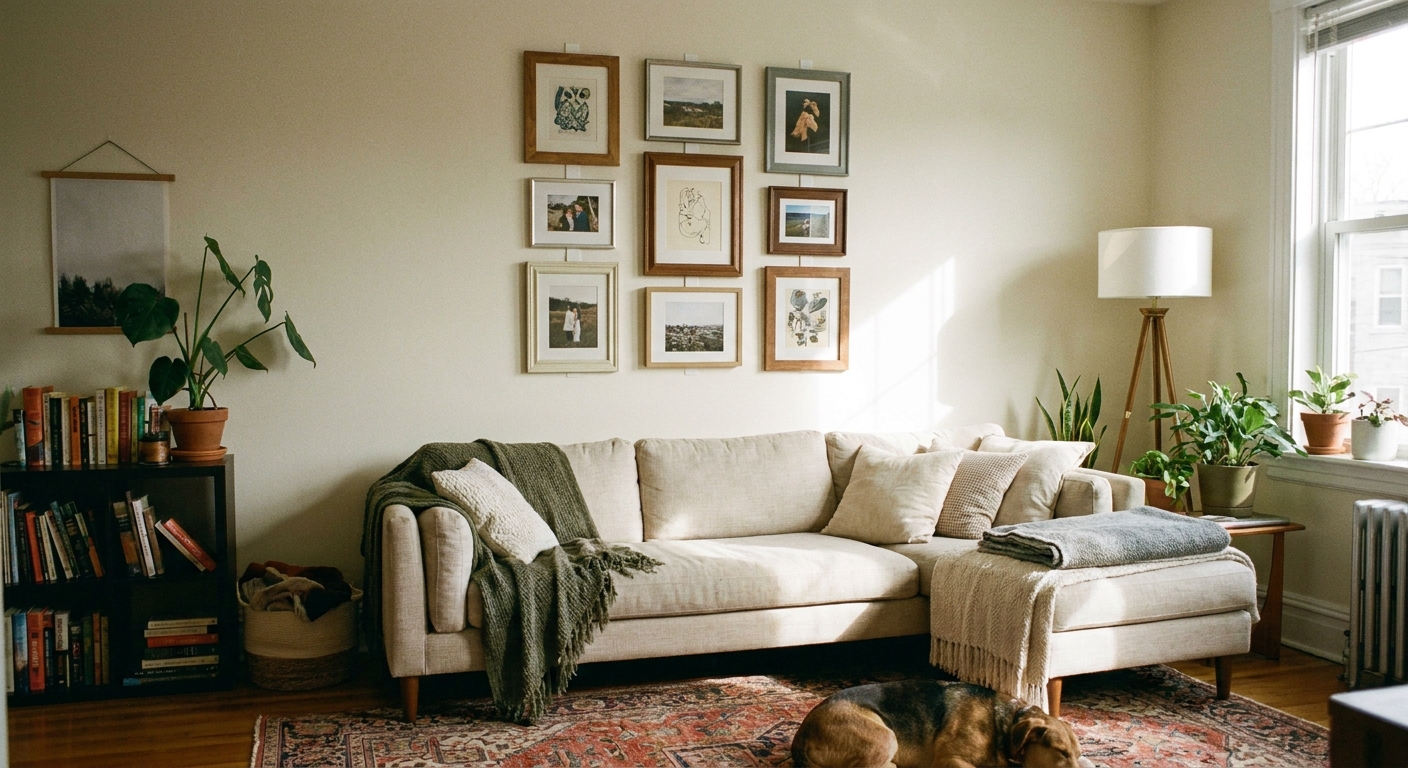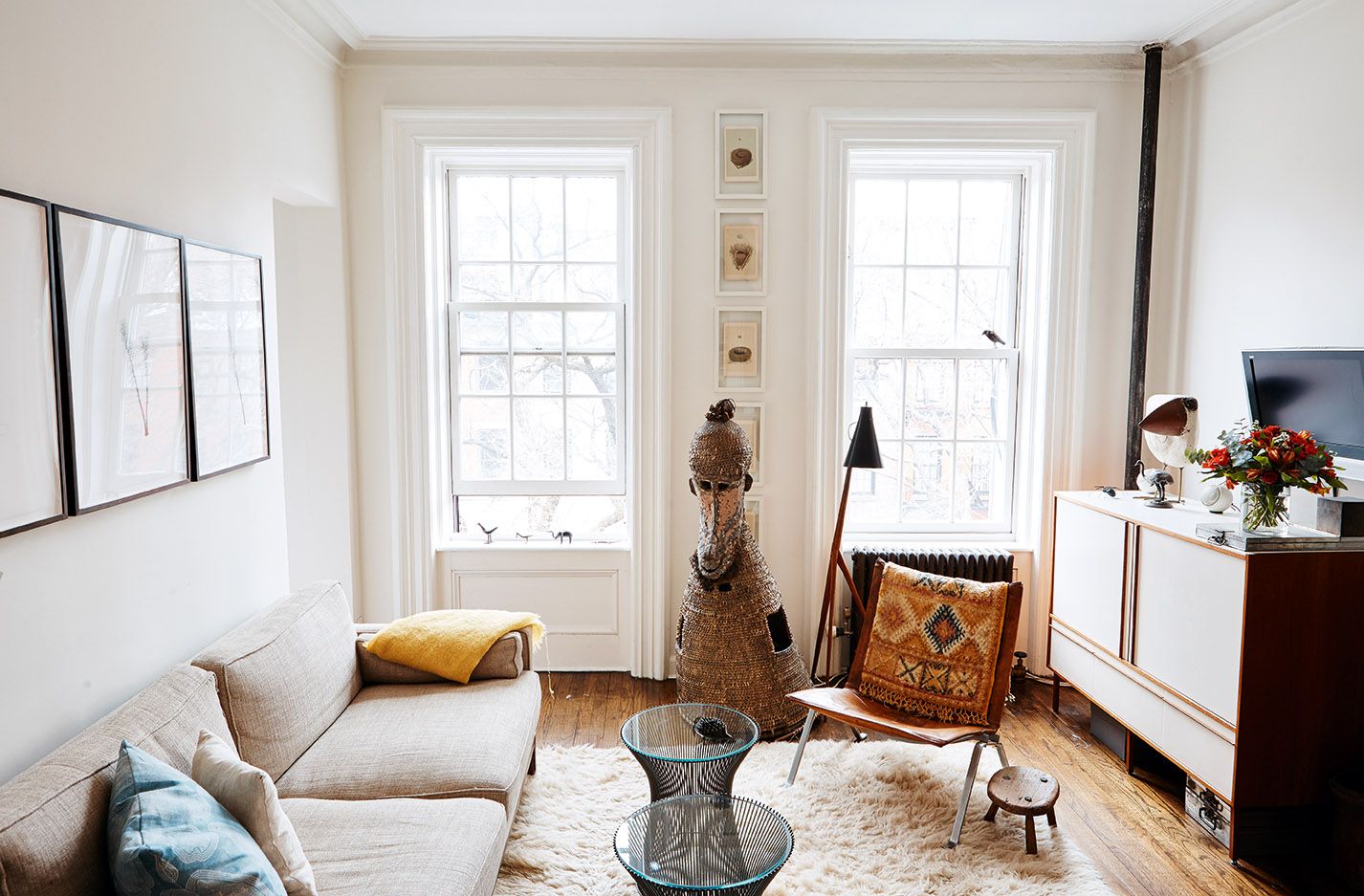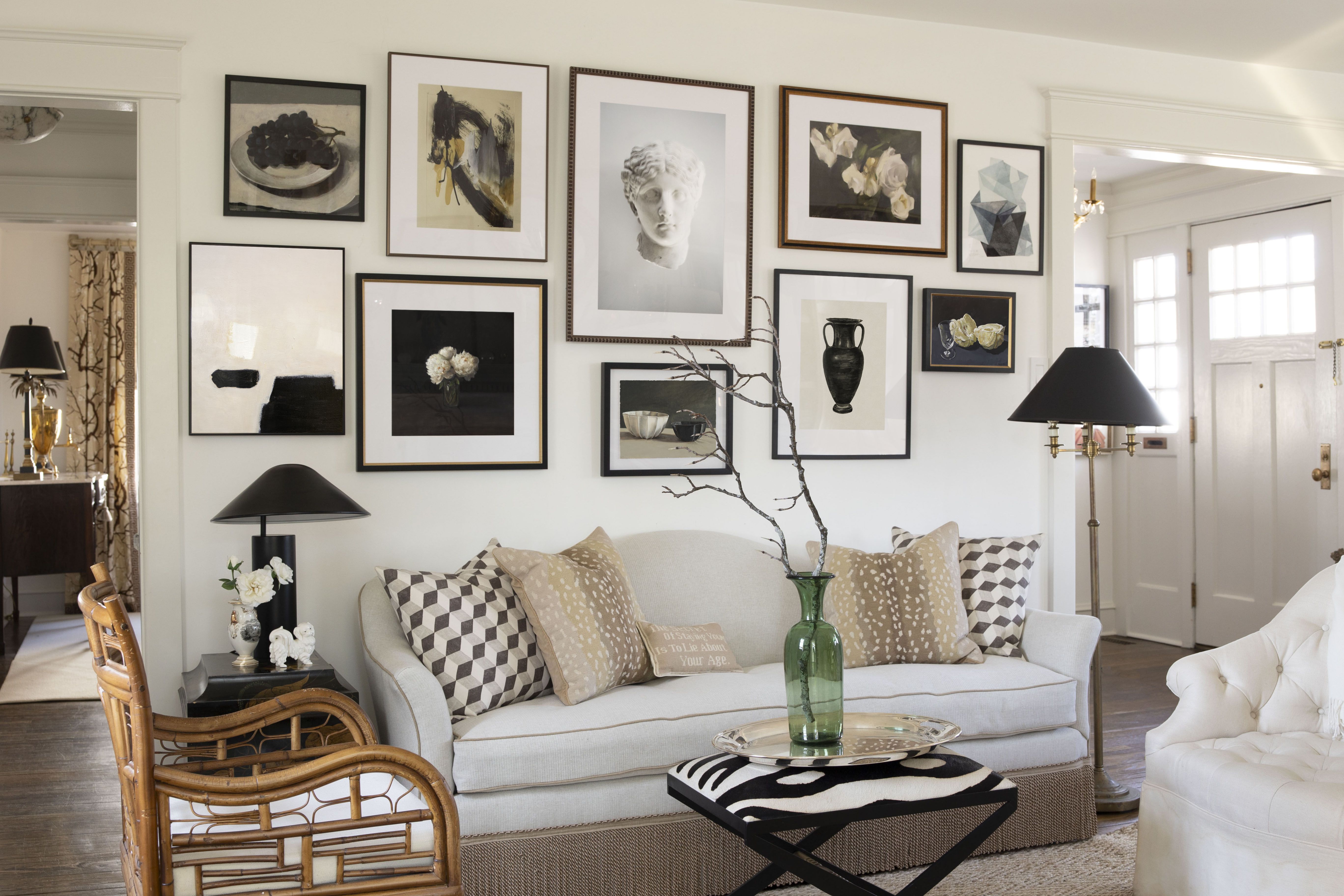
Get the layered, collected gallery wall look without wrecking your rental. Use removable strips, rails, shelves, and smart layouts, with styling directions b...
home decor / design / interior decoration
How to Hang Wall Art Above a Sofa Without It Looking Too Small

Maya Thorne
Maya Thorne is an interior stylist and the creative voice behind Homoraa. With over a decade of experience blending vintage finds with modern aesthetics, she helps readers transform ordinary spaces into personalized sanctuaries. When she is not rearranging her living room, she can usually be found hunting for unique ceramics and textiles at local flea markets.
Created: September 29, 2026
Updated: September 29, 2026
Wall art above a sofa is one of those “why does this feel off?” moments that can quietly nag at you. Often, the issue is not your taste; it is scale and placement. The good news is that a few simple proportions fix it fast, and you can use them whether you are hanging one big piece, a pair, or a full gallery wall.
The two measurements that matter
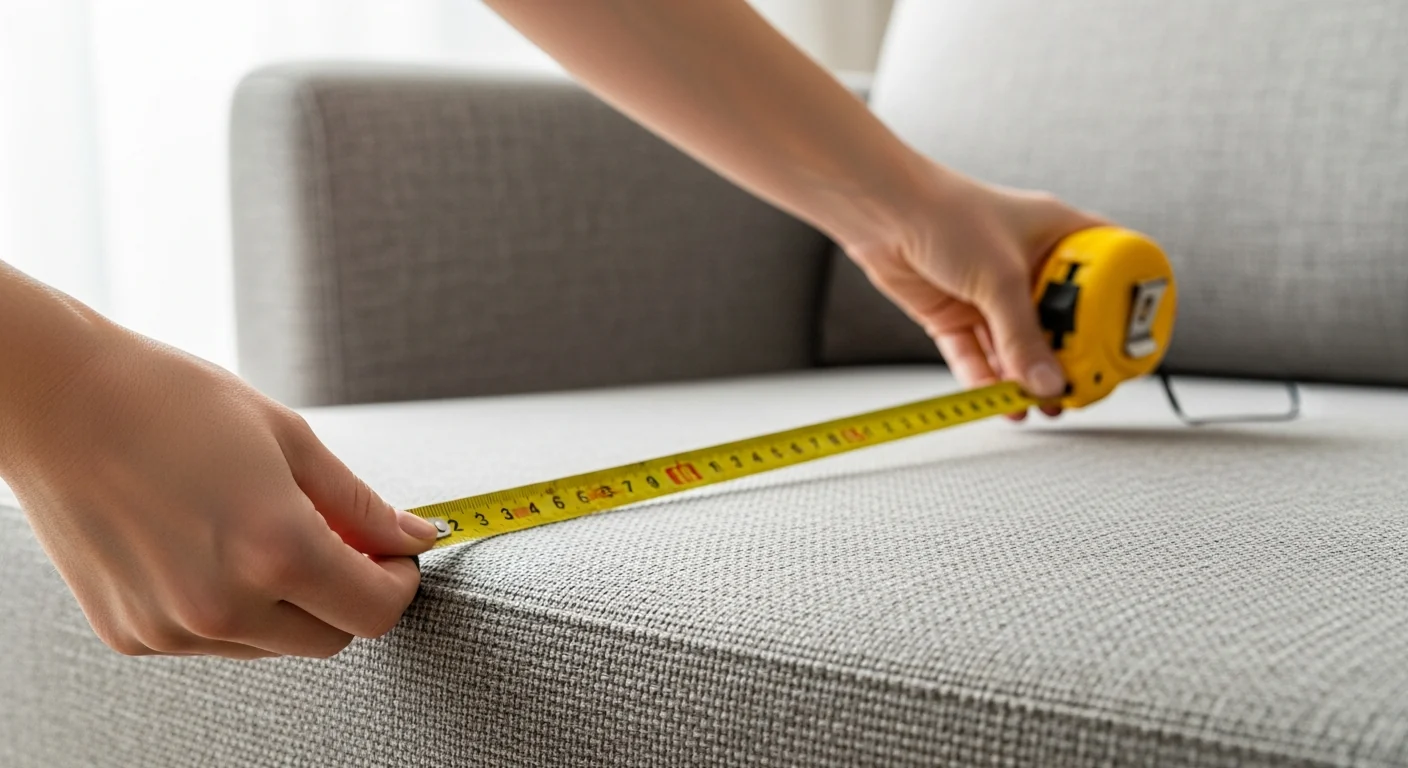
Before you pick up a hammer, grab a tape measure. You are aiming for two things: the right width relative to the sofa, and the right height relative to your sightline. These are classic interior design rules of thumb, not unbreakable laws, but they solve most “something’s off” rooms quickly.
- Width: Most art looks best when it spans about two thirds to three quarters of the sofa’s width.
- Height: Hang it so the center of the artwork lands around 57 to 60 inches from the floor, then adjust slightly for very tall ceilings or unusually tall seating.
Those two guidelines alone go a long way toward eliminating the “postage stamp over a couch” effect.
How wide should it be?
This is the big one. When art feels too small, it is usually because it does not have enough visual weight across the width of the sofa.
The sweet spot formula
- Measure the sofa width (arm to arm).
- Multiply by 0.66 to 0.75.
- That number is your target total art width.
Example: If your sofa is 84 inches wide, aim for art that is about 55 to 63 inches wide in total. “Total” means the combined width of frames if you are doing multiples. If you want the group to read as one statement, include the gaps between frames in that overall width too.
If your sofa is very minimal and low-backed, go closer to 75%. If it is bulky with wide arms, 66% often feels more balanced.
Hanging height that works
Art hung too high is the second most common culprit. It creates a “floating” effect where the sofa and the art do not feel connected.
Use one of these two height rules
- Gallery height rule: Hang so the center of the main piece is 57 to 60 inches from the floor.
- Over-sofa rule: Keep the bottom edge of the frame about 6 to 10 inches above the sofa back.
If you have very tall ceilings, you can cheat the center point up an inch or two, but resist the urge to chase the ceiling. The sofa is the anchor, not the crown molding. If the room feels extra tall, you will usually get a better result by choosing taller art (or stacking pieces) rather than simply hanging everything higher.
Quick adjustment for sofa height: If you have a very tall back, headrests, or a tight clearance where people lean back, start closer to 8 to 10 inches above the back. If you have a very low sofa, 6 to 8 inches often looks more connected.
Spacing for multiple frames
When you hang pairs or gallery walls, spacing does the heavy lifting. Too far apart and everything reads small and scattered. Too tight and it can feel cramped.
My go-to spacing guidelines
- Between frames: Aim for 2 to 3 inches between frames for a crisp, cohesive look.
- Between frame and sofa: Keep the whole arrangement 6 to 10 inches above the sofa back.
- Consistent gaps: Use the same spacing throughout the arrangement. Consistency is what makes it look “designed.”
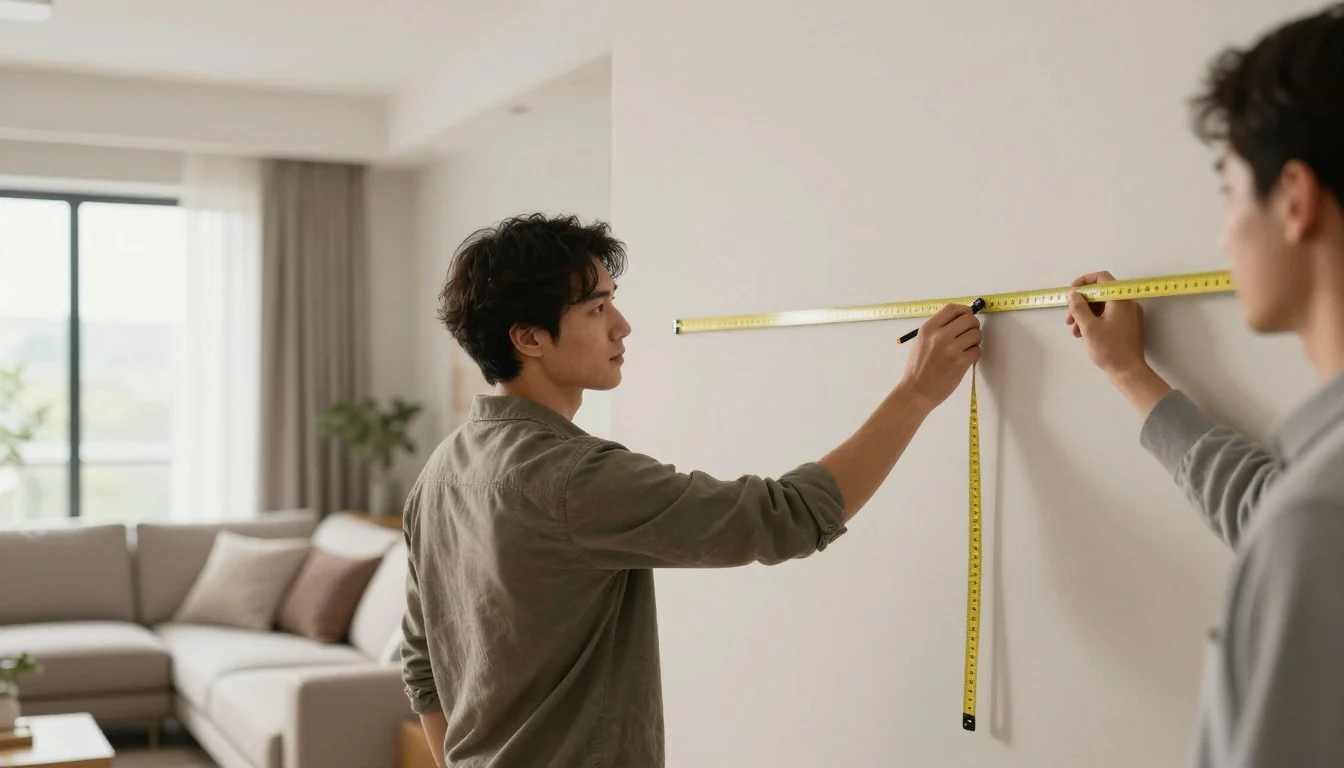
Quick trick: Cut painter’s tape into a few equal pieces to use as temporary spacing markers while you hang. And do yourself a favor: use a level, even for “casual” gallery walls. Crooked reads accidental fast.
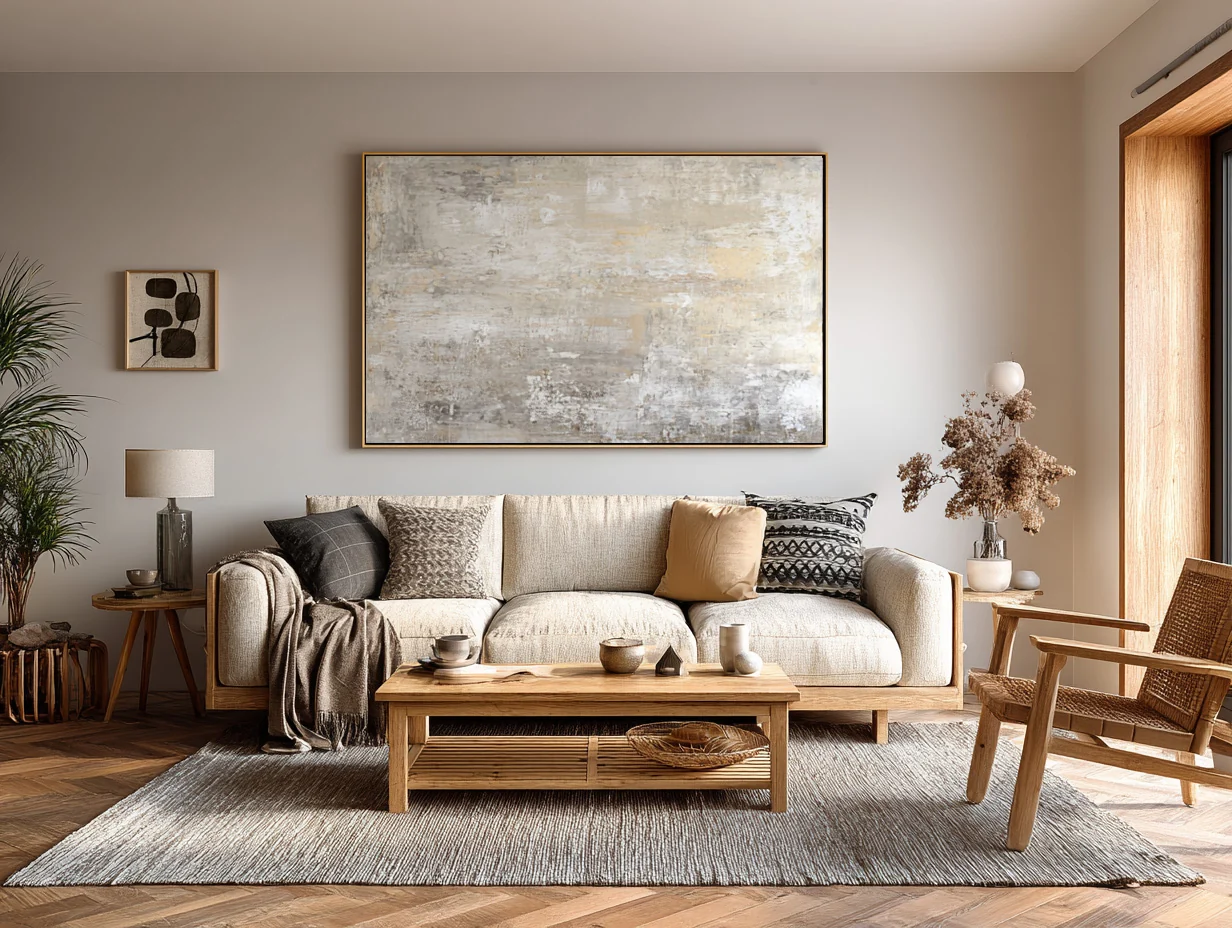
One large piece
If you want the simplest, most foolproof option, choose one substantial piece and center it over the sofa. Bigger usually looks calmer and more expensive because it reduces visual clutter.
Proportions for one piece
- Total width: About 66 to 75% of the sofa width.
- Bottom edge: About 6 to 10 inches above the sofa back.
- Vertical size: Do not be afraid of height. A short, wide frame can still feel small if your wall is tall. Consider a taller piece or add a thick mat and a slightly wider frame to increase presence.
If the artwork you love is smaller than ideal, you can “build it up” with a larger mat, a thicker frame, or by placing it in a float frame. Those are slow-decorating upgrades that add scale without forcing you to replace the art.
Two pieces
Pairs are great when you like symmetry or you want a tidy look but cannot find one huge piece. The key is to treat them as a single composition.
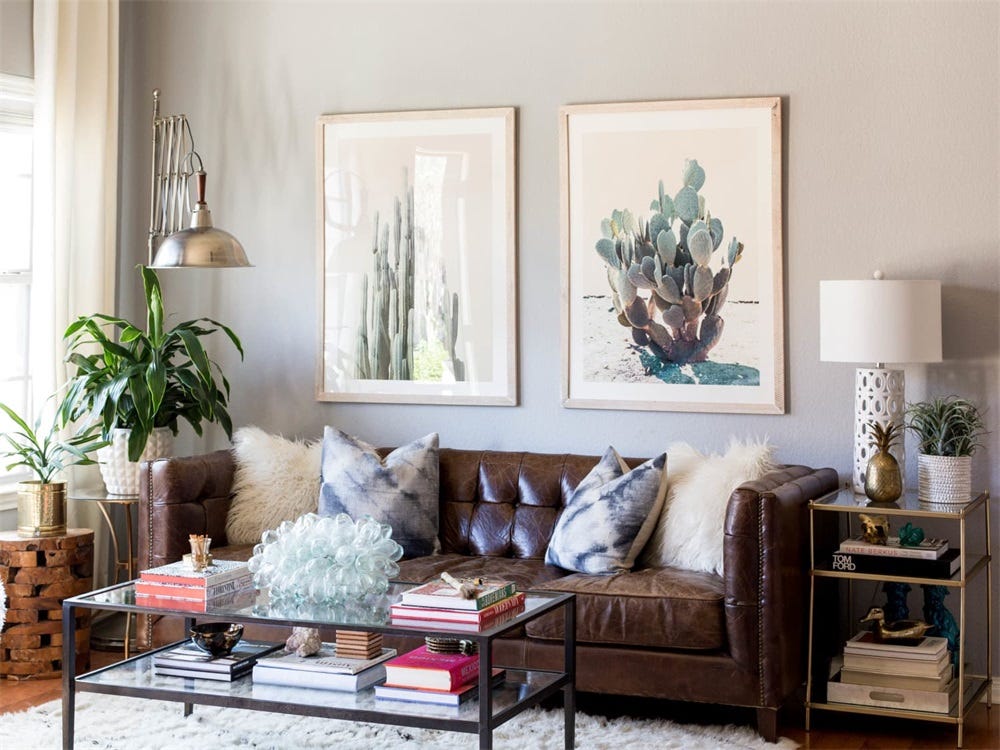
Rules for a balanced pair
- Same frame size (or at least same visual weight) looks the most polished.
- Spacing: Keep 2 to 3 inches between frames.
- Total width: Measure from the outer left edge of the left frame to the outer right edge of the right frame. Aim for that total to be about 66 to 75% of the sofa width.
If you are mixing two different artworks, unify them with matching frames or matching mats. It is a small detail that makes the whole wall feel intentional.
Gallery wall
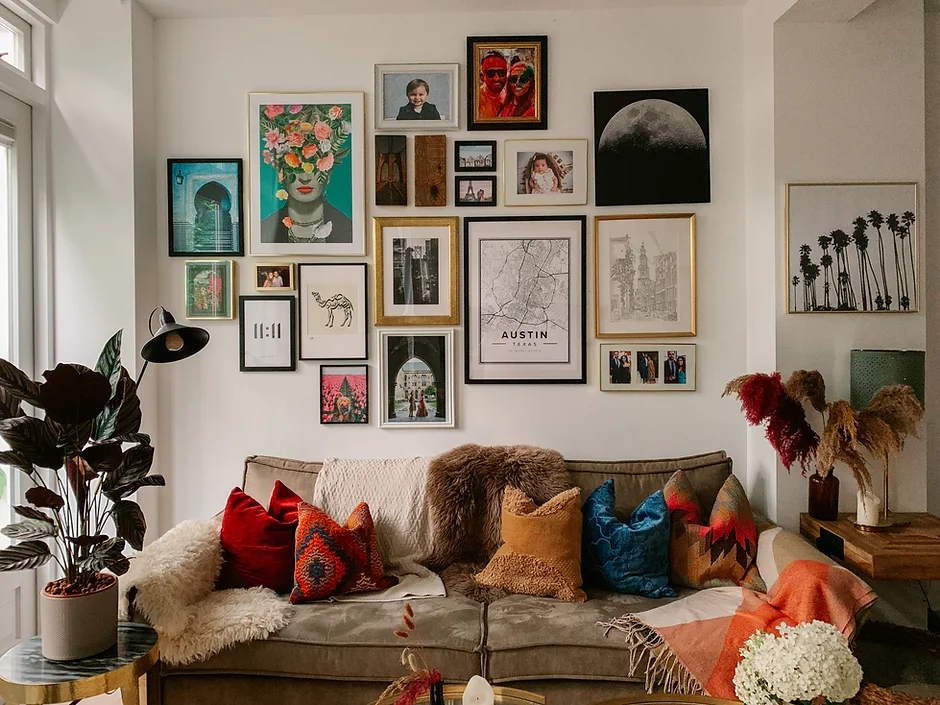
A gallery wall above a sofa should feel like one complete presence, not a bunch of little frames trying their best. Think of it as a single shape you are building.
Start with a boundary
- Decide the overall gallery width first: about 66 to 80% of the sofa width works beautifully for galleries.
- Decide the overall gallery height: as a starting point, an overall arrangement height of about 18 to 28 inches often works above a sofa, depending on ceiling height, frame sizes, and how close you want the grouping to feel to the seating.
Build around an anchor piece
- Begin with one larger frame near the center (it does not have to be dead center).
- Work outward with smaller pieces, keeping spacing consistent at 2 to 3 inches.
- Keep the bottom row aligned roughly along the same invisible line to make the arrangement feel grounded.
My favorite low-stress method is to trace frames on kraft paper, tape the paper templates to the wall, and live with it for a day. You will spot awkward gaps immediately, without extra holes. Painter’s tape can also help you block out the overall rectangle so you can see the scale before you commit.
Common mistakes
- Hanging too high: If the bottom of the frame is 15 inches or more above the sofa, it often starts to float.
- Choosing art based on the empty wall: Your reference point is the sofa width, not the wall width.
- Too much space between frames: Big gaps make each piece look tiny and disconnected.
- Skinny frames on a large wall: A thin frame can be lovely, but it may need a generous mat to hold its own above a sofa.
- Centering on the wall, not on the sofa: If the sofa is off-center (thanks, real life), center the art over the sofa or the seating zone, not the room.
- Ignoring the visual weight of lamps: Tall lamps can make the art feel smaller. Sometimes you need wider art or a slightly lower hang to keep the composition balanced.
Easy fixes if yours is small
If you already own the piece and love it, you do not have to replace it. Try one of these styling upgrades first.
- Add a mat and larger frame: Going up one or two frame sizes can dramatically improve scale.
- Hang it as part of a pair: Add a second piece of similar size to create the right total width.
- Create a mini gallery: Surround the smaller piece with a few supporting frames to build a larger overall shape.
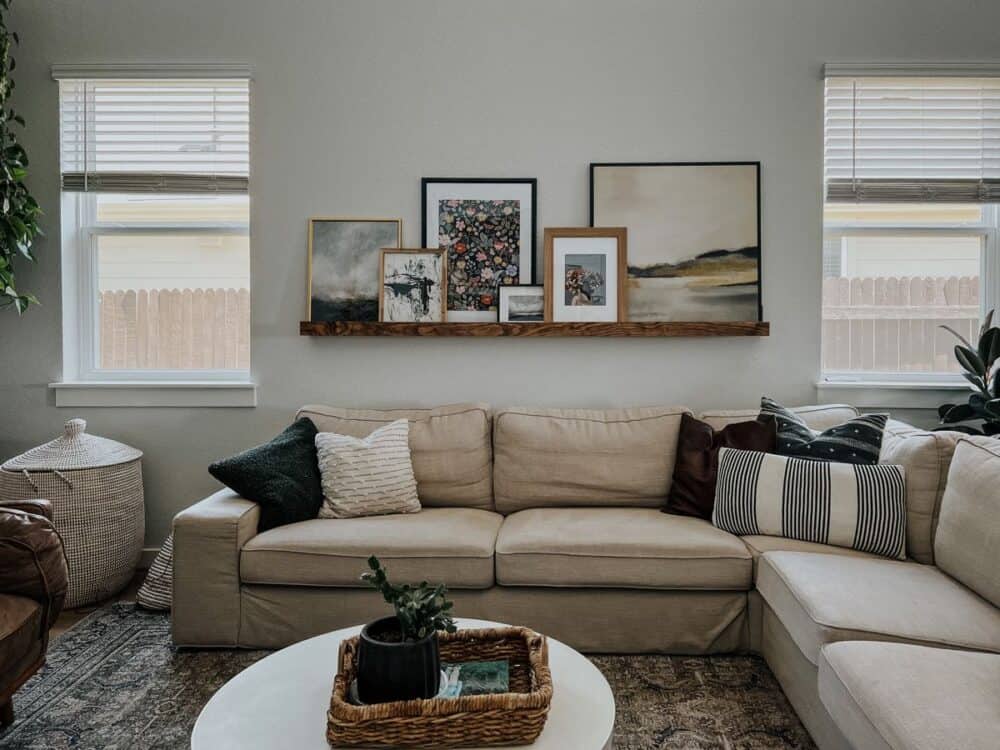
- Layer on a picture ledge: A long ledge above the sofa lets you overlap frames and add width without committing to precise nail placement.
- Use sconces as bookends: Plug-in sconces or swing-arm lights on either side can widen the visual footprint of the arrangement.
Installation note: if your frames are heavy, use the right wall anchors (or hit studs) and double-check weight ratings. Above a sofa is not the place to gamble on a tiny nail.
Quick cheat sheet
- Art width: Aim for about 66 to 75% of sofa width (up to about 80% for gallery walls).
- Height above sofa: Keep the bottom of frames about 6 to 10 inches above the sofa back.
- Center height: Place the center of the main piece around 57 to 60 inches from the floor.
- Frame spacing: Keep gaps at 2 to 3 inches for a cohesive look.
FAQ
What if my sofa is very long, like a sectional?
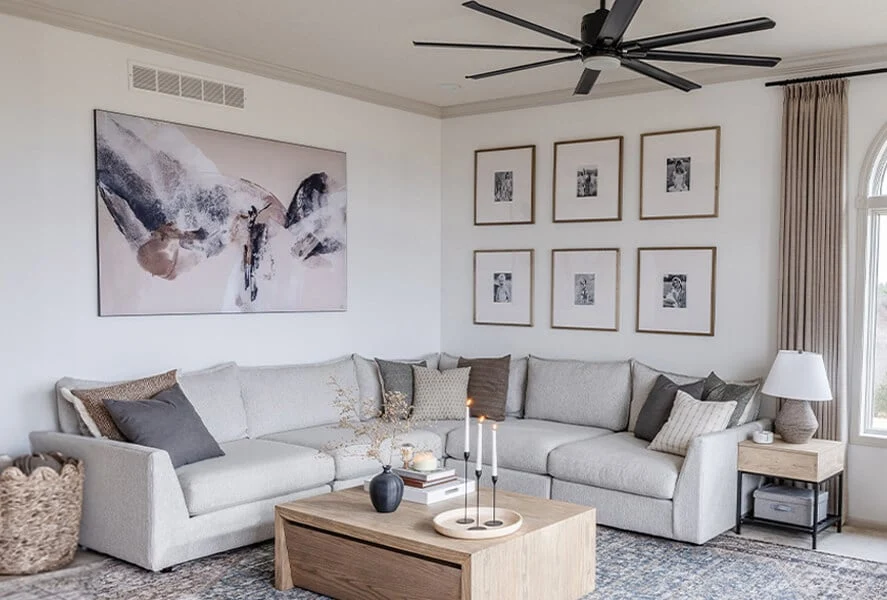
Treat the main seating span as your measuring point. If the sectional has a chaise, measure the length of the “backed” portion where people visually sit. You can also center the art over the primary cushion group, not necessarily the full sectional length.
Can I hang art behind the sofa if people lean back?
Yes, but keep the bottom edge closer to 8 to 10 inches above the back, and secure everything properly. Acrylic can be a practical option because it is lighter and less prone to shattering than glass, but it scratches more easily, so handle and clean it with care. If you have kids who like to climb or the sofa is a high-traffic lounging spot, a picture ledge (installed into studs or with rated anchors) can be a safer, more flexible choice.
Should the art match the sofa color?
Not exactly. I prefer the art to echo one or two tones from the room, like a pillow color, a rug accent, or the wood tone of a coffee table. That is what makes it feel integrated without being matchy.