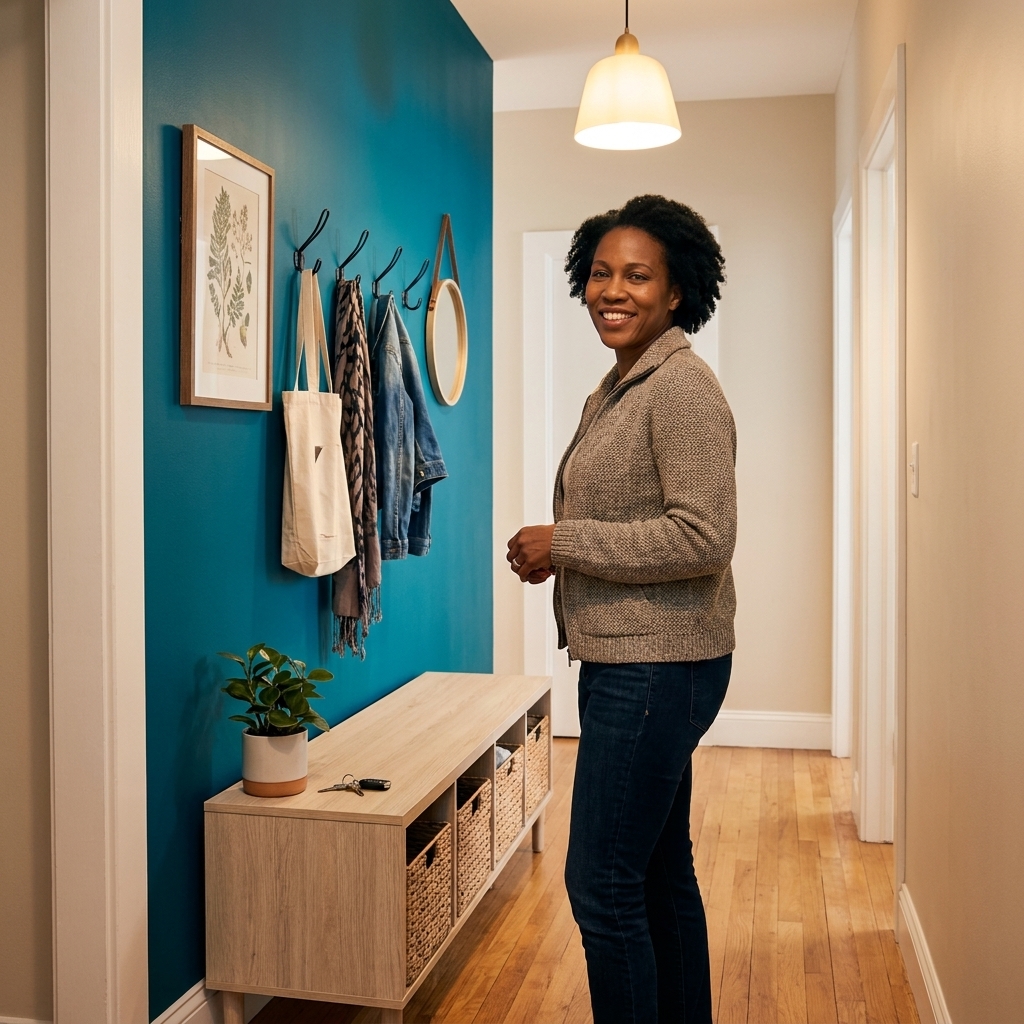
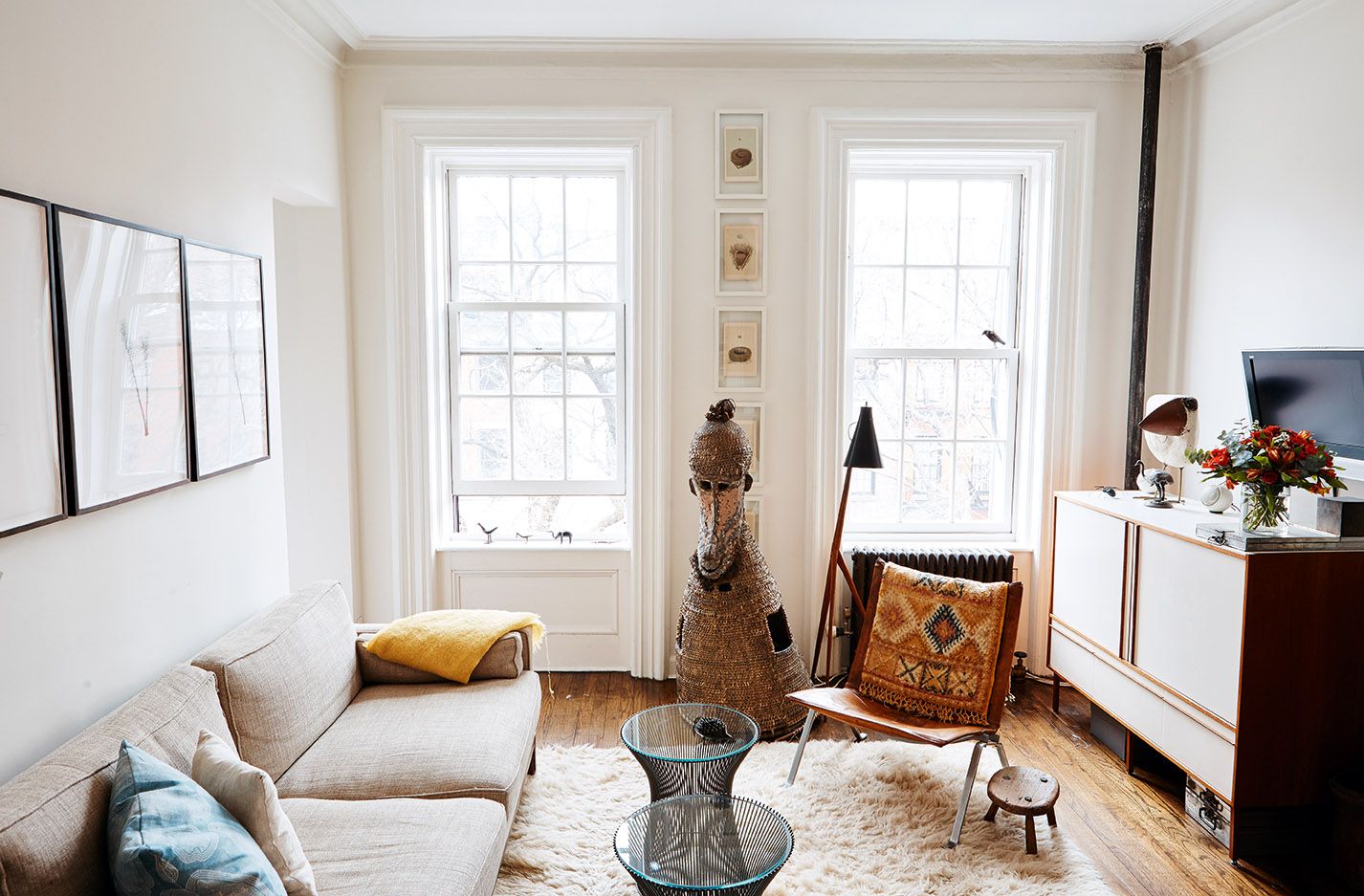
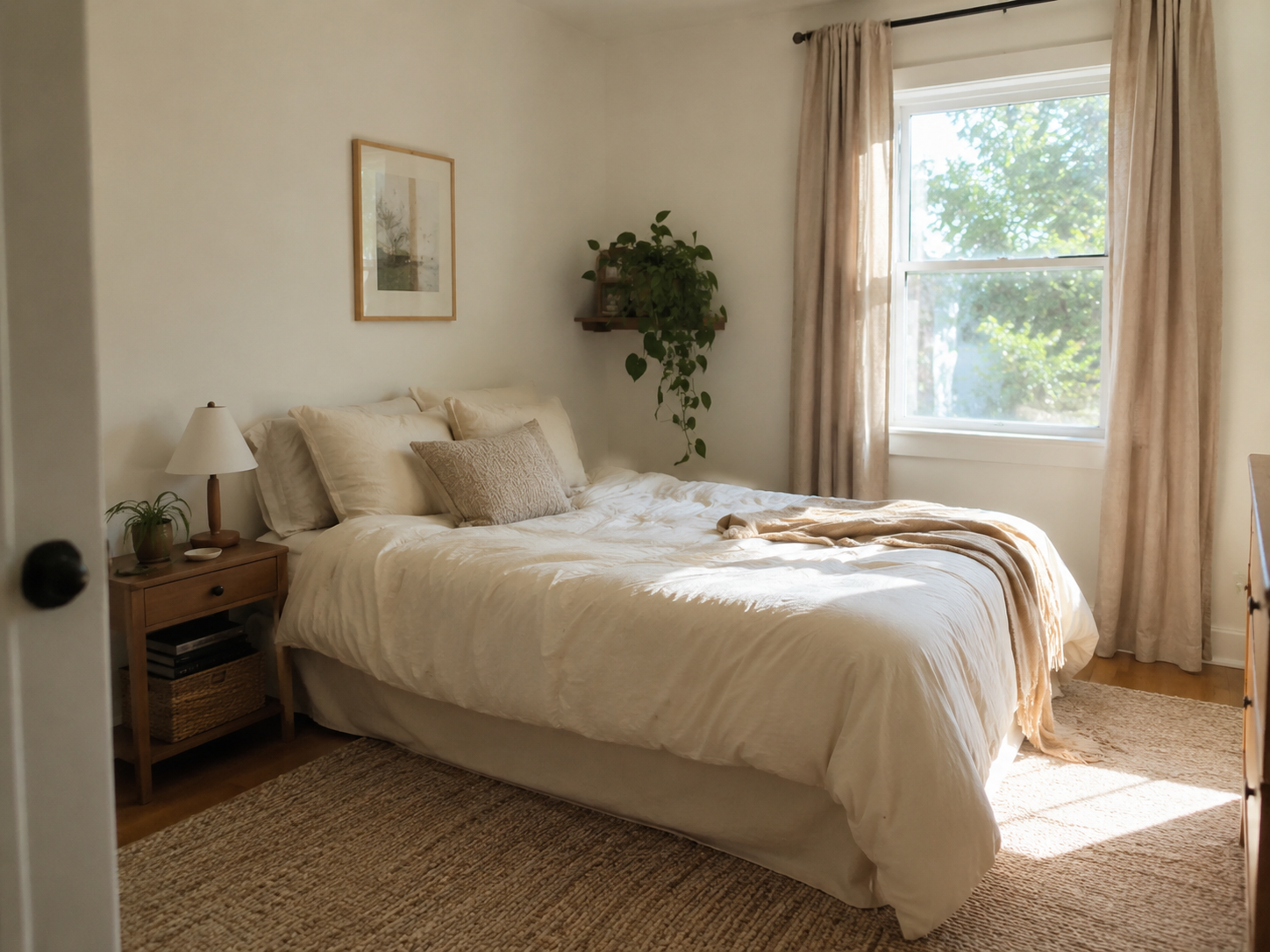
Create a functional drop zone in a narrow hallway using vertical storage, slim shoe cabinets, and a floating console that keeps floors clear and clutter cont...
home decor / design / interior decoration
Small Entryway Ideas That Make a Home Feel Bigger

Maya Thorne
Maya Thorne is an interior stylist and the creative voice behind Homoraa. With over a decade of experience blending vintage finds with modern aesthetics, she helps readers transform ordinary spaces into personalized sanctuaries. When she is not rearranging her living room, she can usually be found hunting for unique ceramics and textiles at local flea markets.
Created: September 28, 2026
Updated: September 28, 2026
Small entryways have a big job. They catch shoes, keys, bags, mail, wet umbrellas, and the emotional whiplash of walking in the door after a long day. If your entry feels tight, cluttered, or a little gloomy, you are not alone.
The good news is you do not need more square footage to make it feel bigger. You need clearer pathways, vertical storage, light-reflecting surfaces, and a few design “rules” that keep visual clutter low. Below are my favorite budget-conscious, real-life fixes for apartments, narrow hallways, and front-door drop zones.
Start with one key measurement
Before you buy anything, measure the clear walking path from the door into the home. A good comfort target in a small entry is about 30 inches of unobstructed passage. If you can get closer to 36 inches, it will feel noticeably more breathable.
Quick reality check: adjust for door swing, tight corners, and the way your household actually moves through the space (kids, pets, grocery runs, strollers). A layout that works on paper can still feel pinched if the door bumps a bench or a coat pile.
A quick layout reset (15 minutes)
- Stand at the front door and notice what your eyes hit first. That is your visual bottleneck. Usually it is a cluster of shoes, a bulky bench, or an overstuffed coat rack.
- Move anything deeper than 12 inches off the main path. In many small entries, it helps to aim for 6 to 12 inches deep for shelves and storage, depending on door clearance and traffic.
- Choose one landing zone. If keys and mail land in three spots, your entry will always look messy, even if it is technically clean.
Design note from years of styling small spaces: negative space is not wasted space. It is what makes the rest feel intentional.
Use floating pieces
If you want a small entryway to feel bigger, get as much as you can off the floor. Floating pieces let your eye travel under them, which visually expands the footprint.
Budget-friendly floating wins
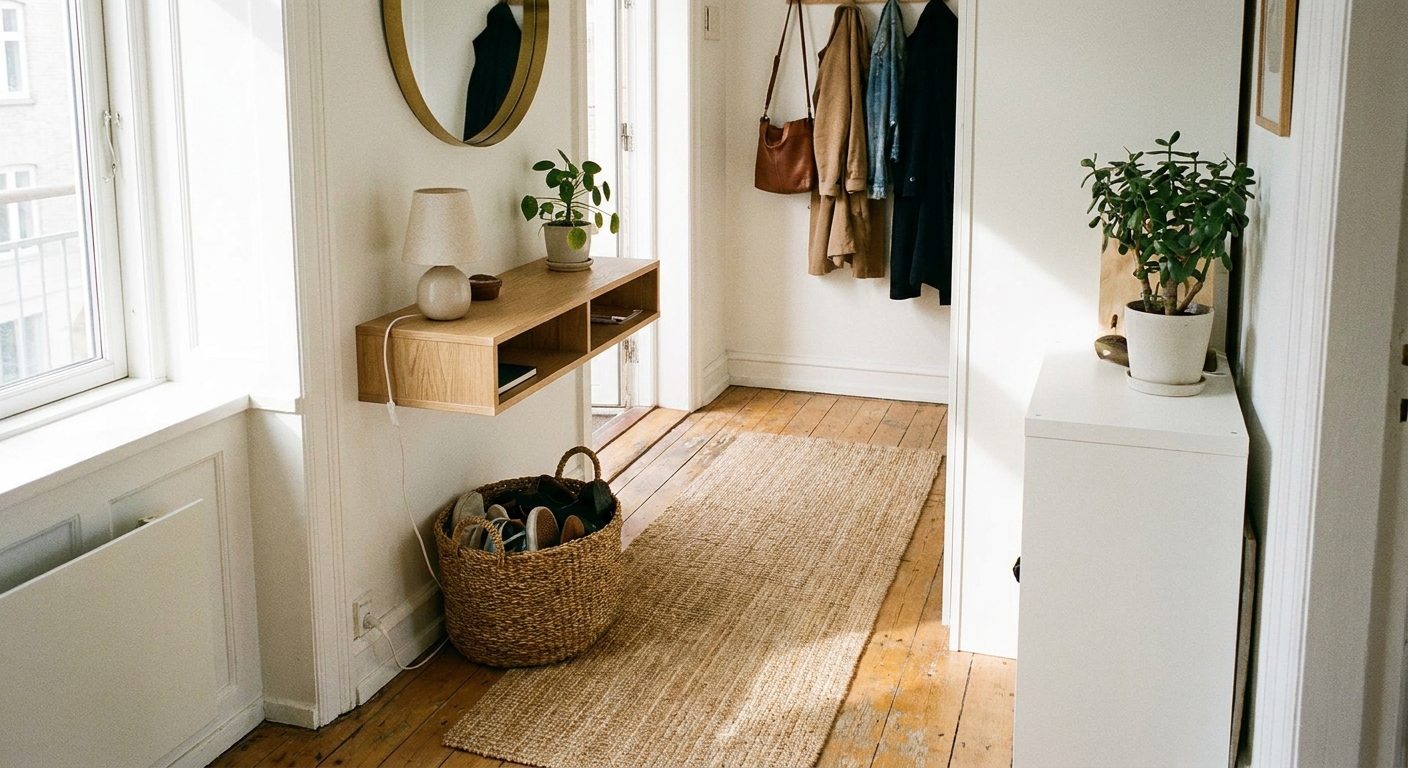
- Wall-mounted shelf (6 to 10 inches deep) as a mini console for keys and sunglasses.
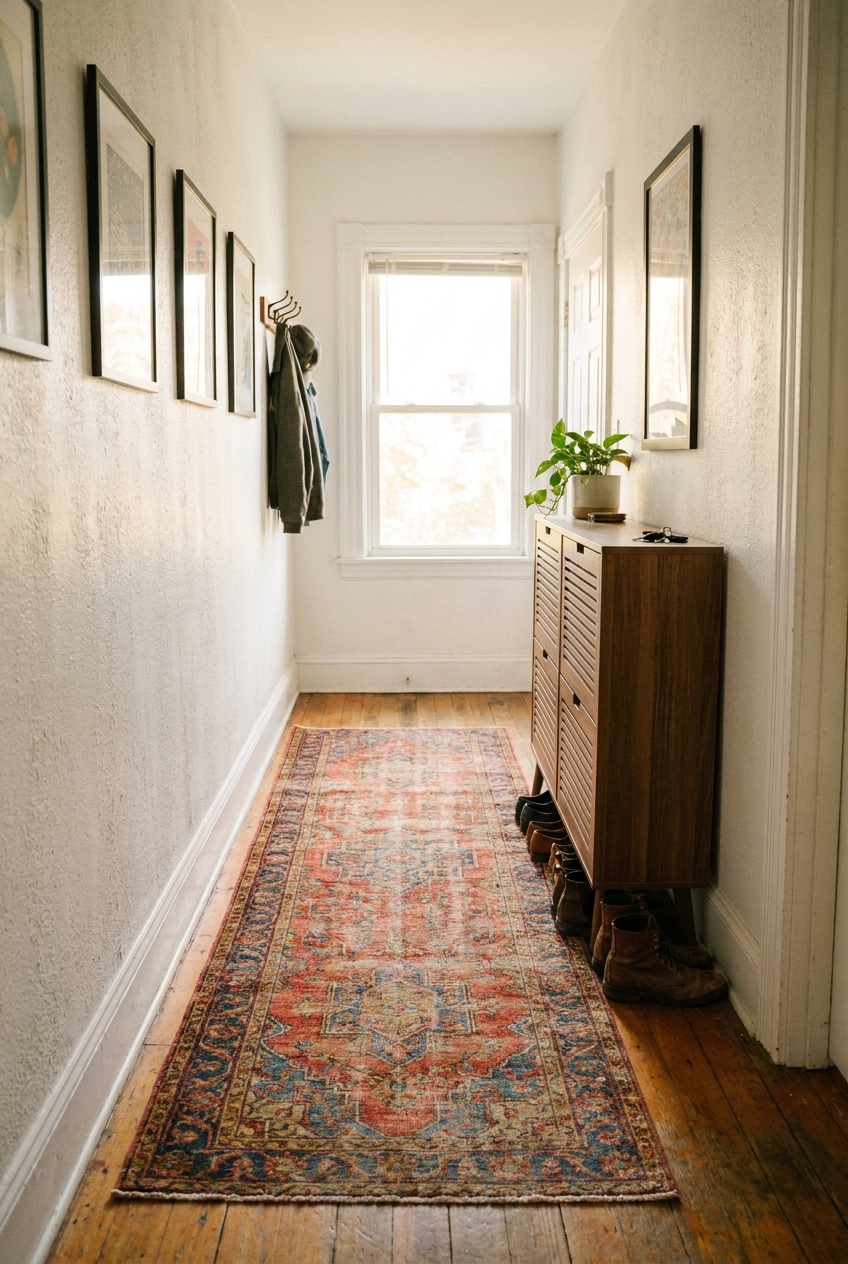
- Floating shoe cabinet (the slim flip-down kind) for tight halls.
- Two sturdy hooks plus one small shelf instead of a full coat tree.
If you rent, look for systems that install with a simple rail, or use anchors that patch cleanly. Also, take 60 seconds to confirm your wall type (drywall vs plaster) and use hardware rated for the weight you plan to hang. If you can hit a stud for hooks or shelves, even better.
Storage that feels calm
Storage is not just about fitting more stuff. It is about hiding the messy shapes (shoes, backpacks, dog leashes) so the entry reads as a clean, simple zone instead of a pile of angles and straps.
Concrete example: three pairs of shoes kicked off at different angles plus a backpack slumped over a chair can make even a tidy entry look chaotic. A single container fixes that instantly.
My favorite small-entry storage formula
- One closed storage option (basket with lid, lidded bin, closed shoe cabinet, or a bench with a door).
- One open daily zone (a small tray, a bowl, or a hook rail) for the items you truly touch every day.
- One overflow limit (a single basket or tote). When it is full, something has to go elsewhere.
Apartment idea: micro console
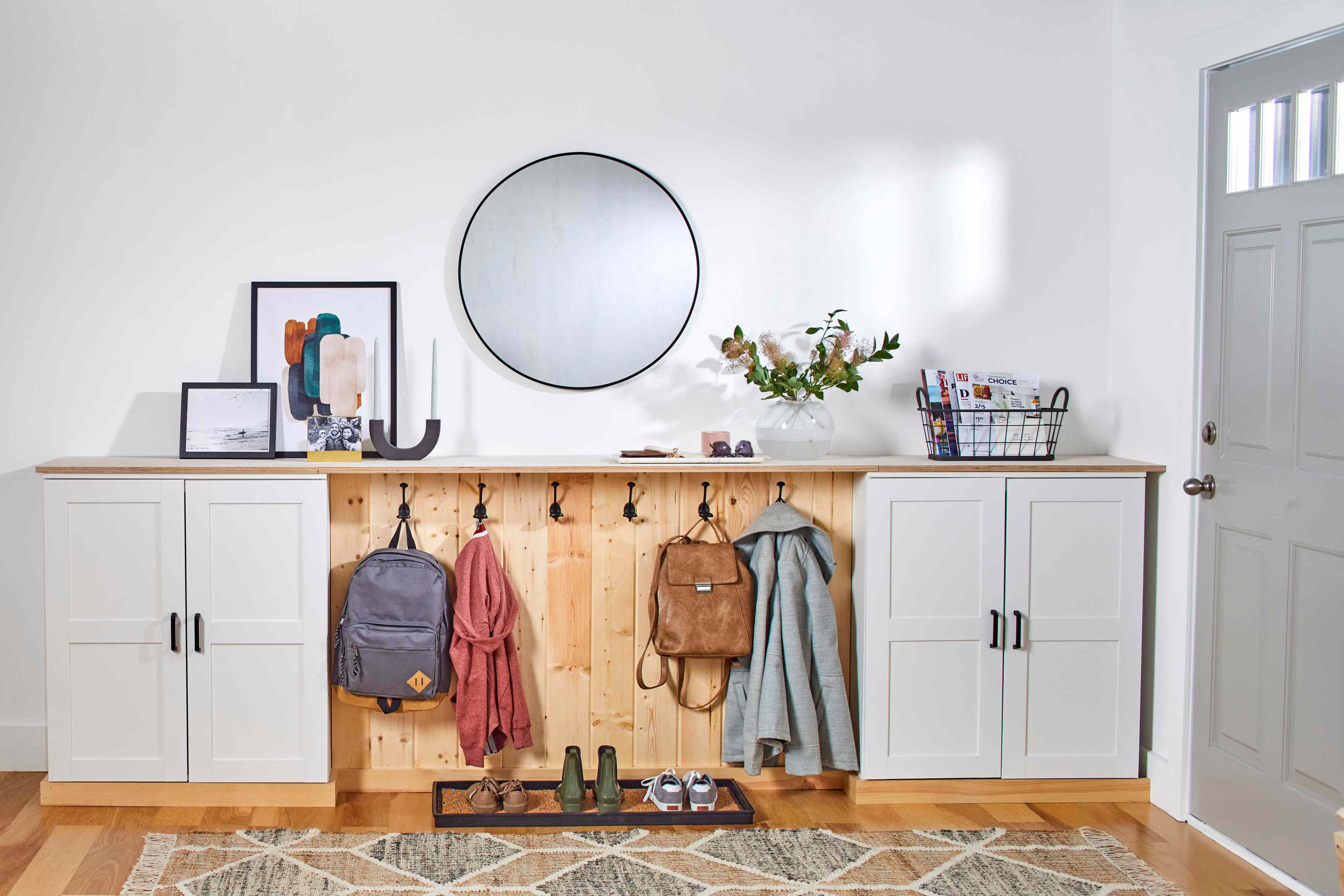
Try a picture ledge mounted at console height (about 34 to 36 inches). Add a small tray for keys and a plug-in sconce or compact lamp. Slip a tall basket below for shoes. It is slim, functional, and looks styled.
Narrow hall idea: hook lockers
If coats create a visual traffic jam, create “lockers” with a simple rhythm: one hook per person, plus one narrow shelf above for hats. A matching set of hangers helps the line look tidy and makes the whole hallway feel wider.
Drop zone idea: contain shoes
Shoes are one of the fastest ways to make an entry feel smaller, mostly because they spread out and interrupt the floor line. Give them one container that is easy:
- Low profile tray for a no-fuss solution (especially good for wet weather).
- Two stacked baskets if you need to hide them quickly.
- Slim shoe cabinet if you want the cleanest look.
Tip: if your household kicks off shoes immediately, place the shoe solution where the feet naturally stop. Do not fight your habits. Design around them.
Mirror placement that works
Mirrors can absolutely open up an entry, but placement matters. In a small space, a mirror should either bounce light or extend a sightline. Otherwise, it just reflects the mess.
Best mirror spots
- Opposite a window (or as close as you can get) to amplify daylight.
- On the longest wall of a narrow hall to visually widen it.
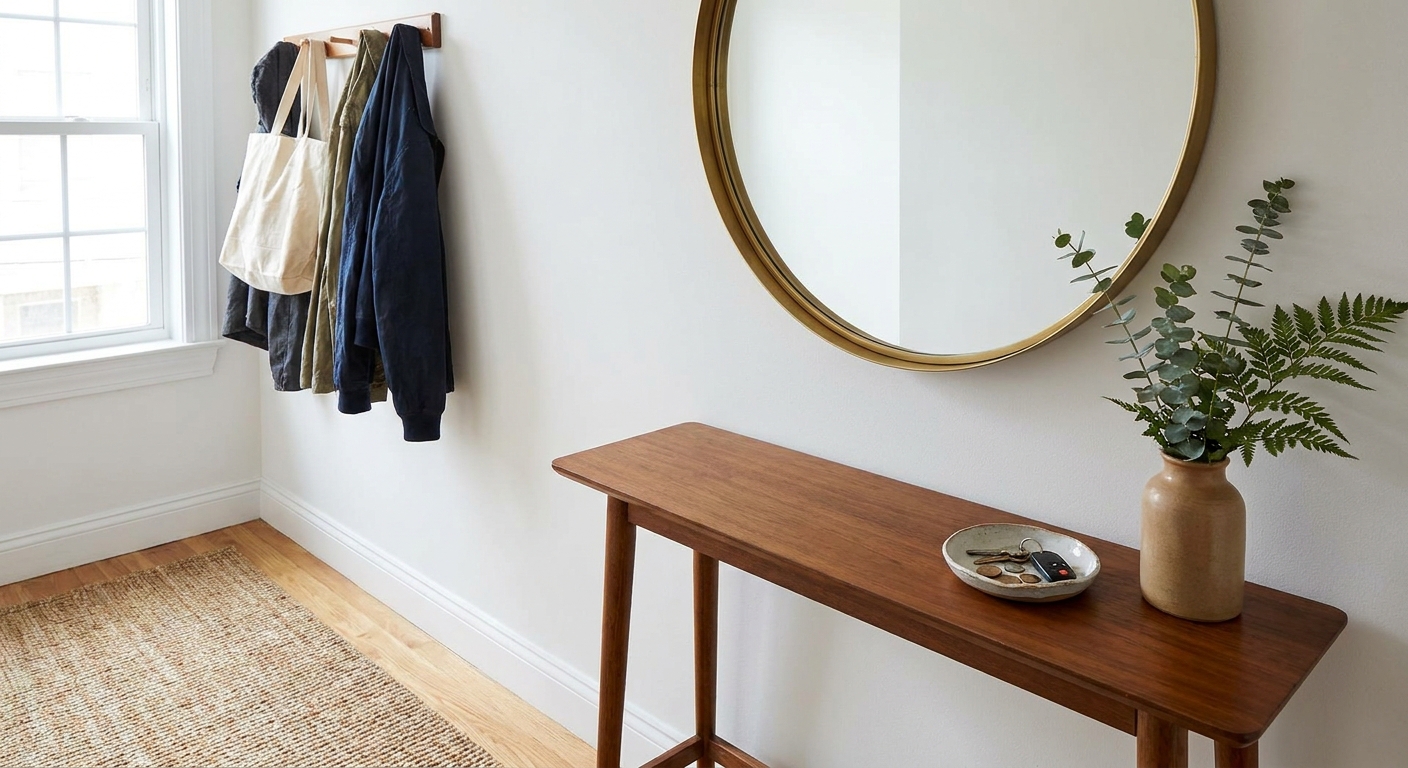
- Above a slim console or shelf to create a destination that feels like a real entry, even in a tiny apartment.
Mirror sizes that work
- Round mirror, 24 to 32 inches: softens tight corners and feels friendly.
- Tall mirror, 60 to 72 inches: great for elongating and for last looks before leaving.
- Rectangle mirror roughly the width of your console: creates balance and makes the setup look intentional.
If the mirror reflects a coat pile, fix the coat pile first. Mirrors are honest like that.
Lighting that opens space
Small entries often feel smaller because they are dim. Shadows compress space. Layered, warm lighting helps the area feel larger and more welcoming.
Easy lighting upgrades
- Swap to a brighter bulb (aim for roughly 800 to 1100 lumens in a small entry). For color temperature, 2700K feels cozy, while 3000K looks a bit cleaner and brighter. Choose what matches the vibe of the rooms nearby.
- Add a plug-in sconce to lift light up the wall and make the ceiling feel higher.
- Use a small lamp on a shelf or console for evening glow. A lamp reads as “home,” not “hallway.”
- Stick-on puck lights inside a closet or above a shoe cabinet to eliminate dark corners.
If you have an overhead fixture
Choose a semi-flush mount or a clean pendant that does not visually hang low into the space. In tight entries, simple globe shapes or shallow drum shades are easy wins.
Color and materials
To make a small entry feel bigger, you want continuous surfaces, soft contrast, and simple repetition. This is where slow decorating shines. You do not need a full renovation. You need a calmer palette and fewer competing finishes.
Paint and finish choices
- Light, warm neutrals (creamy whites, soft greige, pale taupe) keep edges from feeling harsh.
- Satin or eggshell paint reflects more light than flat without looking shiny.
- Match trim to wall color (or go one shade lighter) to blur boundaries and make the area feel larger.
Rug rules
- Go longer, not wider in narrow halls. A runner that nearly reaches the end makes the hallway feel extended.
- Choose low pile and durable (washable if possible). Bulky rugs add visual weight.
- Use a non-slip rug pad and keep edges clear of thresholds so you do not create a trip hazard.
- Pick a pattern that disguises grit. Vintage-style rugs are forgiving and welcoming.
Decor that stays open
Once function is handled, decor is what makes the space feel like yours. The key is choosing pieces with presence, not piles of small things.
The three-item styling rule
On a tiny entry shelf or console, try a simple trio:
- Something practical: a tray or bowl for keys.
- Something vertical: a small lamp, branches in a vase, or a tall candleholder.
- Something personal: a framed photo, a small artwork, or a favorite flea market ceramic.
Stop there. In small spaces, restraint looks expensive.
Wall decor tips
- One larger piece of art often makes the wall feel bigger than many small frames.
- Keep frames cohesive (all black, all wood, or all brass) for a calmer look.
- Use a picture ledge if you like to rotate art. It is slow decorating friendly and renter friendly.
Quick layouts
Door opens to living room
- Place a narrow shelf near the door as a landing strip.
- Add two to four hooks for bags and jackets.
- Ground it with a small rug that defines the entry zone.
- Use a mirror to create a visual boundary and bounce light.
- Check door swing before you mount anything, especially if the door opens tight to a wall.
Narrow hallway entry
- Use wall-mounted storage only, ideally under 10 to 12 inches deep.
- Choose a runner that is long and not too high-contrast.
- Install evenly spaced hooks to create visual rhythm.
- Consider a tall mirror on the long wall to widen the feel.
Small enclosed foyer
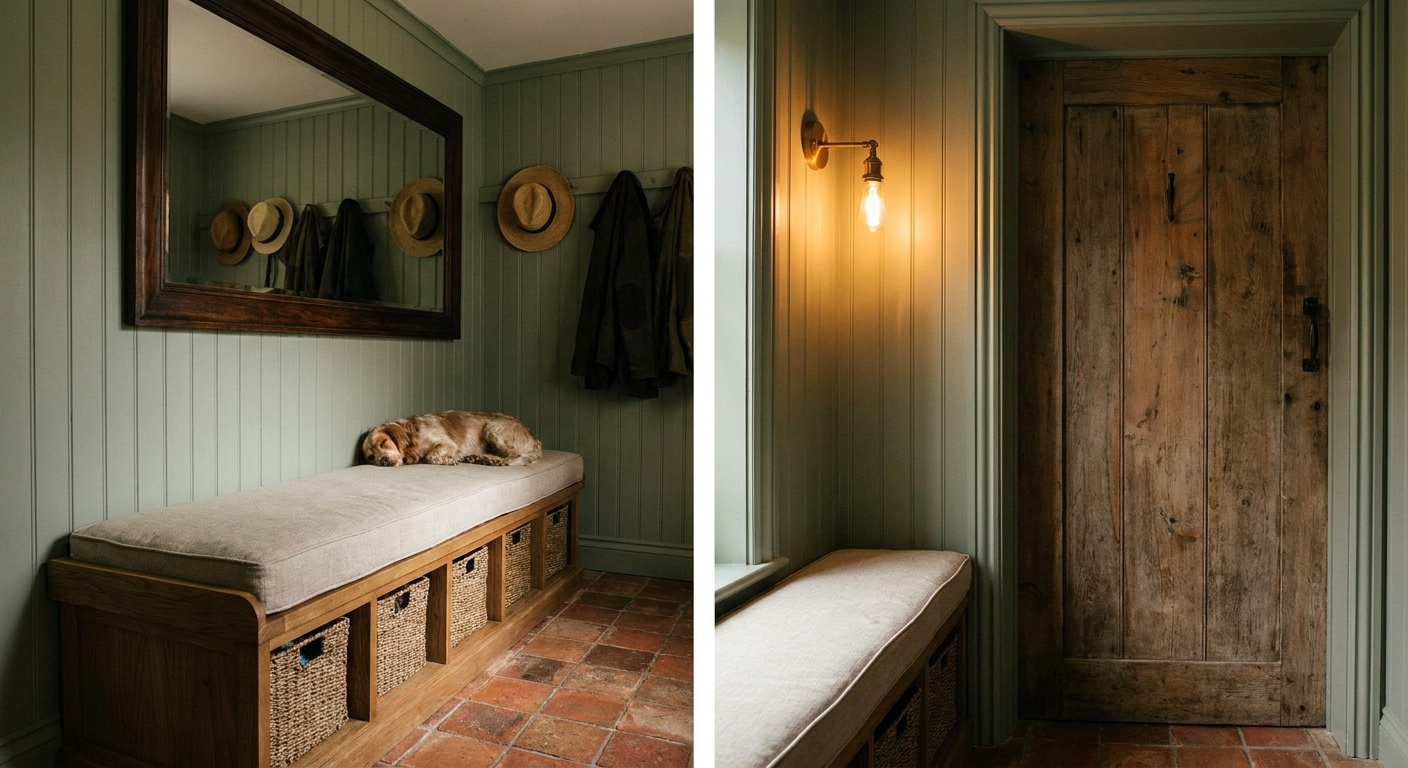
- Try a slim bench with closed storage and a cushion for comfort. Make sure it does not block the door or create a pinch point.
- Add one statement light or a warm lamp to avoid the waiting room vibe.
- Use one larger art piece or mirror as the focal point.
Real life add-ons
- Pet gear: add a small leash hook and a lidded bin for bags and wipes.
- Kids: mount hooks lower so backpacks actually get hung up.
- Stroller parking: if it must live by the door, keep the rest of the entry extra slim so the path stays clear.
Mistakes to avoid
- Too many open baskets. Baskets are great, but a wall of baskets can still read as visual clutter. Mix in at least one closed cabinet or lidded container.
- A deep console in a tight path. In many small entries, depth is the main space stealer. Look for slim silhouettes and wall-mounted options.
- Coats for every season on display. Rotate. Keep only what you need for the current weather near the door.
- Mirror reflecting mess. Tidy the reflected zone, or reposition the mirror.
- One harsh overhead light. Add a softer, layered light source to make the space feel welcoming and more open.
FAQ
What is the best furniture for a small entryway?
Look for pieces that are slim (often 6 to 12 inches deep), ideally wall-mounted: a floating shelf, a narrow shoe cabinet, or a compact bench with hidden storage. If you choose one floor piece, keep it light in color and leggy so you can see underneath.
Where should a mirror go in a small entryway?
Place it where it reflects light or extends a view, like opposite a window, on the longest wall of a narrow hall, or above your entry shelf or console. Avoid placing it where it mainly reflects a coat pile or shoe clutter.
How do I create an entryway in a small apartment with no hallway?
Define a mini zone by the door with a rug, a wall shelf, and hooks. Add a mirror to make it feel intentional. Think of it as a moment rather than a room.
How do I keep an entryway from getting messy?
Give everything a home and keep the system small: one tray for daily essentials, one shoe solution, and one overflow basket. If the overflow container is full, it is your signal to edit.
A simple shopping list
- Wall hooks (set of 3 to 5)
- Small tray or bowl for keys
- Slim shelf or picture ledge
- Mirror (round or tall)
- Runner or durable mat plus a non-slip rug pad
- One closed container (lidded basket or shoe cabinet)
- Warm lighting (lamp, plug-in sconce, or brighter bulb)
If you do nothing else, start with shoes, light, and one consistent landing zone. Those three changes alone make most small entries feel noticeably bigger and calmer.