A friendly, practical breakdown of the three lighting layers and how to combine ceiling fixtures, lamps, and accent lights for a finished, cozy living room, ...
home decor / design / interior decoration
How to Create a Reading Nook in Any Room

Maya Thorne
Maya Thorne is an interior stylist and the creative voice behind Homoraa. With over a decade of experience blending vintage finds with modern aesthetics, she helps readers transform ordinary spaces into personalized sanctuaries. When she is not rearranging her living room, she can usually be found hunting for unique ceramics and textiles at local flea markets.
Created: October 1, 2026
Updated: October 1, 2026
A reading nook does not require a spare room or a custom banquette. It needs three things: a place to land, a pool of good light, and a few comforting layers that make you want to stay put. The secret is making it feel intentional, like it belongs in the room rather than looking like you parked a chair in a random corner.
Below, I will walk you through creating a nook in a corner, a window seat situation, or that awkward little alcove you have been ignoring. We will cover small-space versions, budget-friendly swaps, and styling choices that make the whole setup feel like it was always meant to be there.
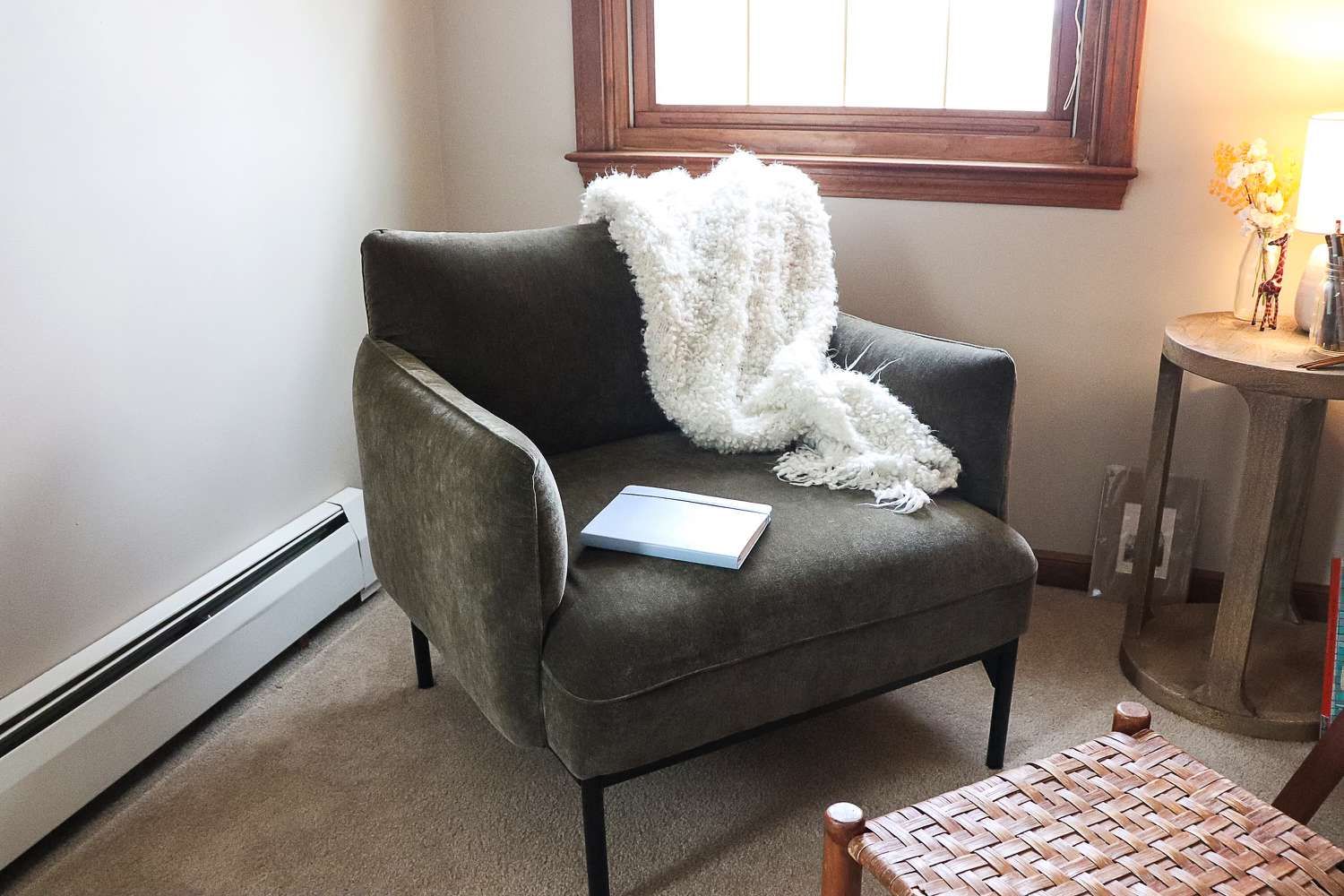
Choose your nook location
Before you buy anything, take a slow lap around your home with a cup of tea and look for "pause points" or the spots where you naturally slow down. The best nooks usually fall into one of these categories:
- A corner with a view: near a window, beside a bookshelf, or tucked next to the sofa.
- A window zone: a bay window, a wide sill, or even a sliding door corner that gets soft daylight.
- An awkward alcove: under a staircase, at the end of a hallway, or an unused bedroom corner that feels too small for real furniture.
- The bedroom edge: a chair that is not for laundry, plus light and a small surface, becomes a ritual spot.
Maya tip: This is my go-to designer rule for pass-through areas. If the spot is a walkway, keep the nook shallow. You want a place that invites lingering, not a setup that gets bumped every time someone walks by.
Start with the seat
The seat is the anchor. Choose it the same way you would choose a mattress: for how it feels, not just how it looks. Then tailor the size to the room.
Best seating options by space
- Roomy living room corner: a deep armchair, a swivel chair, or a small loveseat if you want to curl up with a kid or a pet.
- Small-space nook: a slipper chair (armless), a compact lounge chair, or a structured accent chair with a supportive back.
- Window seat vibe without construction: a storage bench with a thick cushion, or two small poufs with a tray that can move out of the way.
- Alcove solution: a built-in look using a narrow bench, a daybed, or a twin mattress on a low platform if the alcove is deep enough.
My quick comfort checklist
- Seat height: your feet should touch the floor easily, or plan for a footstool.
- Back support: if the chair is low and loungey, add a lumbar pillow so longer reads do not turn into neck strain.
- Arm support: arms help for heavy hardcovers, but if the chair is armless, a pillow "arm" works surprisingly well.
Budget swaps that still feel good
- Use a dining chair you already own, then upgrade comfort with a seat pad and a lumbar pillow.
- Try a vintage cane chair and add a thick cushion. Cane adds texture without visual bulk.
- Repurpose an ottoman as the seat and add a wall-mounted sconce plus a narrow shelf for your mug.
Quick measuring guide
- Walkway clearance: if the nook sits near a path, aim for about 30 to 36 inches of clear walking space.
- Chair fit: measure the chair width and depth, then add a little breathing room so it does not feel wedged. In a tight corner, armless chairs vary a lot, so measure before you buy.
- Table height: the top should land close to your chair arm height for easy reaches.
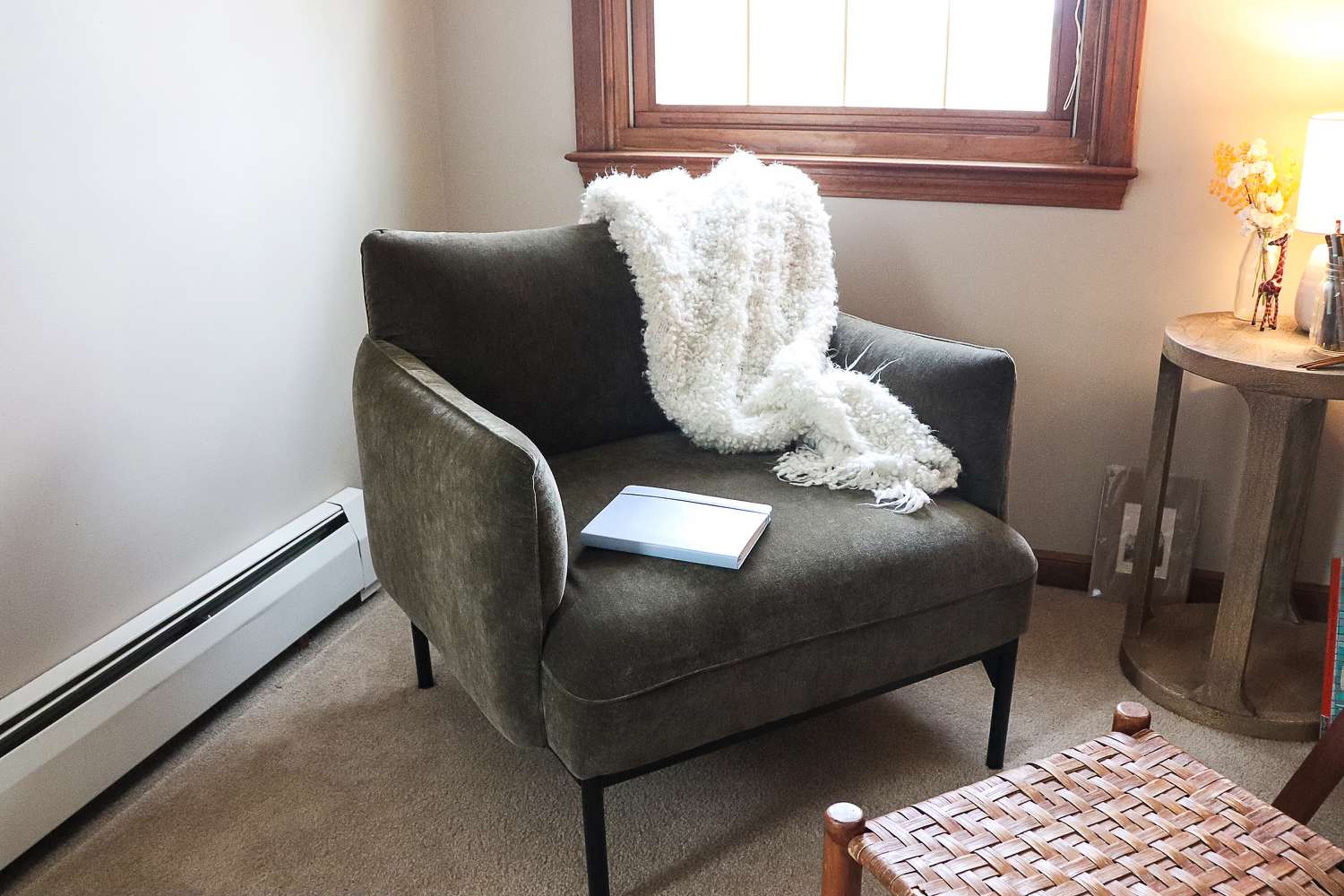
Layer the light
If there is one thing that makes a nook feel deliberate, it is dedicated lighting. Overhead light is great for cleaning. For reading, you want light that lands where your pages are.
The easiest lighting formula
- One targeted reading light: floor lamp, table lamp, or wall sconce.
- One soft ambient glow (optional but lovely): a small lamp on a shelf, a plug-in picture light above art, or a warm LED candle on the side table.
Which lamp works best where
- Floor lamp: ideal if you do not have room for a bigger side table. Look for an adjustable arm so the light can angle toward your book.
- Table lamp: best if you have a real surface for a drink and a book stack.
- Plug-in sconce: my favorite small-space trick. It frees up table space and gives the nook a planned, finished look.
Bulbs and brightness
For a cozy feel, warm white bulbs in the 2700K to 3000K range usually work well. If the rest of your room runs cooler or brighter, you may prefer 3000K for easier task reading and 2700K for a softer glow. For a dedicated reading lamp, aim for roughly 450 to 800 lumens, and if you can, choose dimmable so you can adjust for time of day and eye comfort.
If you are sensitive to glare, use a shade that diffuses the bulb. Placement matters too. Light that comes from the side and slightly behind you often helps, and placing the light on the opposite side of your dominant hand can reduce page shadows.
Safety and cords
- Keep lamp shades and bulbs away from curtains, throws, and anything draped.
- Route plug-in sconce cords tight to the wall with cord covers or clips to cut down on trip hazards.
- If you like hot drinks while you read, choose a stable table that will not wobble when you set a mug down.
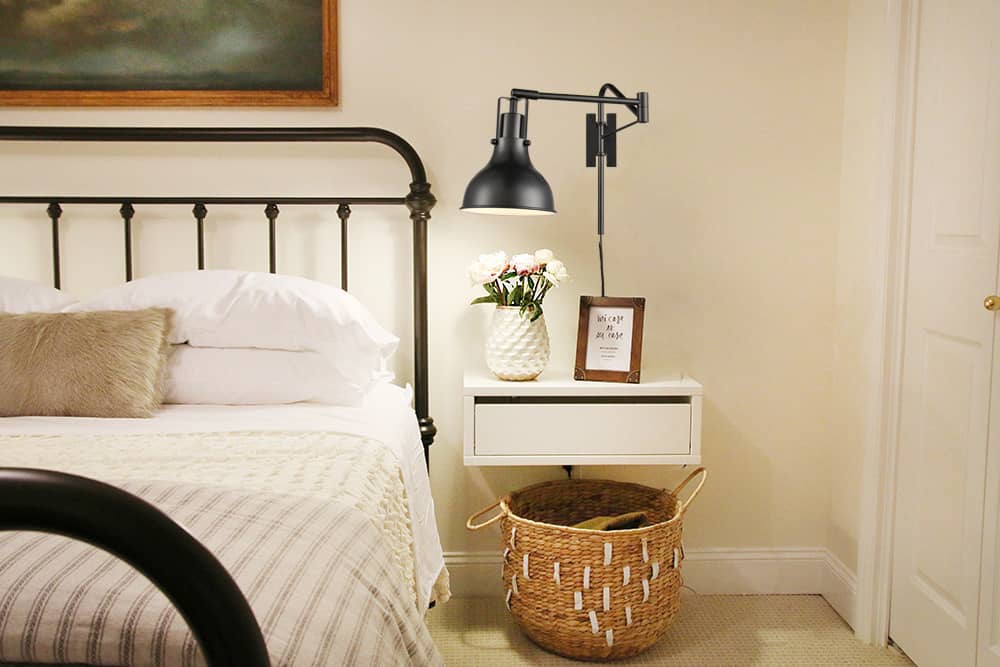
Add a surface
A surface is what keeps your nook from becoming a chair in a corner. It holds the practical little rituals: tea, reading glasses, a bookmark, a candle, a notepad for the thought you do not want to lose.
Pick the right scale
- Minimum: a small round side table, a C-table that slides under the chair, or a wall shelf placed at arm height.
- Better: a petite cabinet or stool that can hide clutter.
- Best for tight spaces: a narrow wall-mounted ledge, especially in hall nooks and bedrooms.
Budget-friendly options I love
- A sturdy plant stand as a mini side table.
- A vintage stool that brings character and can move around the room.
- A stack of large art books topped with a tray, if you need something temporary while you shop slowly.
Textiles
Textiles are where the nook becomes emotionally inviting. This is also where you can spend very little and still get a big payoff.
The core textile trio
- One throw blanket: choose something you actually want on your skin. Wool blend, cotton, or a soft fleece that does not look shiny.
- Two pillows: one for lumbar support, one for softness or styling. If you only do one, make it lumbar.
- One grounding rug (optional but powerful): even a small 2x3 or 3x5 can zone the nook so it feels separate from the rest of the room.
Make it look intentional
- Repeat a color from the room in one textile, then introduce one nook-only accent color for personality.
- Mix textures, not chaos. For example: nubby pillow, smooth cotton throw, flatweave rug.
- Keep the palette to 2 to 4 colors so the nook reads calm.
If you have kids or pets
- Choose washable throws and removable pillow covers.
- Consider performance fabric or a slipcovered chair if the nook is going to be heavily used.
- Pick a heavier, stable floor lamp base so it is harder to tip.
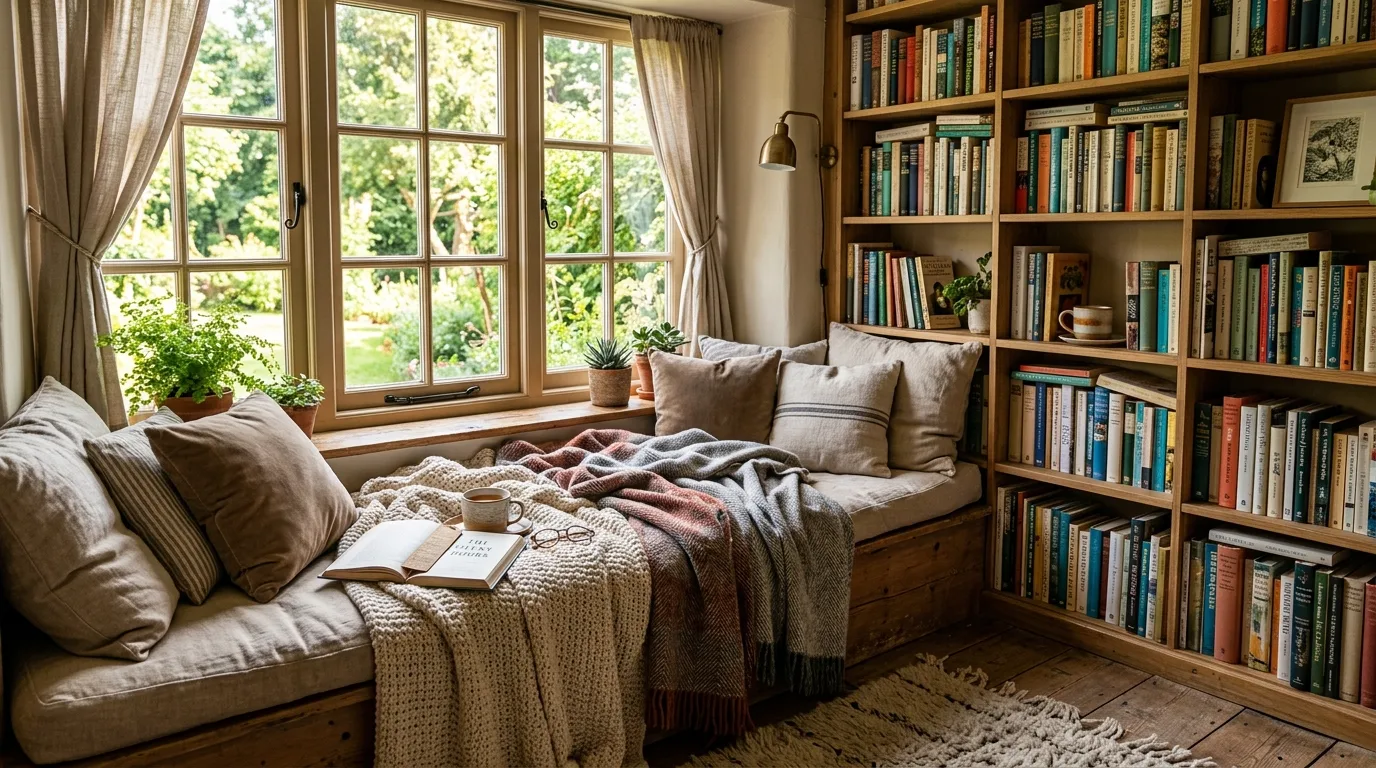
Smart storage
Books are beautiful, but the accessories of reading can get cluttery fast: chargers, bookmarks, notebooks, extra glasses, a second book you are totally starting next. Give those items a home and your nook will feel serene more often.
Small storage ideas that look good
- Basket beside the chair: for throws, magazines, or the book you are in the middle of.
- Wall shelf above the chair: a narrow ledge shelf can hold a small stack of books and a tiny lamp without taking floor space.
- Ottoman with storage: perfect if you want to hide everything when guests come over.
- Rolling cart: excellent in rentals or if your nook moves seasonally with the sun.
My favorite shelf rule
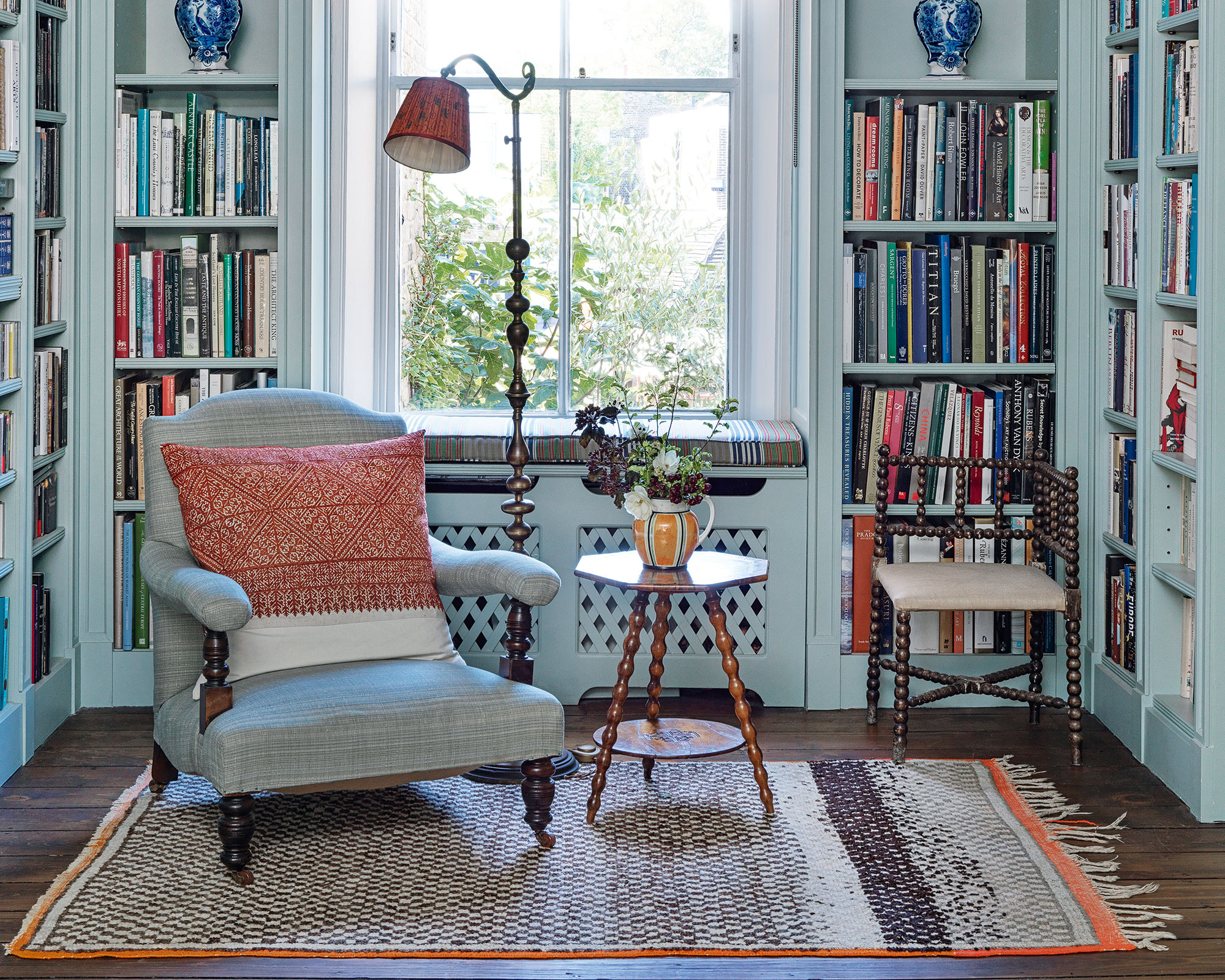
Think in threes: a stack of books, a small object (like a ceramic bowl for clips or bookmarks), and something living (a plant or a bud vase). It keeps the shelf from feeling like a dumping zone.
Create boundaries
Most reading nooks are not actually built in. They just look like they belong. You create that effect by adding simple boundaries.
Easy ways to define the nook
- Rug boundary: even a small rug signals, "this is a zone."
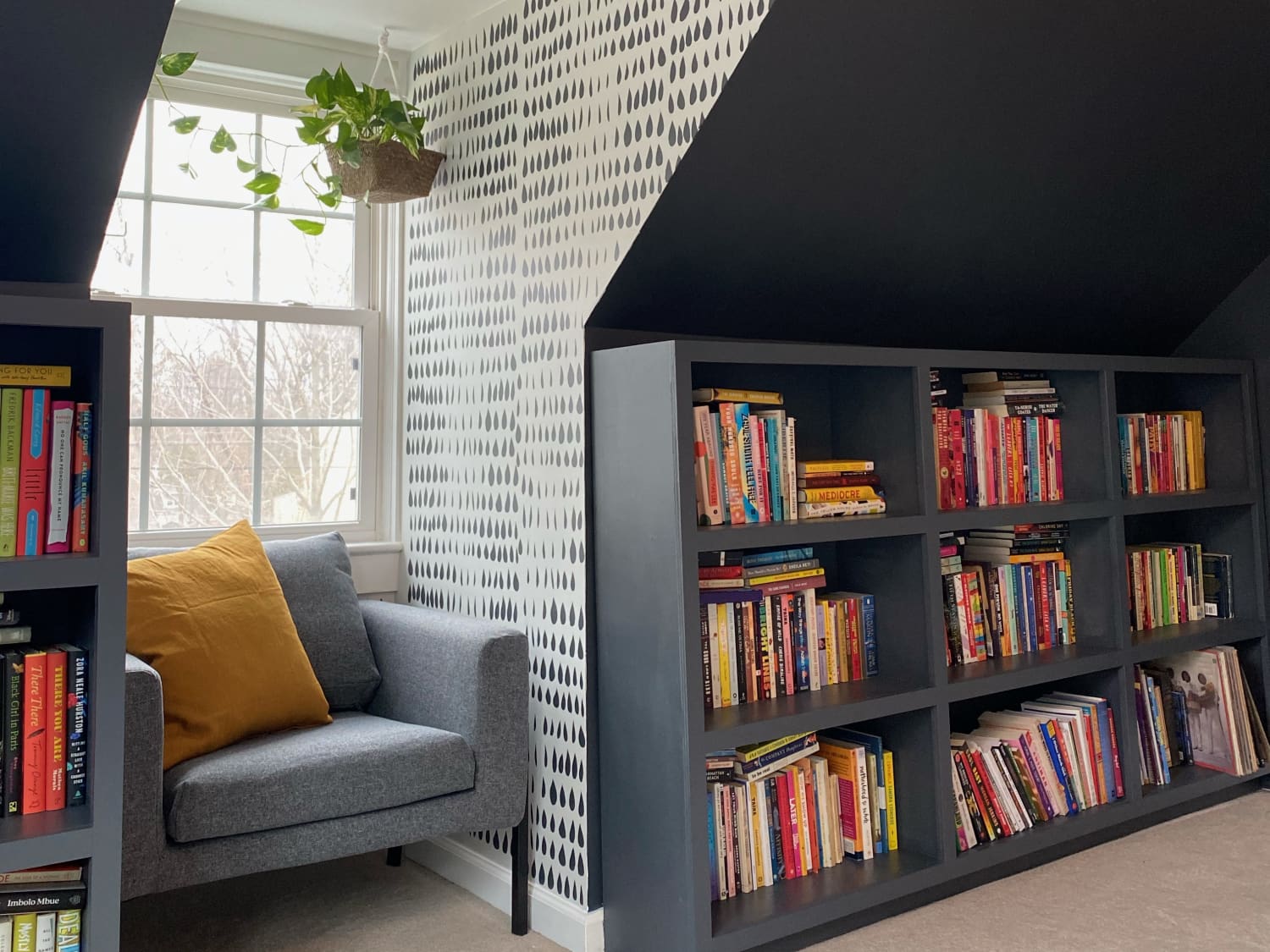
- Paint or wallpaper moment: paint the nook corner a deeper shade than the room, or apply peel-and-stick wallpaper to the back wall of an alcove.
- Lighting boundary: a dedicated sconce or lamp creates a visual pool that reads like purpose.
- Art boundary: hang one larger piece of art at eye level when seated, or create a tight mini gallery wall.
Color ideas that soothe
For reading, I love colors with a little dustiness to them: muted olive, clay, deep teal, warm mushroom, or a soft inky navy. If your room is already bold, go tonal instead, using the same color family but a shade darker in the nook area.
Nook layouts
1) Corner nook
- Chair angled slightly toward the room, not pushed flat into the corner
- Side table on your dominant-hand side
- Floor lamp to the side and slightly behind, adjusted to avoid glare
- Small rug to zone it
2) Window nook
- Storage bench under the window, or two poufs plus a cushion
- Roman shade or curtain panel to soften light
- Plug-in sconce on the side wall if the window area is tight
- Basket underneath for blankets
3) Alcove nook
- Narrow bench or armless chair to fit the recess
- Wall-mounted shelf as the side table
- Sconce or clip-on reading light
- One large art piece on the back wall to make it feel designed
4) Micro nook
- Compact chair or pouf that can tuck under a desk
- C-table or wall shelf for a mug
- Plug-in wall sconce or clamp lamp
- One pillow and one throw, edited, not piled
Decorate slowly
If you are trying to be mindful with your budget, a reading nook is the perfect slow-decorating project. Start with the essentials, then let the space evolve.
- Week 1: Claim the spot and add a light source.
- Week 2: Add a surface and one comfort textile.
- Month 1: Upgrade the seating if needed, or add a footrest.
- Month 2: Add art, a rug, and one object that feels like you (a thrifted ceramic lamp, a framed postcard, a small woven wall hanging).
The goal is not to finish quickly. The goal is to make a tiny place you will actually use, so your home supports your mind the way you need it to.
Common mistakes
- Mistake: The chair is pretty but uncomfortable. Fix: Add a seat cushion and lumbar pillow, or swap to a deeper, more supportive chair.
- Mistake: Only overhead lighting. Fix: Add a floor lamp, table lamp, or plug-in sconce with a bulb temperature that matches the room.
- Mistake: No place for a drink or book. Fix: Use a C-table, stool, or wall shelf.
- Mistake: The nook looks like clutter. Fix: Add one basket or lidded box for the reading extras.
- Mistake: It feels random in the room. Fix: Repeat a color from nearby decor and anchor it with a small rug or art.
FAQ
How big does a reading nook need to be?
Surprisingly small. If you can fit a comfortable seat and a light source, you can make a nook. Even a 3-foot-wide corner can work with an armless chair, a wall shelf, and a plug-in sconce, but measure the chair depth and make sure you still have comfortable walking clearance.
What is the best chair for a reading nook?
The best chair is the one that supports your back and lets you relax your shoulders. For most people, that means a medium-depth armchair with a supportive back. In small spaces, a slipper chair plus a footstool is an excellent substitute.
How do I create a reading nook on a budget?
Prioritize lighting and softness. Use a chair you already have, add a thrifted lamp or plug-in sconce, then layer in a pillow and throw. A basket from a discount store adds storage and polish right away.
How do I make it feel intentional?
Add boundaries: a small rug, dedicated lighting, and one piece of art at seated eye level. Repeat one color from the room in your textiles so it feels connected.
Can I make a reading nook in a bedroom?
Yes, and it is one of my favorite ways to make a bedroom feel restorative. Keep the palette calm, use warm lighting that suits the rest of the room, and choose a chair that is comfortable enough to sit in for 20 minutes without shifting.