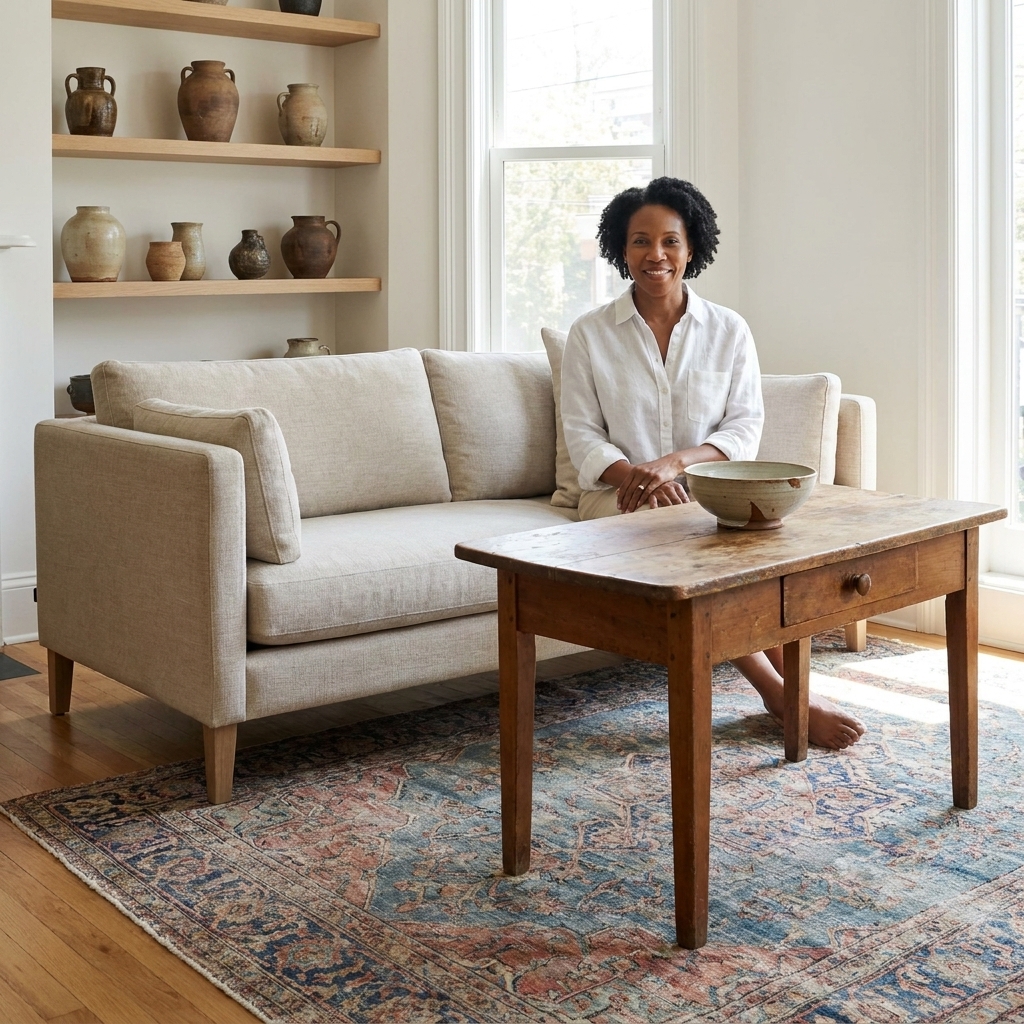
A practical, warm guide to pairing thrifted antiques with contemporary pieces so your home feels curated, not crowded. Tips on color, scale, spacing, and sty...
home decor / design / interior decoration
How to Mix Wood Tones Without Looking Mismatched

Maya Thorne
Maya Thorne is an interior stylist and the creative voice behind Homoraa. With over a decade of experience blending vintage finds with modern aesthetics, she helps readers transform ordinary spaces into personalized sanctuaries. When she is not rearranging her living room, she can usually be found hunting for unique ceramics and textiles at local flea markets.
Created: September 27, 2026
Updated: September 27, 2026
Mixing wood tones is one of those design skills that looks effortless when it’s done well, and slightly chaotic when it’s not. The good news is that “matching” was never the goal. The goal is harmony: woods that relate to each other through undertone, contrast, and repetition so the room feels collected over time, not bought in one afternoon.
Below, I’ll walk you through the easiest way to start, the rules I use when I’m styling real homes, and a few examples you can copy whether you’re working with rentals, vintage pieces, or a mix of both.
Start with what stays
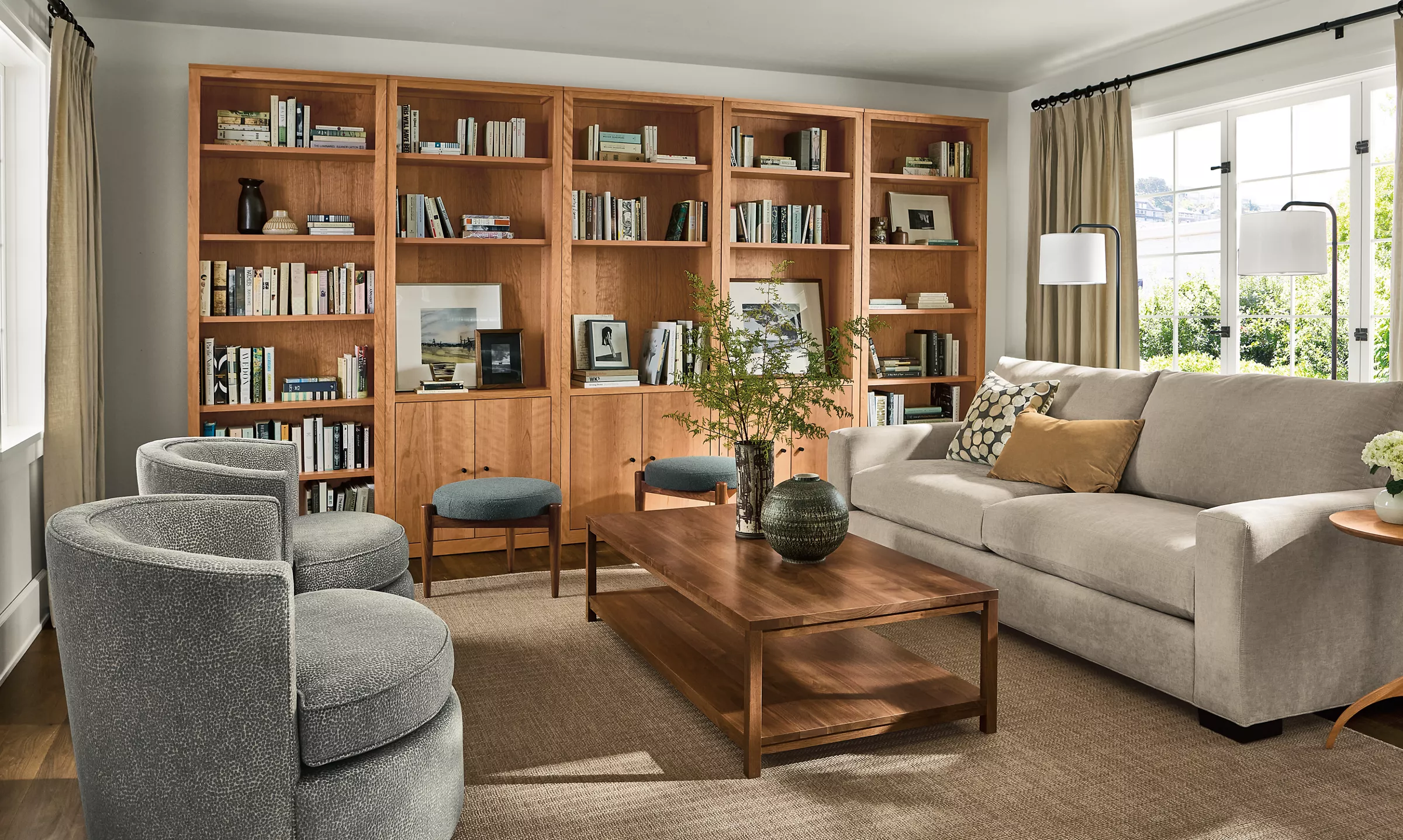
Before you buy a single new piece, identify the “fixed” woods in your space. These are the elements you are least likely to replace soon:
- Floors (hardwood, laminate, even wood-look tile)
- Cabinetry (kitchen or built-ins)
- Large furniture you already own and love
- Wood trim or doors in older homes
Once you name the anchor, everything else gets simpler. You are not mixing random woods. You are choosing supporting woods that make the anchor look intentional.
Quick check: Stand in the doorway and squint. The wood you notice first is usually your anchor wood.
Rule #1: Match undertones
Most mismatched rooms are not suffering from “too many woods.” They are suffering from undertone conflict.
How to spot undertones
- Warm woods lean golden, orange, red, or honey (think oak with warmth, cherry, many vintage teak pieces).
- Cool woods lean gray, taupe, ashy, or slightly green (many modern “greige” stains, weathered finishes).
- Neutral-leaning woods feel balanced, not strongly red or gray (some white oaks depending on finish; walnut can read warm or more neutral depending on stain and lighting).
The simplest approach: keep most of your woods in the same temperature family, then use one bridge element if you want to cross over.
Bridge idea: a medium tone wood (often walnut, aged oak, or a classic mid-brown) can help connect a pale floor to darker accents. A rug that contains both warm and cool notes can do the same job.
Lighting note: undertones shift fast under warm bulbs, cool LEDs, and daylight. If you are on the fence, check your woods in the room in the morning, afternoon, and evening before you decide it is a “yes” or a “no.”
Rule #2: Use contrast
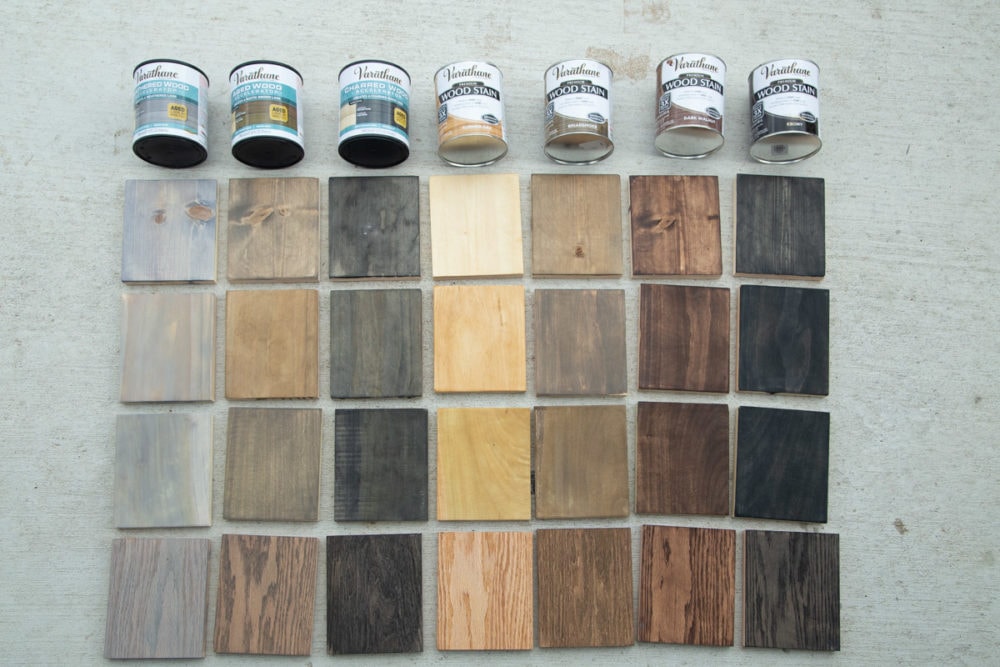
Rooms usually feel most balanced when they include at least two wood depths, and often three:
- Light: pale oak, ash, maple, bleached finishes
- Medium: walnut, teak, classic oak tones, mid-brown stains
- Dark: espresso stains, dark walnut tones, ebony or ebonized finishes
What you want to avoid is having several pieces that are almost the same tone but not quite. That “almost matching” zone is where things start to feel accidental.
A simple formula
60/30/10 for visual weight:
- 60% your anchor wood (often floors or cabinets)
- 30% a secondary wood tone (your main furniture)
- 10% an accent wood (frames, stools, trays, small tables)
These are not exact measurements. It is a way to keep the room from turning into a wood sample board.
Rule #3: Repeat tones
Design loves repetition because repetition reads as intention.
If you introduce a darker wood piece, echo that darker note somewhere else, even subtly. That could be:
- a second item in a similar depth (a small side table, a frame)
- a dark wood lamp base
- blackened metal accents that visually stand in for dark wood
- a textile with deep brown or espresso tones
This is especially helpful in open-plan rooms where wood tones can feel scattered. Repetition ties zones together.
Rule #4: Add breaks
When wood tones feel busy, it is often because wood is competing with more wood. Give your eye a place to rest.
Mixing helpers
- Textiles: a substantial rug, linen curtains, or a throw can soften transitions between tones.
- Paint: a calm wall color creates a consistent backdrop so the woods feel curated, not chaotic.
- Metals: brass often warms up cool wood, while black iron or dark bronze often makes warm woods feel more modern.
- Stone and ceramic: travertine, marble, and handmade ceramics add organic variation without adding another wood.
- Painted furniture: black, white, or soft color-painted casegoods act like a non-wood pause, which can make mixed woods feel instantly more intentional.
Easy starting points
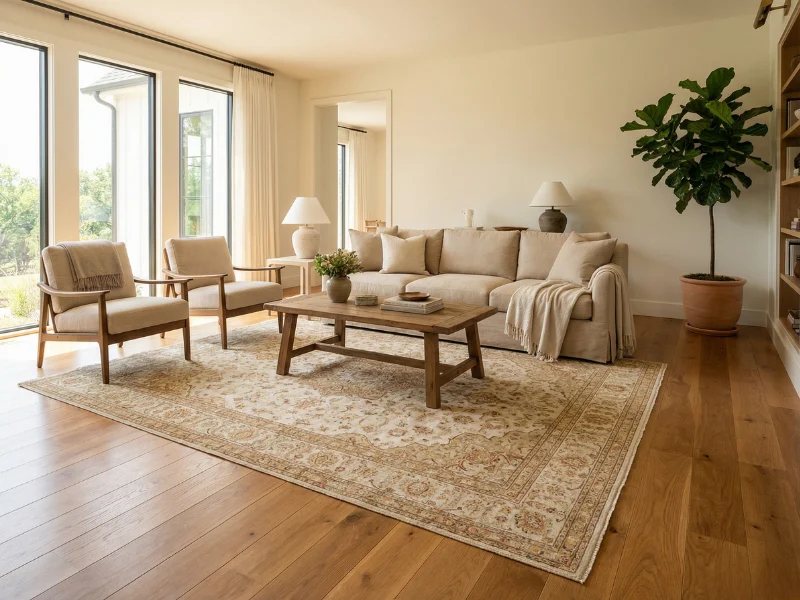
1) Choose clear differences
If you are new to this, choose tones with obvious contrast: a light oak next to a medium walnut, or a medium oak next to an espresso accent. Clear contrast looks deliberate.
2) Keep grain intensity consistent
Grain matters. A very heavy, swirly grain next to a super minimal grain can look jumpy.
- More traditional vibe: visible oak grain, classic walnut grain, some character knots.
- More modern vibe: calmer grains, smoother finishes, simpler silhouettes.
Concrete example: cathedral-cut oak with dramatic movement paired with a high-contrast burl can feel busy together. If one piece is loud, pair it with a calmer partner like a more uniform walnut, maple, or a simpler oak cut.
You can absolutely mix grains, just do it consciously and balance the busy grain with quieter surfaces.
3) Pick a lead piece
Let one wood piece lead the room: a vintage sideboard, a dining table, or a bed frame. When there is a clear lead, the supporting pieces do not have to work as hard.
4) Sample before you commit
If you are trying to select a stain or a new wood finish, bring home a small sample if you can. Even a cheap unfinished wood swatch or a peel-and-stick sample can save you from a return trip because the undertone looked different under your lighting.
Common mistakes
Buying almost the same
If your floor is warm oak and you buy a coffee table that is also warm oak but slightly darker and slightly more orange, it often reads as a miss. Either match closely on purpose, or contrast clearly.
Mixing warm and cool with no bridge
Warm honey oak plus cool gray-washed pieces can work, but you usually need a mediator: a medium neutral wood, a rug that contains both warm and cool notes, or a wall color that calms the temperature clash.
Too much wood at one height
If your console, coffee table, and side tables are all different woods and all live in the same horizontal band, the room can look like a lineup. Vary heights and break up the wood with upholstered pieces, art, or plants.
Forgetting sheen
Finish matters as much as color. A glossy espresso table next to a matte mid-tone dresser can feel mismatched even if the tones are close. If you cannot change sheen, balance it by repeating each finish elsewhere.
Room examples
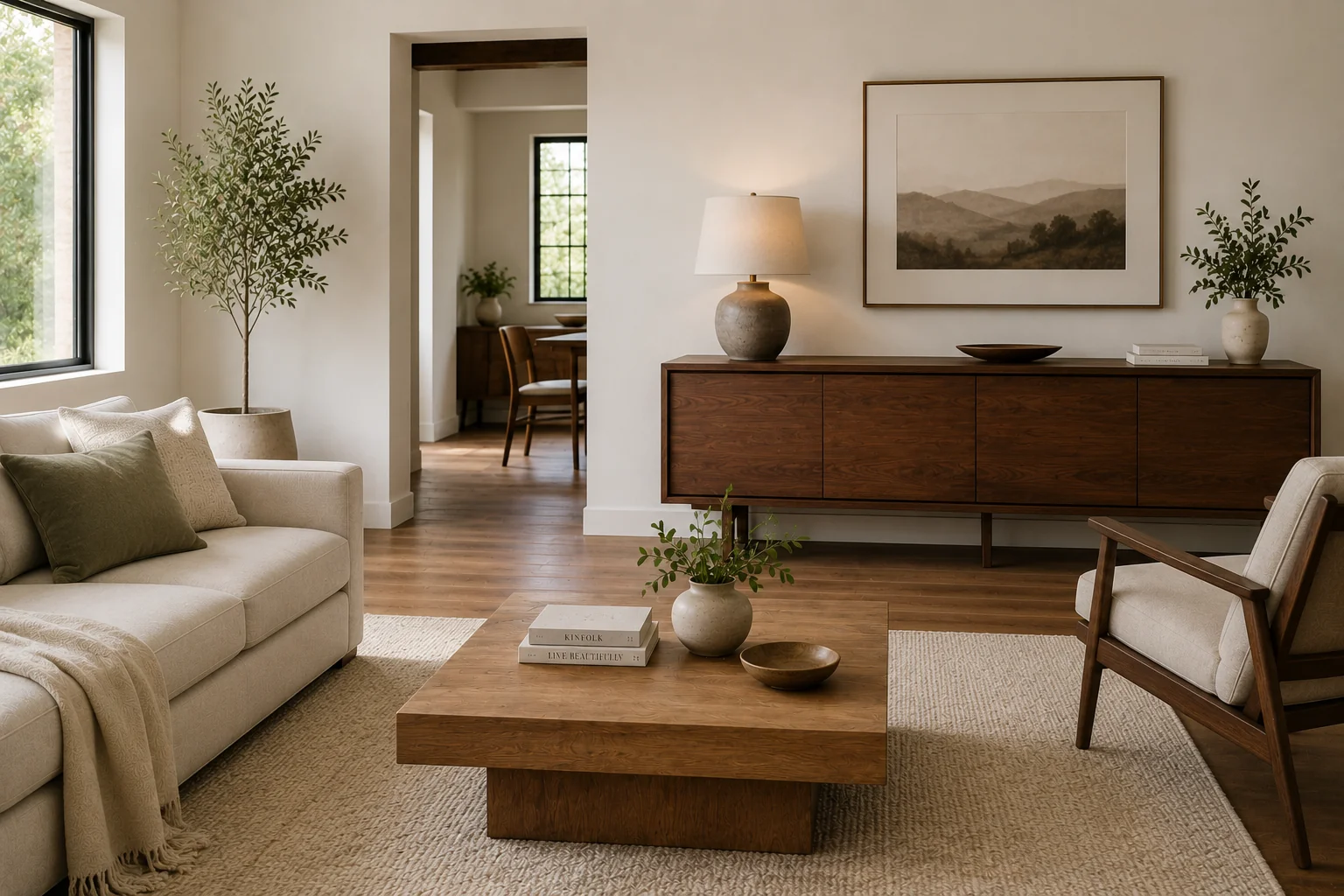
Example 1: Light floors
Anchor: light oak floors
Secondary wood: medium walnut media console
Accent wood: dark stained frames or a small side table
Why it works: the floor stays airy, walnut adds richness, and the dark accent gives definition so nothing feels washed out.
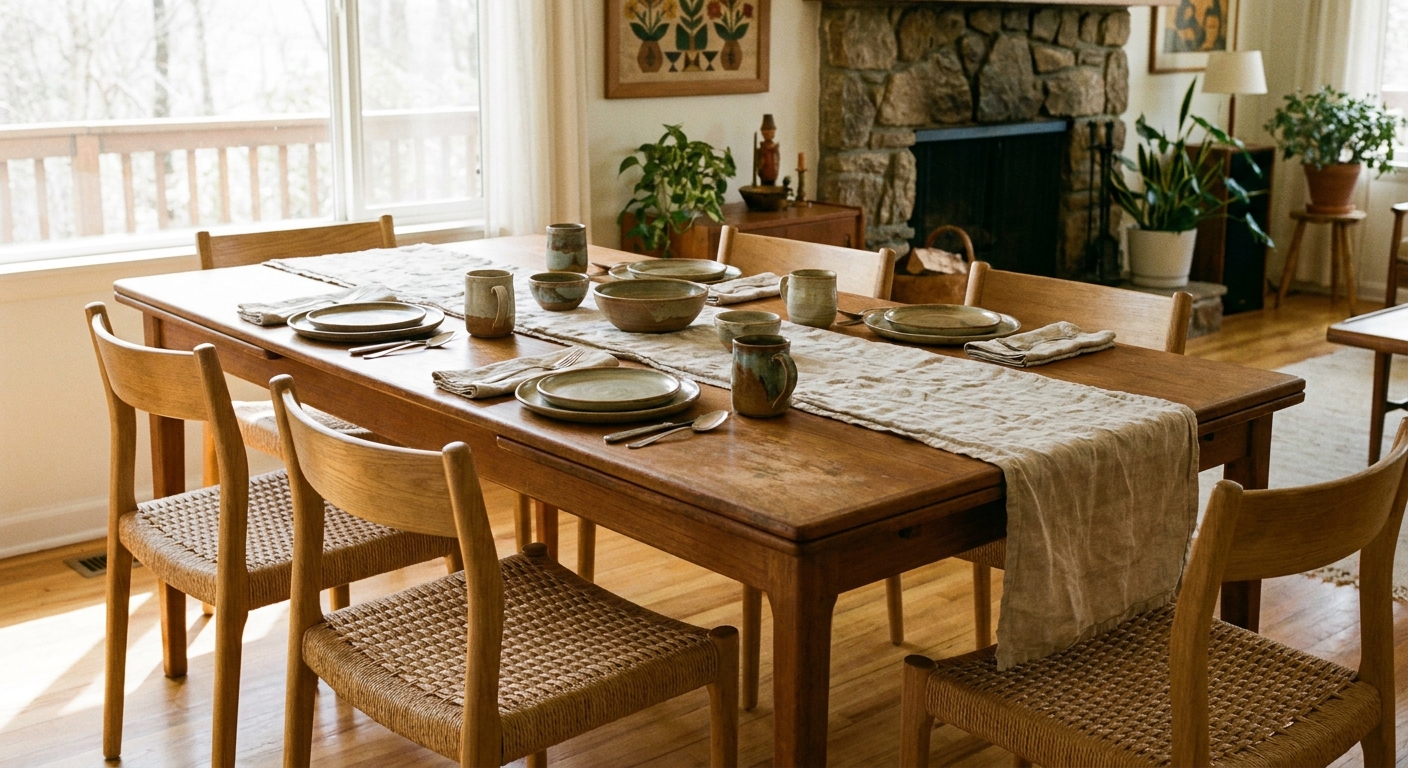
Example 2: Vintage dining table
Anchor: medium vintage wood dining table (teak or walnut)
Secondary wood: light wood chairs or a light-toned sideboard
Accent wood: a darker bowl, tray, or framed art
Styling tip: if the table has a lot of character, keep the chair silhouettes simple. That contrast feels modern, even if the table is vintage.
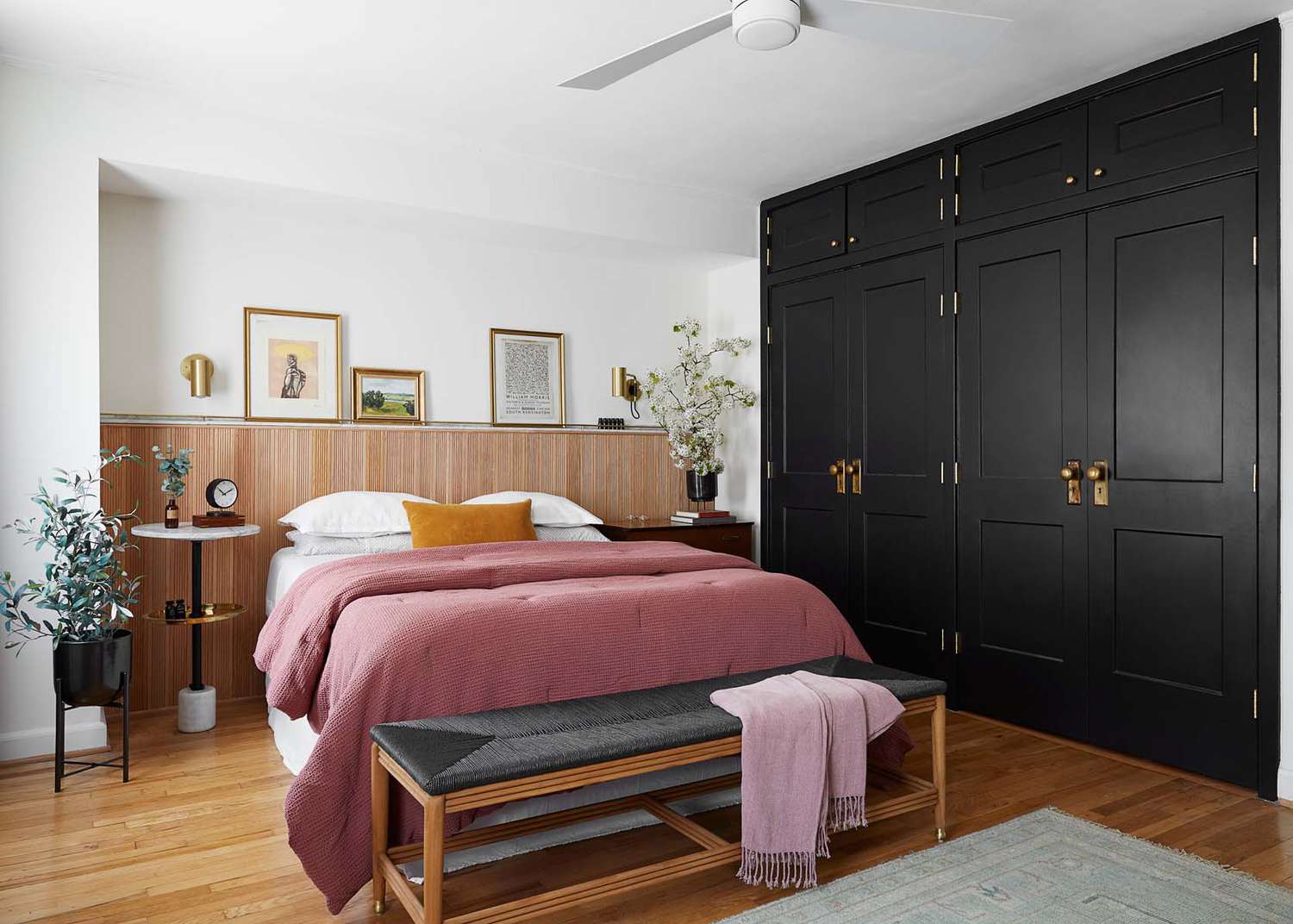
Example 3: Mixed bedroom woods
Anchor: your bed frame (often the largest wood piece)
Secondary wood: nightstands in a different tone, ideally lighter or darker by a noticeable step
Unifier: a large rug and soft bedding in warm neutrals
Bonus: black or aged brass hardware can tie mismatched dressers together, especially in rentals where replacing everything is not realistic.
Small spaces
Small rooms show contrast quickly, so the trick is to keep the palette tighter while still letting it feel layered.
- Limit yourself to two main woods plus one accent.
- Use closed storage (a cabinet instead of open shelving) if the room already has busy grain.
- Repeat your darkest tone at least twice so it reads as structure, not an outlier.
- Choose slimmer silhouettes so wood reads as warmth, not heaviness.
In studios and apartments, I often lean on a medium wood as the connector and use lighter wood to keep things open.
Troubleshooting
- Does one wood feel out of temperature? Add a bridging element (a medium neutral wood, a rug with both tones, or consistent metal finishes).
- Do you have several pieces that are almost the same? Swap one for a clearly lighter or darker option.
- Does the room feel like it has stripes of wood? Break up the midline with upholstery, art, or a tall plant.
- Does it feel flat? Add a darker accent or bring in texture through textiles and ceramics.
FAQ
Should all wood match?
No, and honestly, it rarely looks natural when it does. Homes that feel lived-in usually have a mix: inherited pieces, vintage finds, and newer staples. Aim for related undertones and intentional repetition.
Can I mix warm and cool woods?
Yes. It is easiest when you include a bridge element, like a medium wood tone, a rug with both warm and cool notes, or consistent metal finishes that create continuity.
How many wood tones is too many?
In many rooms, two to three wood tones is the sweet spot. You can go beyond that if undertones are consistent and you repeat each tone, but if your space is small, three is usually plenty.
What if I hate orange oak floors?
You are not alone. Instead of fighting them with more orange wood, bring in neutral or slightly cooler medium woods and add textiles that calm the warmth: creamy rugs, oat linens, and soft grays that lean warm rather than icy.
Slow decorating note
If your home is evolving piece by piece, mixed wood tones are not a problem to solve. They are proof that your space is becoming yours. Start with undertones, build contrast intentionally, and repeat what you introduce. The room will settle into balance faster than you think.


