The $200 styling blueprint: lighting, textiles, thrifted art, and a few high-impact DIYs that make a living room feel polished and intentionally designed.
home decor / design / interior decoration
Microfiber Couch Cleaning: Oily Marks and Water Rings

Maya Thorne
Maya Thorne is an interior stylist and the creative voice behind Homoraa. With over a decade of experience blending vintage finds with modern aesthetics, she helps readers transform ordinary spaces into personalized sanctuaries. When she is not rearranging her living room, she can usually be found hunting for unique ceramics and textiles at local flea markets.
Created: October 2, 2026
Updated: October 2, 2026
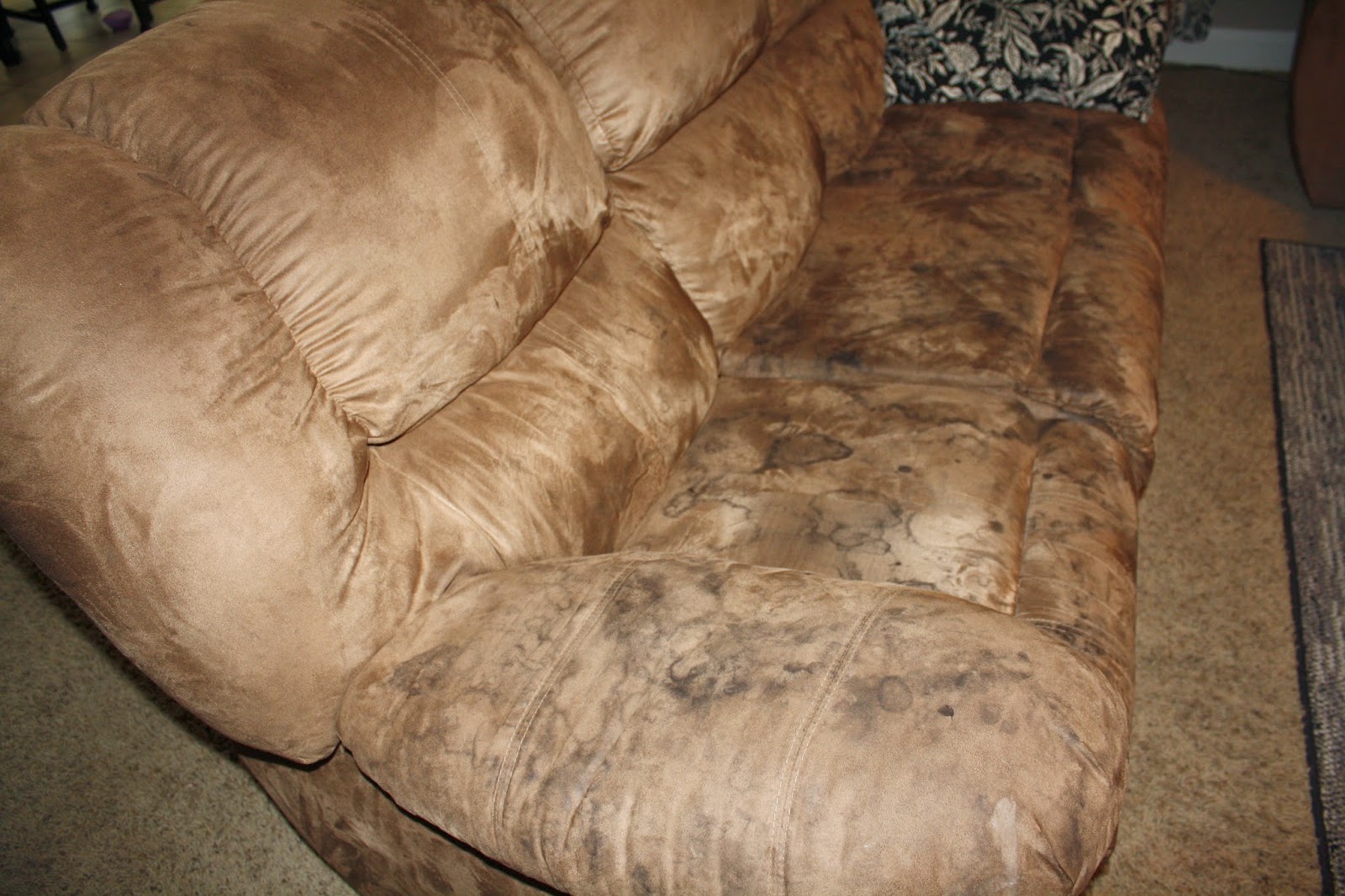
Microfiber is one of those miracle fabrics that feels cozy, wears well, and somehow shows every little mystery mark at the worst possible time. The good news is that most oily spots and water rings are fixable at home, as long as you use the right method for your specific microfiber and you keep the fabric from getting over-wet.
Below is the exact approach I use when a sofa starts collecting shiny armrest patches, snack-grease shadows, or those pale water halos that seem to appear overnight.
Before you clean: find the code
Most microfiber couches have a care tag tucked under a seat cushion or along the underside of the sofa. Look for a letter code. This matters because the wrong liquid can set a stain, shift dye, or leave larger rings.
- W: water-based cleaning is safe (diluted soap, water, water-based upholstery cleaner).
- S: solvent-based cleaning only (often dry-cleaning style solvents). Many people use isopropyl alcohol as a DIY option because it evaporates fast, but it is not universally manufacturer-approved, so spot test first.
- WS: either water-based or solvent-based methods can work.
- X: vacuum only, professional cleaning recommended (no DIY liquids).
If you cannot find a tag: do not guess. Spot test both a water method and an alcohol method in an inconspicuous area (back hem, under a cushion). Start with the least moisture you can get away with, and use whichever test dries evenly without leaving a ring, stiffness, or color transfer.
Your quick supply list
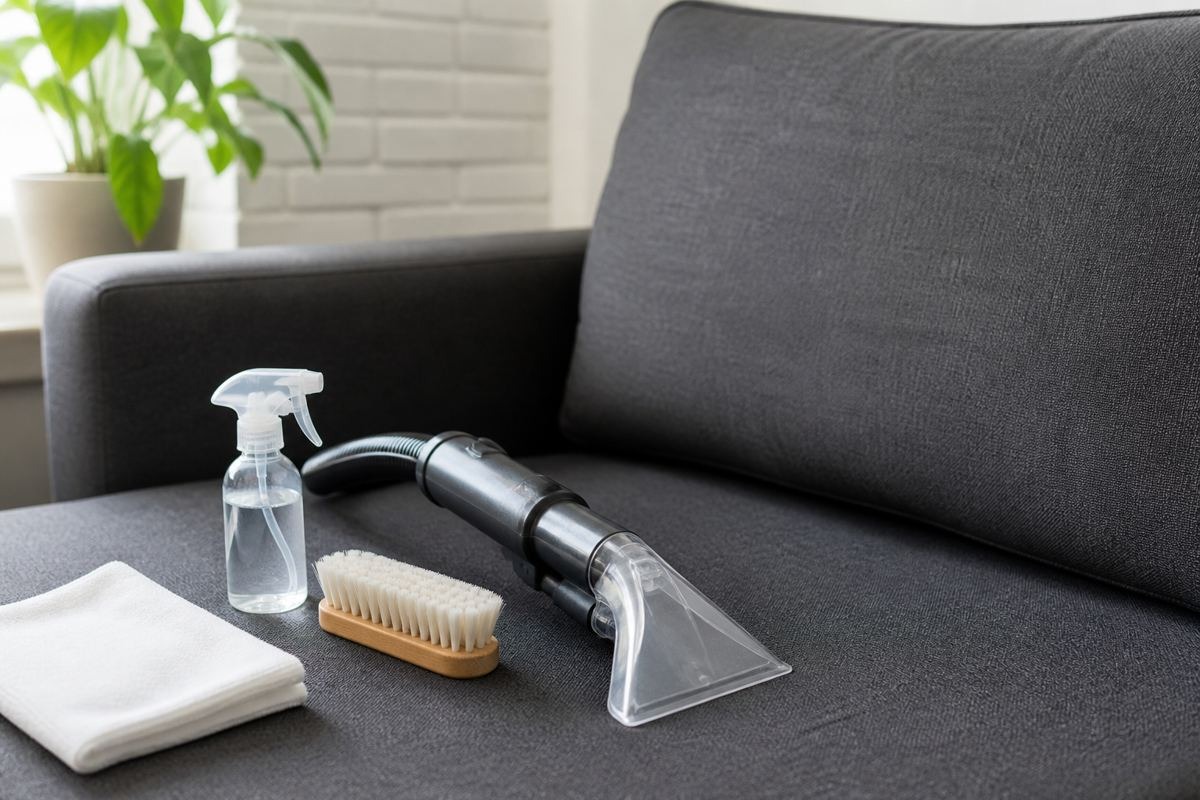
You do not need a closet full of specialty sprays. Start here:
- Vacuum with upholstery attachment
- White microfiber cloths (or clean white cotton cloths)
- Soft nylon brush (or a clean, dry dish brush)
- Isopropyl alcohol (70% or 91%, whichever performs best in your spot test)
- Mild dish soap (clear, grease-cutting)
- Distilled water (helps prevent new rings)
- Optional: cornstarch or baking soda for fresh oil, a fan or hair dryer on cool or low
First step: dry-lift
Even if the stain is oily, start dry. Dry-lift simply means removing loose debris before any liquid touches the fabric. Crumbs and dust turn into muddy streaks the moment moisture hits them.
- Vacuum the cushion and surrounding area thoroughly.
- Blot (do not rub) with a dry cloth to pick up surface residue.
- Brush lightly with the fabric nap (the direction the fibers naturally lie) to lift the pile and reveal what you are actually dealing with.
This little reset step makes every cleaning method work better and look more even.
How to remove oily marks
Oily marks on microfiber often look darker at first, then turn into a slightly shiny patch once the liquid portion evaporates. They love armrests, headrests, and the “snack seat.” Choose the method based on whether the oil is fresh or set-in.
If the oil is fresh: absorb first
- Sprinkle cornstarch (or baking soda) over the spot. Use enough to cover it like a light snowfall.
- Wait 30 to 60 minutes. Longer is better if the spot is truly greasy.
- Vacuum thoroughly.
- If a shadow remains, move on to the appropriate low-moisture method below for your care code.
For W or WS: dish soap solution
This is my go-to when the tag says water is safe and the stain is primarily grease.
- Mix 2 cups lukewarm distilled water with 1 teaspoon clear dish soap. Keep it low-suds.
- Dampen a white cloth in the solution and wring it out well. Your cloth should feel barely wet, not dripping.
- Blot from the outside in, rotating to a clean section of cloth often.
- Follow immediately with a second cloth dampened with plain distilled water to remove soap residue.
- Press dry with a towel, then let it air-dry with a fan.
- Once fully dry, brush the nap to restore softness.
For S or WS: alcohol method
Alcohol can help break down oils and it evaporates quickly, which is helpful on microfiber that tends to watermark. Because some S-coded manufacturers specify dry-cleaning solvents rather than household alcohol, treat this as a careful DIY option: spot test first and stop if you see dye transfer or texture change.
- Ventilate the room and keep alcohol away from open flames, pilot lights, and smoking. (It is flammable.)
- Pour isopropyl alcohol into a spray bottle or onto a cloth (I prefer a spray bottle for evenness).
- Mist lightly over the oily area. Do not saturate. Alcohol strength matters less than even application, so use the concentration that looks best in your spot test.
- Blot with a clean white cloth until the mark starts lifting. If you see color on the cloth, pause and reassess before continuing.
- Let it dry completely.
- Brush gently to reset the texture.
Stylist tip: If the oily area is large (like an entire headrest), do not spot clean only the darkest center. Clean the whole panel seam-to-seam with very light, even passes so it dries uniformly and does not leave edges.
How to remove water rings
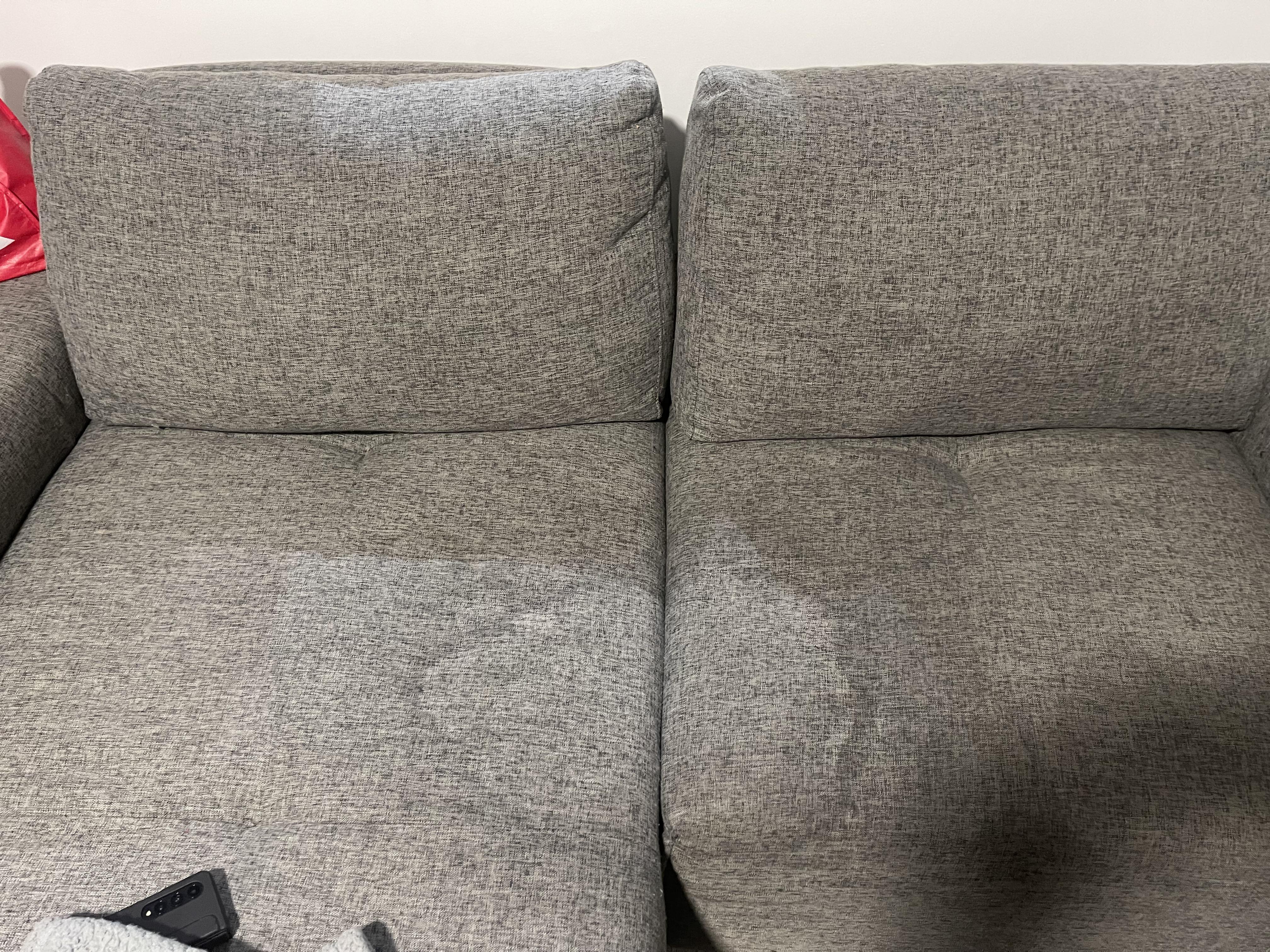
Water rings on microfiber happen because only part of the fabric got wet, then dried unevenly. The fix is counterintuitive: you usually need to re-wet evenly (with the right liquid) and dry evenly.
For W: even out with distilled water
- Lightly mist distilled water over the entire ringed area, extending a few inches beyond the visible edge.
- Blot with a dry towel to pull moisture up and out.
- Point a fan at the cushion, or use a hair dryer on cool or low to speed up even drying.
- When fully dry, brush the nap in one direction.
For S: even out with alcohol
If your couch is solvent-coded, using water to fix a water ring can make it worse. Alcohol is a common way to re-wet the area evenly and let it evaporate fast, but you still need a spot test for dye stability.
- Ventilate the room and keep alcohol away from flames or heat sources.
- Mist isopropyl alcohol over the ringed section and slightly beyond it.
- Blot gently and consistently.
- Air-dry completely, then brush.
If the ring is stubborn: repeat once more rather than scrubbing harder. Aggressive rubbing can crush the pile and create a permanent shiny patch that looks like a stain even when it is clean.
Preventing new rings and shiny patches
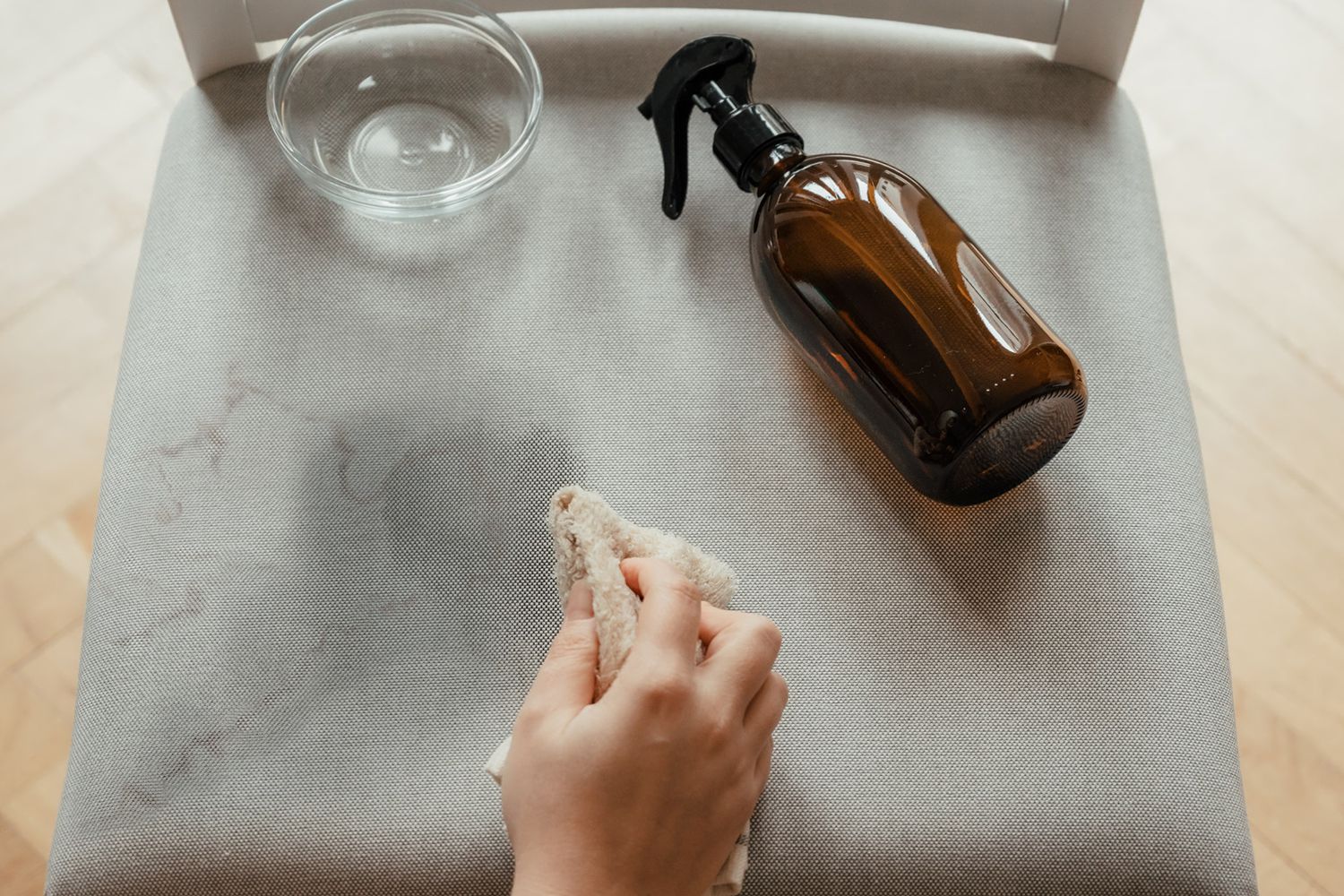
Microfiber rewards consistency. These habits keep your sofa looking even and fresh between deep cleans.
- Use distilled water when you can. Hard water minerals love to leave outlines.
- Blot, do not rub. Rubbing pushes soil deeper and can flatten the nap.
- Clean seam-to-seam on large areas (armrests, headrests) so the fabric dries uniformly.
- Brush after drying to restore that velvety look.
- Rotate cushions if they are reversible to distribute skin oils and wear.
- Keep a cozy throw over the favorite seat. This is slow decorating in action: protect the pieces you love so they age beautifully.
Common mistakes to avoid
- Over-wetting the fabric, which can create a larger ring and slow drying.
- Using colored towels that can transfer dye when damp.
- Using high heat to force drying. Too much heat can set some stains, distort the pile, or leave the fabric feeling stiff. Choose cool or low heat and patience.
- Using vinegar on S-coded microfiber. Vinegar is water-based, and extra moisture can worsen watermarking on many solvent-coded pieces.
- Going straight to strong cleaners. Start gentle, repeat if needed, and only escalate if your fabric tolerates it.
- Skipping the spot test, especially on darker or highly saturated colors where alcohol can lift dye.
FAQ
Why does my microfiber couch look worse after cleaning?
Usually it is either leftover soap residue (which attracts dirt), uneven drying (which creates a ring), or a crushed nap from rubbing. The fix is typically to re-clean evenly with the correct liquid for your care code, blot thoroughly, dry evenly, and brush the fibers back up once dry.
Can I use a steam cleaner on microfiber?
I only recommend steam if the tag clearly indicates W and you are experienced using low moisture and low heat. Too much heat or water can create rings and flatten the nap. When in doubt, skip steam and use a low-moisture blotting method.
What if the stain is old and dark?
Old stains often have both oil and dirt. Start with vacuuming, then try the appropriate method for your code. If the area lightens but does not fully disappear, repeat once more after it dries. If it still stays visible, it may be dye loss or pile damage rather than a removable stain.
What about ink or marker on microfiber?
Ink can spread fast and become permanent if you use the wrong liquid or rub. If it is a large mark or it soaked in, I would call a professional. For a tiny fresh dot, you can try a careful spot test with isopropyl alcohol on a white cloth, blotting only. Stop immediately if dye transfers from the sofa to the cloth.
When should I call a professional?
If your tag is X, if the cushion is filled with down or feathers and got soaked, if there is widespread dye transfer, or if the stain is from ink, paint, or a large amount of grease, it is worth calling a professional upholstery cleaner to avoid spreading the damage.
Finish: reset the cushion
Once your spot is gone, take two extra minutes to make it look like nothing ever happened. Brush the nap in one direction across the entire cushion, then flip or rotate if possible. Microfiber looks best when the texture reads consistent, not patchy. Your sofa will feel softer too, which is never a bad reward for doing the responsible thing.